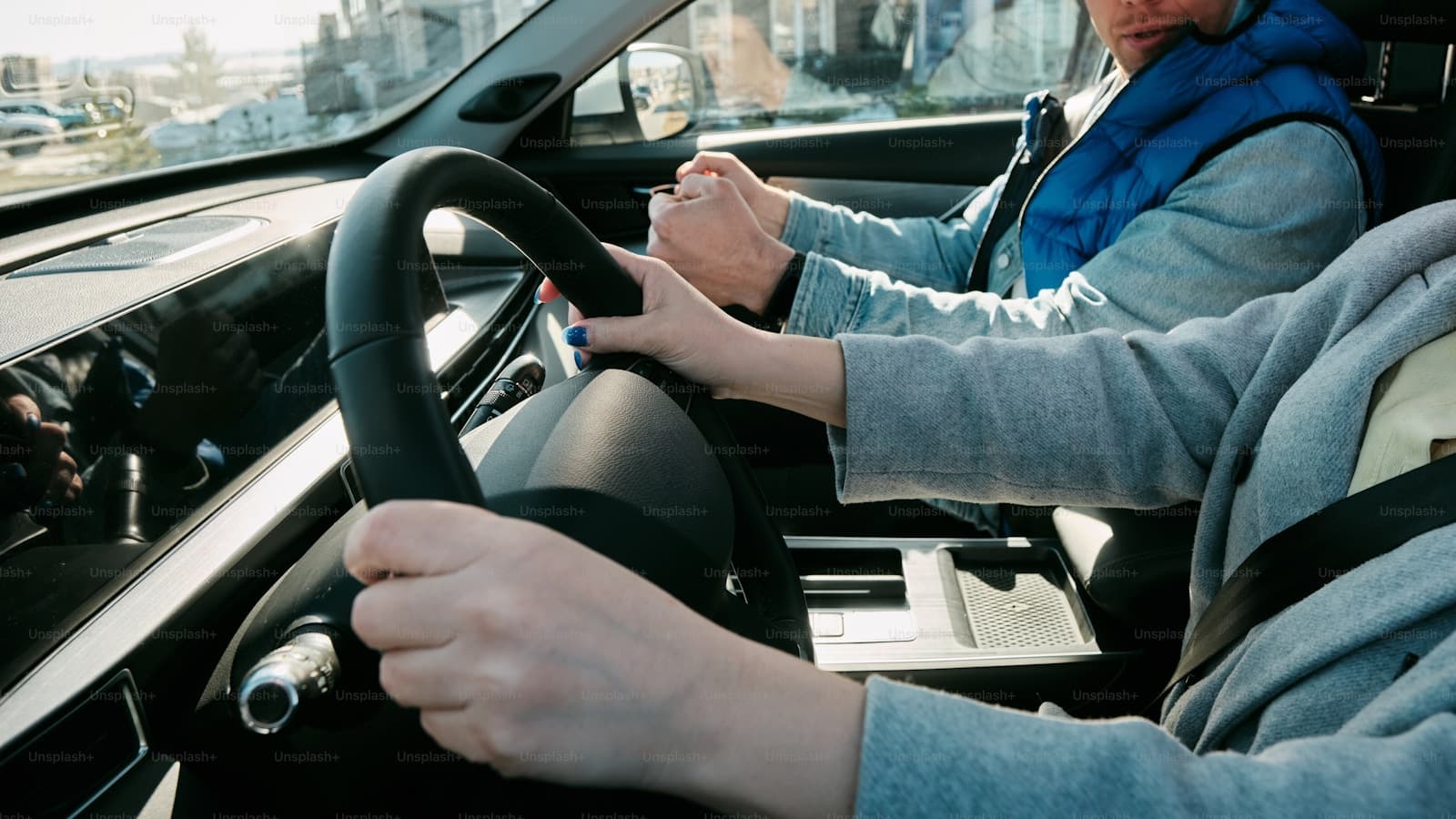
When your teen splits time between two households in Pennsylvania, you need to decide which parent's policy covers them, whether both parents can share coverage, and how the good student discount applies when report cards go to one address.
Which Parent's Policy Covers a Teen Driver in Pennsylvania When Custody Is Split?
Pennsylvania requires the teen to be listed on the policy of the parent whose address appears on the teen's driver's license, regardless of the actual custody split. If your teen's license shows your ex-spouse's address but the teen spends 50% of the time at your house, your policy will not cover the teen driving your vehicle unless you add them as a rated driver to your own policy.
The state does not recognize shared coverage arrangements between two separate policies. Each policy treats the teen as either a listed driver with full rating impact or an excluded driver with zero coverage. If you and your ex-spouse both want the teen covered when driving your respective vehicles, the teen must appear as a rated driver on both policies.
This creates a double-premium situation that catches most divorced parents by surprise. Adding a 16-year-old to a Pennsylvania auto policy typically increases the annual premium by $1,800–$3,200 depending on the vehicle, coverage level, and location. If both parents carry the teen as a rated driver, both pay that increase.
What Happens If the Teen Drives the Non-Custodial Parent's Car Without Being Listed?
If the teen is listed only on the custodial parent's policy and drives the non-custodial parent's vehicle, the non-custodial parent's insurer will deny the claim if an accident occurs. Pennsylvania's permissive use rule extends coverage to occasional drivers, but it explicitly excludes household members and regular users who should have been disclosed during underwriting.
The insurer will review the teen's address history, school enrollment records, and the parent's custody arrangement during the claim investigation. If the evidence shows the teen had regular access to the vehicle or stayed at that address more than occasionally, the claim is denied and the parent may face policy rescission for material misrepresentation.
Some parents assume they can avoid listing the teen by claiming the teen only drives during summer visitation or holiday breaks. That strategy fails if the teen is at the non-custodial parent's home more than 30 days per year in most cases, or if the teen keeps personal belongings, has a bedroom, or receives mail at that address.
See what adding a teen driver actually costs in your state
Compare quotes from carriers that offer good student discounts — most parents find savings they didn't know were available.
Get Your Free Quote✓ Good Student Discounts✓ No Obligation✓ Licensed Carriers✓ All 50 States
Can Both Parents Share the Cost of Adding the Teen Driver?
There is no mechanism within Pennsylvania insurance regulation that allows two separate policies to split the rating impact or premium cost of a single teen driver. Each parent's policy rates the teen independently based on that parent's own rating factors: the parent's driving record, the vehicles on that policy, the coverage limits, and the location.
This means the cost to add the teen will differ between the two parents even if the teen is the same rated driver. A parent with a clean record, older vehicle, and rural address might pay $150/month to add the teen, while the other parent with a recent speeding ticket, newer financed vehicle, and Philadelphia ZIP code might pay $280/month.
Parents can agree privately to split the financial burden, but that arrangement is external to the insurance contracts. Each parent pays their own carrier directly, and each parent controls their own policy's coverage limits, deductibles, and discount elections.
How Does Pennsylvania's Graduated Licensing System Affect Coverage for Part-Time Teen Drivers?
Pennsylvania requires teen drivers to hold a learner's permit for at least six months before applying for a junior driver's license, and during the permit phase the teen must complete 65 hours of supervised driving including 10 hours at night and 5 hours in bad weather. Both parents must notify their insurers when the teen receives the learner's permit, even if the teen will not drive both parents' vehicles regularly.
Most Pennsylvania carriers do not apply the full teen driver surcharge during the learner's permit phase if the teen is listed as a permitted driver under supervision only. The surcharge activates when the teen receives the junior license and begins driving alone. Junior license restrictions prohibit driving between 11 p.m. and 5 a.m. unless for work, school, or emergency, and prohibit more than one passenger under 18 unless they are family members, for the first six months.
Carriers do not adjust the premium based on junior license restrictions. The teen is rated as a full driver once the junior license is issued, even though the teen is legally prohibited from driving during certain hours. Parents cannot request a reduced rate during the first six months of the junior license by citing the passenger and nighttime restrictions.
Does the Good Student Discount Apply If Report Cards Are Sent to Only One Parent's Address?
Pennsylvania does not mandate the good student discount, so eligibility rules vary by carrier. Most carriers require a GPA of 3.0 or higher and accept report cards, transcripts, or honor roll certificates as proof. The document does not need to show the same address as the policy, but it must show the teen's name and the qualifying GPA or academic standing.
If the teen's school sends report cards to only one parent's address, the parent whose policy will carry the discount must obtain a copy of that report card or request an official transcript directly from the school. Some carriers accept a signed letter from the school counselor or principal confirming the student's GPA in place of a report card.
Both parents can claim the good student discount on their respective policies if both policies list the teen as a rated driver and both parents provide the required documentation to their own carriers. The discount typically reduces the teen surcharge by 10–25%, which translates to $200–$600 per year depending on the base premium increase.
What Coverage Limits Make Sense for a Teen Driving Older Vehicles at Two Households?
Pennsylvania requires minimum liability limits of 15/30/5: $15,000 per person for bodily injury, $30,000 per accident, and $5,000 for property damage. Those limits are inadequate for a household with any assets, and especially inadequate when a teen driver is involved. A single at-fault accident with injuries can exceed $30,000 in medical bills within hours, and the parent whose policy covers the teen is personally liable for the difference.
If the teen is driving older paid-off vehicles at both parents' homes, the parents should carry 100/300/100 liability minimums and consider dropping collision coverage on vehicles worth under $3,000. Collision coverage on a 12-year-old vehicle with a $500 deductible and a $2,000 actual cash value costs $40–$70/month and pays at most $1,500 after the deductible in a total loss.
Uninsured motorist coverage is essential in Pennsylvania. Approximately 10% of Pennsylvania drivers carry no insurance, and another 15% carry only state minimums. If an uninsured driver injures your teen or totals the vehicle, your uninsured motorist coverage is the only recovery source. Most carriers price UM coverage at 30–50% of the cost of the equivalent liability limit.
How Do Telematics Programs Work When the Teen Drives Vehicles on Two Different Policies?
Telematics programs track braking, acceleration, speed, and time of day through a mobile app or plug-in device. Pennsylvania carriers offering these programs include Progressive Snapshot, State Farm Drive Safe & Save, Allstate Drivewise, Nationwide SmartRide, and GEICO DriveEasy. Safe driving during the monitoring period can reduce the teen surcharge by 10–30%, but hard braking events, late-night trips, or speeding incidents can eliminate the discount entirely.
If the teen is listed on both parents' policies and both parents enroll in telematics programs with their respective carriers, the teen must use two separate apps or devices and maintain safe driving metrics on both. One parent's discount does not transfer to the other parent's policy, and a poor score on one policy does not affect the other.
The telematics monitoring period is typically 90 days to six months. After the initial period, the carrier assigns a discount percentage that remains in effect for the policy term. Some programs offer continuous monitoring with per-trip feedback, but the discount is locked at renewal based on the prior term's performance.