Best Car Insurance for Young Drivers in Oakland — Coverage Guide
Compare Teen Driver RatesHow Much Does Adding a Teen Driver Cost in Oakland?
Adding a 16- or 17-year-old driver to your Oakland policy typically increases your annual premium by $2,400–$4,800, depending on your current carrier, the vehicle your teen drives, and your coverage levels. Oakland's urban density drives higher collision frequency rates than suburban Alameda County communities, and the city's elevated vehicle theft rate — particularly for older Honda and Toyota models popular with families adding teen drivers — pushes comprehensive coverage costs higher than the California average.
If your teen drives a newer financed vehicle requiring full coverage (liability, collision, and comprehensive), expect the higher end of that range. If they're driving an older paid-off sedan and you're carrying liability-only coverage, you'll land closer to the lower end. The difference matters: a family with a 2015 Honda Civic carrying $100,000/$300,000 liability plus collision and comprehensive will see a bigger increase than one with the same liability limits on a 2008 Toyota Corolla with no physical damage coverage.
California law prohibits insurers from using gender as a rating factor, so unlike most states, your daughter and son will receive identical rate quotes based on age, driving record, and vehicle. This levels the playing field compared to states where male teen drivers pay 10–15% more than female teens.
The add-to-parent-policy vs separate-policy decision is straightforward in Oakland: adding your teen to your existing policy will almost always cost less than buying them a standalone policy. Standalone policies for 16- or 17-year-old drivers in California routinely exceed $6,000–$9,000 annually because the teen loses the multi-car and bundling discounts attached to your policy, and they're rated as the primary policyholder with zero prior insurance history. California state coverage requirements collision coverage decision uninsured motorist protection
California Graduated Licensing Rules and How They Affect Your Coverage Decision
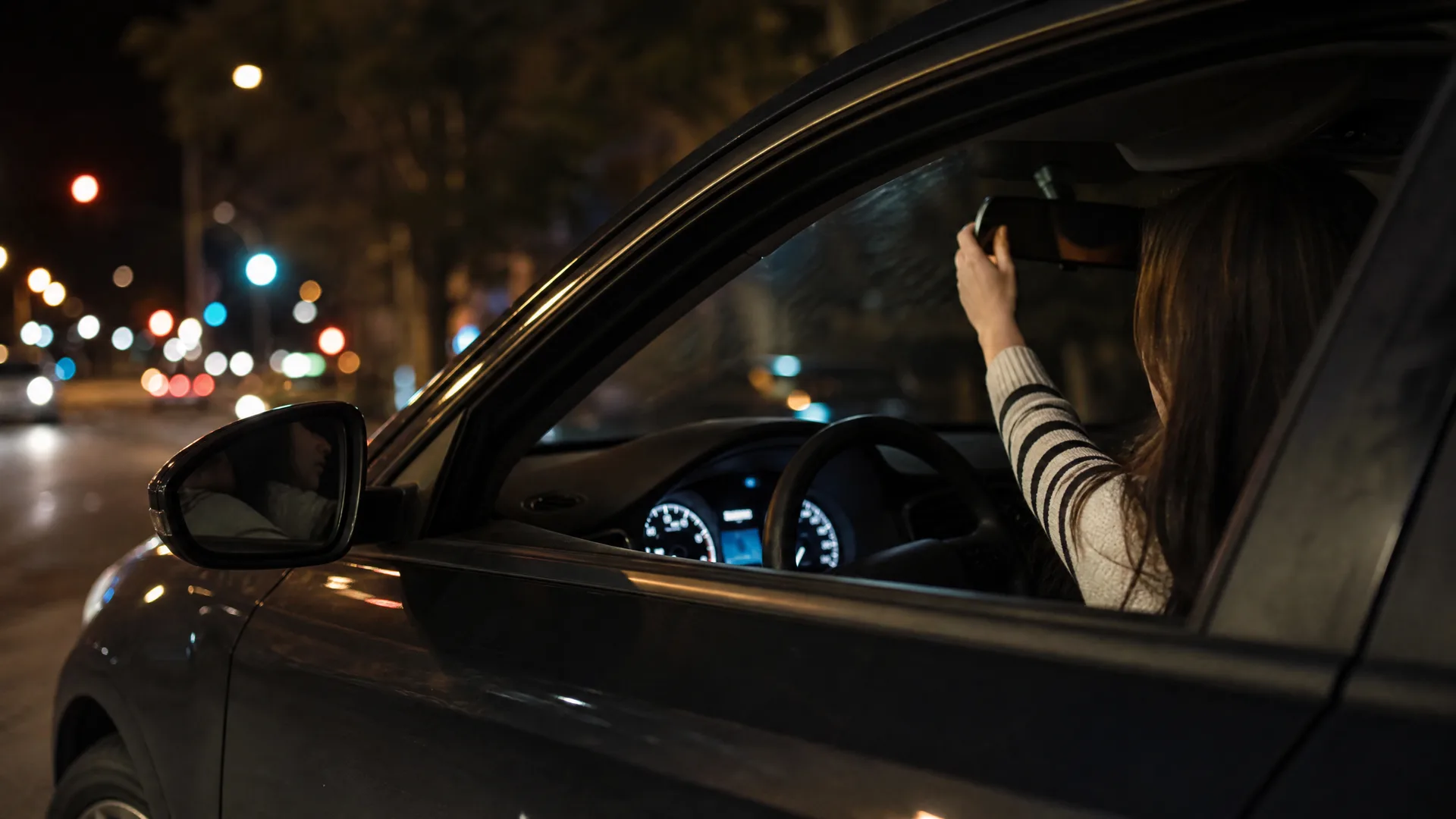
California's graduated driver licensing (GDL) program restricts when and how your teen can drive, and understanding these phases helps you make smarter coverage decisions. A provisional license holder under 18 (Phase I) cannot drive between 11 p.m. and 5 a.m. without a licensed adult 25 or older, and cannot transport passengers under 20 unless accompanied by a parent, guardian, or licensed driver 25 or older for the first 12 months.
These restrictions reduce your teen's actual road exposure during the highest-risk driving hours — late night and early morning — which is when most teen accidents occur according to Insurance Institute for Highway Safety data. Some carriers offer usage-based insurance (UBI) programs with smartphone apps or plug-in devices that monitor driving time, and because your teen is legally restricted from driving during high-risk hours, they may automatically qualify for a low-mileage or time-of-day discount without changing their behavior. If your insurer offers a telematics program, enroll your teen immediately after they get their provisional license — the GDL restrictions essentially guarantee they'll meet the program's safe-hour criteria for the first year.
Once your teen turns 18 or holds their provisional license for 12 months and meets other requirements, they receive a full California driver license with no time or passenger restrictions. Your coverage needs don't change at this point, but your discount opportunities shift: the automatic time-restriction benefit disappears, so if your teen continues low annual mileage (under 7,500 miles per year), explicitly request a low-mileage discount from your carrier.

Good Student and Driver Training Discounts in California — What Parents Miss
California Insurance Code Section 1861.025 mandates that insurers offer a good student discount to drivers under 25 who maintain a B average or equivalent (3.0 GPA). This isn't optional or carrier-specific — every admitted insurer in California must offer it. The discount typically reduces your teen's portion of the premium by 10–25%, which translates to $240–$1,200 in annual savings on a typical Oakland teen driver addition.
The documentation requirement is where most families lose money. Carriers require a report card, transcript, or letter from the school registrar showing your teen's GPA, and most insurers require updated proof every six months or annually. If you don't submit renewal documentation, many carriers will quietly remove the discount mid-policy without proactive notification. Set a recurring calendar reminder to submit updated transcripts at the end of each semester — most carriers accept electronic transcripts emailed directly from your teen's school, which takes five minutes to request through the school's records office.
Driver training discounts are carrier-discretionary in California, not legally mandated. Most major insurers offer 5–15% off for completing an approved driver education course, and some offer an additional discount for behind-the-wheel training beyond the state's minimum requirement. The California DMV requires teens under 17.5 years old to complete driver education and six hours of behind-the-wheel training with a licensed instructor before applying for a provisional license, so your teen will meet the basic requirement by default — but ask your insurer whether additional training hours qualify for a larger discount.
The distant student discount applies when your teen attends college more than 100 miles from home without a vehicle. If your teen leaves for UC Berkeley, Stanford, or a school outside the Bay Area and doesn't take a car, you can remove them as a regular driver and add them as an occasional driver, reducing your premium by 30–60% while maintaining coverage when they're home on breaks.

Add Your Teen Without Doubling Your Bill
Compare Teen Driver RatesWhat Coverage Level Does Your Oakland Teen Driver Actually Need?
California requires minimum liability limits of $15,000 per person for bodily injury, $30,000 per accident for bodily injury, and $5,000 for property damage (written as 15/30/5). These minimums are dangerously low in Oakland, where the median home price exceeds $800,000 and a significant portion of drivers carry assets worth protecting. If your teen causes an accident that injures another driver or damages an expensive vehicle, your family is personally liable for damages beyond your policy limits.
For families adding a teen driver in Oakland, 100/300/100 liability limits represent a more realistic floor — $100,000 per person for bodily injury, $300,000 per accident, and $100,000 for property damage. The incremental cost difference between state minimum and 100/300/100 is typically $200–$400 annually, but it protects your home equity and savings from a lawsuit. If you carry assets beyond your home — retirement accounts, investment properties, significant savings — consider an umbrella policy that sits above your auto liability coverage and provides an additional $1–$2 million in protection.
Collision and comprehensive coverage are required if your teen's vehicle is financed or leased, but they're optional on a paid-off vehicle. Collision covers damage to your teen's vehicle in an accident regardless of fault; comprehensive covers theft, vandalism, weather damage, and hitting an animal. In Oakland, comprehensive coverage costs more than in suburban areas due to higher theft rates, particularly in neighborhoods near I-880 and I-980. If your teen drives a 2010 or older vehicle worth under $4,000 (check Kelley Blue Book actual cash value), collision and comprehensive may not be cost-effective — you're paying $600–$1,200 annually to insure a vehicle that would only yield a $3,000–$4,000 payout minus your deductible if totaled.
Uninsured motorist coverage is essential in California. The state has an uninsured driver rate estimated at 16.6% by the Insurance Research Council, meaning roughly one in six drivers your teen might encounter has no insurance. Uninsured/underinsured motorist coverage protects your teen if they're hit by an uninsured driver or a driver with insufficient liability limits. Most carriers bundle UM/UIM with your liability coverage at a modest additional cost — typically $100–$250 annually for 100/300 limits.
Which Oakland Insurers Offer the Best Combination of Teen Discounts?
California's largest auto insurers — State Farm, GEICO, Allstate, Farmers, and Progressive — all operate in Oakland and offer the mandated good student discount, but their baseline rates and discretionary discount stacks vary significantly. State Farm and Allstate historically maintain competitive rates for multi-car family policies with teen drivers in California, and both offer robust telematics programs (Drive Safe & Save for State Farm, Drivewise for Allstate) that can reduce teen driver premiums by 15–30% based on monitored driving behavior.
GEICO and Progressive typically quote lower baseline rates for families with clean driving records but offer fewer loyalty and multi-policy bundling discounts, which matters if you've been with your current carrier for several years and bundle home or renters insurance. Progressive's Snapshot telematics program is particularly aggressive in rewarding low annual mileage and limited night driving — exactly the profile California's GDL restrictions create for provisional license holders.
Wawanesa is a California-licensed insurer that consistently ranks among the lowest-cost options for families with teen drivers in urban California markets, but the company maintains strict underwriting criteria and doesn't accept all applicants. If you have a clean driving record and good credit (California allows credit-based insurance scoring with restrictions), request a Wawanesa quote — savings can reach 20–40% compared to major national carriers.
The most effective approach is quoting your current policy configuration with your teen added against three to five competitors, ensuring each quote includes identical coverage limits and every discount your family qualifies for. Parents frequently discover their longtime carrier is no longer the most competitive option once a teen driver enters the picture, because carriers weigh teen driver risk differently in their pricing models.

How Vehicle Choice Affects Your Teen Driver Premium in Oakland
The vehicle your teen drives matters as much as the coverage you choose. Insurers rate vehicles based on theft frequency, collision claim frequency, and repair costs — and in Oakland, those factors vary dramatically by make, model, and year. Older Honda Civics and Accords (particularly 1990s and early 2000s models) carry elevated theft rates in Oakland, which drives comprehensive coverage costs higher. The Insurance Institute for Highway Safety publishes loss data showing that small, high-performance vehicles — sports cars, turbocharged compacts, modified vehicles — generate higher collision claim frequencies when driven by teens.
The safest financial choice is assigning your teen to the lowest-value, highest-safety-rated vehicle in your household. A 2008–2012 midsize sedan with strong crash test ratings (Toyota Camry, Honda Accord, Ford Fusion, Hyundai Sonata) represents the sweet spot: low enough value that dropping collision coverage might make sense, common enough that repair costs are moderate, safe enough to provide real protection, and boring enough that it doesn't invite theft or aggressive driving. If you're purchasing a vehicle specifically for your teen, prioritize IIHS Top Safety Pick models from 2010 or later with good crash test ratings and multiple airbags.
Avoid assigning your teen to a leased or financed vehicle if you have an older paid-off option available. Leased and financed vehicles require collision and comprehensive coverage, and that physical damage coverage is where teen driver costs spike in Oakland. If your teen drives a paid-off 2011 sedan and you carry liability-only coverage, your premium increase will be 30–50% lower than if they drive your 2022 leased SUV with full coverage.
Frequently Asked Questions
Should I add my teen to my Oakland policy or get them a separate policy?
Add your teen to your existing policy — it will almost always cost less. A standalone policy for a 16- or 17-year-old in Oakland typically runs $6,000–$9,000 annually, while adding them to your current policy increases your premium by $2,400–$4,800. Your teen benefits from your multi-car discount, bundling discounts, and your established insurance history.
Does California require me to give my teen driver a good student discount?
California Insurance Code Section 1861.025 mandates that every insurer offer a good student discount to drivers under 25 with a B average or 3.0 GPA. The discount is typically 10–25% off your teen's portion of the premium. You must submit proof (report card or transcript) and renew documentation every semester or annually to keep the discount active.
What liability limits should I carry with a teen driver in Oakland?
California's 15/30/5 state minimum is too low for Oakland, where home values and assets create significant lawsuit risk if your teen causes an accident. Carry at least 100/300/100 liability limits ($100,000 per person, $300,000 per accident, $100,000 property damage), and consider an umbrella policy if you have home equity or retirement savings to protect.
Do I need collision coverage if my Oakland teen drives an older paid-off car?
Collision coverage is optional on a paid-off vehicle and may not be cost-effective if the car is worth under $4,000. You'd pay $600–$1,200 annually to insure a vehicle that would only return a $3,000–$4,000 payout minus your deductible if totaled. Check the vehicle's actual cash value and compare it to your annual collision premium before deciding.
How do California graduated licensing restrictions affect my teen's insurance rate?
California provisional license holders under 18 can't drive between 11 p.m. and 5 a.m. without an adult, which reduces their exposure during high-risk hours. If your insurer offers a telematics program that monitors driving time, your teen may automatically qualify for time-of-day or safe-hour discounts (15–30% off) because the GDL rules prevent them from driving during dangerous hours.
Related Articles
Chicago Teen Driver Insurance: Coverage & Cost Guide
4/2/2026

Teen Driver Insurance Winston-Salem: Parent Cost Guide
4/2/2026
Who Qualifies for CA Good Student Teen Discount
5/19/2026

Honolulu Teen Driver Insurance: What Parents Pay
4/2/2026

Hiding a Teen Driver: What Happens When Caught
5/19/2026

Teen Driver Insurance Irvine: What Parents Pay
4/2/2026