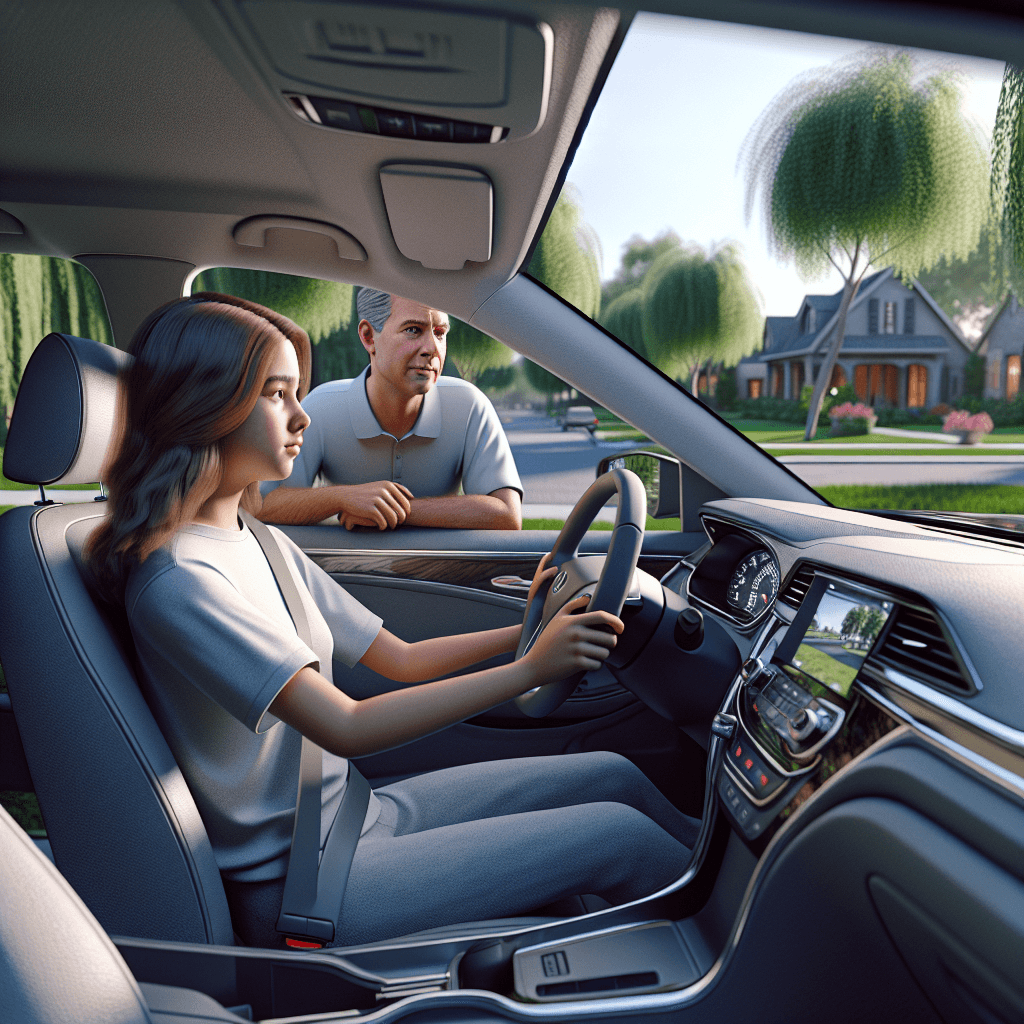
If you just added your teen to your San Francisco policy and saw your premium jump $2,400–$4,200 a year, you're not alone. Here's how to cut that increase by stacking California-mandated discounts with city-specific strategies.
What Adding a Teen Driver Costs in San Francisco
Adding a 16-year-old driver to a parent's auto policy in San Francisco typically increases the annual premium by $2,400–$4,200, depending on the carrier, vehicle, and coverage level. That range reflects San Francisco's unique risk profile: dense urban traffic, high vehicle theft rates in certain neighborhoods, and elevated collision frequency compared to suburban California cities. A parent paying $1,800/year for their own full coverage policy should expect to pay roughly $4,200–$6,000/year once the teen is added.
The cost variation within San Francisco is substantial. A teen driver garaged in the Sunset District (ZIP 94122) may generate a lower surcharge than the same teen garaged in the Mission (ZIP 94110) or Tenderloin (ZIP 94102), where comprehensive claims for theft and vandalism are significantly higher. According to the California Department of Insurance, ZIP code is one of the top three rating factors carriers use after driver age and driving record, and parents often don't realize they can designate the garaging location where the vehicle is parked overnight — which may differ from the parent's primary residence if the teen attends college locally or parks at a workplace.
Most San Francisco families see the steepest increase when adding a 16-year-old with a learner's permit who has just passed the California DMV written test. The surcharge moderates slightly at age 17 after the provisional license is issued, drops further at 18 when the full license is available, and declines meaningfully at 19 and again at 21 as the driver accumulates claim-free years. A male 16-year-old driver typically costs 10–15% more to insure than a female driver of the same age, all else equal, due to collision frequency data tracked by the Insurance Institute for Highway Safety. liability insurance
California's Graduated Licensing Law and How It Affects Your Coverage
California operates a three-stage Graduated Driver Licensing (GDL) program that directly impacts both your teen's legal driving privileges and your insurance decisions. Stage one is the learner's permit, available at age 15½, requiring 50 hours of supervised driving (10 at night) and held for at least six months. Stage two is the provisional license, available at age 16 after passing the behind-the-wheel test, which prohibits driving between 11 PM and 5 AM and restricts passengers under 20 for the first year. Stage three is the full license, available at age 18 with no GDL restrictions.
From an insurance perspective, your teen must be listed on your policy as soon as they receive a learner's permit — even though they're not driving alone. California law requires all household members with a driver's license or permit to be listed as drivers on the policy, and failing to disclose a permit-holding teen can void coverage if they're involved in a collision during supervised driving. Most carriers charge 30–50% of the full teen surcharge during the permit phase, then the full surcharge once the provisional license is issued.
The GDL restrictions create a coverage decision point for parents: whether to carry collision and comprehensive on the vehicle the teen drives. If your teen is driving a paid-off 2012 Honda Civic worth $6,000, the annual cost of collision and comprehensive coverage in San Francisco may run $800–$1,200 — potentially more than the vehicle's depreciated value over two years. Many San Francisco parents choose liability-only coverage during the provisional license period, then add collision once the teen has six months of claim-free driving. The nighttime driving restriction reduces, but does not eliminate, collision risk during this phase.
See what adding a teen driver actually costs in your state
Compare quotes from carriers that offer good student discounts — most parents find savings they didn't know were available.
Get Your Free Quote✓ Good Student Discounts✓ No Obligation✓ Licensed Carriers✓ All 50 States
Add to Parent Policy vs. Separate Policy: The San Francisco Math
In nearly all cases, adding your teen to your existing San Francisco policy costs less than purchasing a separate policy in the teen's name. A standalone policy for a 16-year-old driver in San Francisco typically runs $6,000–$9,500 annually for state minimum liability coverage, compared to the $2,400–$4,200 incremental cost of adding them to a parent policy with full coverage already in place. The savings come from multi-car discounts, multi-policy bundling, and the parent's established claim history and credit-based insurance score.
There are two scenarios where a separate policy makes financial sense for San Francisco families. First, if the parent has multiple at-fault accidents or a DUI on their record and is already paying high-risk rates, adding a teen could push the combined premium above the cost of two separate policies with a carrier willing to write new business for the teen independently. Second, if the teen will attend college more than 100 miles from San Francisco and take the family vehicle with them, some carriers require the policy to be rewritten in the teen's name with the school's garaging ZIP code — and at that point, shopping a separate policy may yield better rates.
The distant student discount is the exception that changes this calculation. If your teen attends UC Berkeley, Stanford, or another school more than 100 miles away and does not take a vehicle, most carriers offer a 10–35% discount on the teen driver surcharge. That discount applies because the teen is no longer a regular operator of the insured vehicle. To qualify, you'll need to provide proof of enrollment and confirm the student does not have regular access to a car at school. This discount is carrier-discretionary in California, not mandated by law, so you must ask for it explicitly — insurers rarely apply it automatically.
Stacking Discounts: Good Student, Telematics, and Driver Training
California law mandates that insurers offer a good student discount to drivers under age 25 who maintain a B average or equivalent GPA. In San Francisco, this discount typically reduces the teen surcharge by 10–25%, translating to $240–$1,000 in annual savings. Most carriers require proof at initial application — a report card, transcript, or letter from the school registrar — and then re-verification every six months or annually. The critical mistake parents make is not submitting renewal documentation mid-policy when a new semester ends or school year begins, causing the discount to lapse silently until the next policy renewal when the rate jumps back up.
Telematics programs — where the teen's driving is monitored via smartphone app or plug-in device — offer participation discounts of 5–10% immediately upon enrollment, with potential performance discounts up to 30–40% based on safe driving behavior over 90–180 days. In San Francisco's stop-and-go traffic, the metrics that matter most are hard braking events, nighttime driving (flagged even during legal hours for teen drivers), and phone use while the vehicle is in motion. Programs like State Farm's Steer Clear, Allstate's Drivewise, and Progressive's Snapshot are widely available, but the savings vary significantly by carrier and by how your teen actually drives.
California does not mandate a discount for driver training, but most major carriers offer 5–15% off for teens who complete an approved driver education course beyond the state's minimum requirement. The state requires all drivers under 17½ to complete driver education and driver training to receive a provisional license, so this discount applies when your teen completes additional defensive driving coursework through AAA, a private driving school, or an online provider approved by the California DMV. You'll need a completion certificate to claim the discount, and it typically remains in effect until age 21 or 25 depending on the carrier. California teen driver insurance
Which San Francisco Carriers Offer the Lowest Teen Rates
No single carrier consistently offers the lowest rate for teen drivers in San Francisco, because each insurer weights rating factors differently — and the factors that determine your current rate (your age, claim history, credit score, vehicle) interact unpredictably with your teen's age and gender. However, pattern analysis of publicly filed rate data shows that CSAA (AAA Northern California), Wawanesa, and GEICO tend to produce competitive quotes for parents with clean records adding a first teen driver, while State Farm and Farmers often win on price when multiple discounts (good student + telematics + multi-car) are stacked.
Parents should request quotes from at least four carriers, and specifically test how each weights the discounts you're eligible for. Some carriers front-load telematics discounts with a high participation incentive but modest performance upside; others offer minimal upfront savings but deep discounts after six months of safe driving data. The good student discount varies from 10% to 25% across carriers for the identical transcript, and driver training discounts range from 0% (not offered) to 15%. The only way to surface this variation is to provide the same driver, vehicle, and coverage information to multiple carriers and compare the post-discount premium.
For families with teens driving high-value or financed vehicles, the cost of collision and comprehensive coverage varies more across carriers than the liability surcharge does. San Francisco's high theft rate for certain makes and models (Honda Accord, Toyota Camry, older pickup trucks) means comprehensive premiums can swing by $400–$800 annually for the same vehicle depending on the insurer's theft-recovery data and the garaging ZIP code's loss history. If your teen drives a vehicle on the National Insurance Crime Bureau's Hot Wheels most-stolen list, shopping specifically for lower comprehensive rates becomes a higher-leverage decision than chasing small liability discounts.
What Coverage Your Teen Actually Needs in San Francisco
California requires minimum liability coverage of 15/30/5: $15,000 per person for bodily injury, $30,000 per incident, and $5,000 for property damage. These limits are dangerously inadequate for a teen driver in San Francisco, where a single-car collision with another vehicle can easily generate $30,000–$75,000 in combined medical and property damage claims. Most insurance professionals recommend 100/300/100 as a realistic minimum for families with assets to protect, and 250/500/100 if the household owns property or has significant retirement savings that could be targeted in a liability lawsuit.
Collision and comprehensive are optional unless your vehicle is financed or leased. For a teen driving a paid-off older vehicle worth under $5,000, many San Francisco parents choose to drop collision coverage and accept the risk of paying out-of-pocket to replace the vehicle if the teen causes a collision. Comprehensive remains valuable even on older cars in San Francisco due to break-in and theft frequency — a smashed window and stolen belongings is a $500–$1,200 loss that comprehensive covers after the deductible. If you do carry collision, consider a $1,000 deductible instead of $500 to reduce the premium; the savings over two years often exceed the deductible difference, and most parents prefer to self-insure minor teen fender-benders to avoid a claim on record.
Uninsured and underinsured motorist coverage (UM/UIM) is critical in California, where the uninsured driver rate is estimated at 15–17% statewide and higher in some urban areas. UM/UIM covers your teen's injuries and vehicle damage if they're hit by a driver with no insurance or inadequate liability limits. This coverage typically adds $100–$250 annually to a San Francisco policy and should match your liability limits. It's one of the few coverages where the cost-benefit calculation tilts heavily toward carrying it, especially for a teen driver with limited defensive driving experience navigating San Francisco's congested streets and intersections.