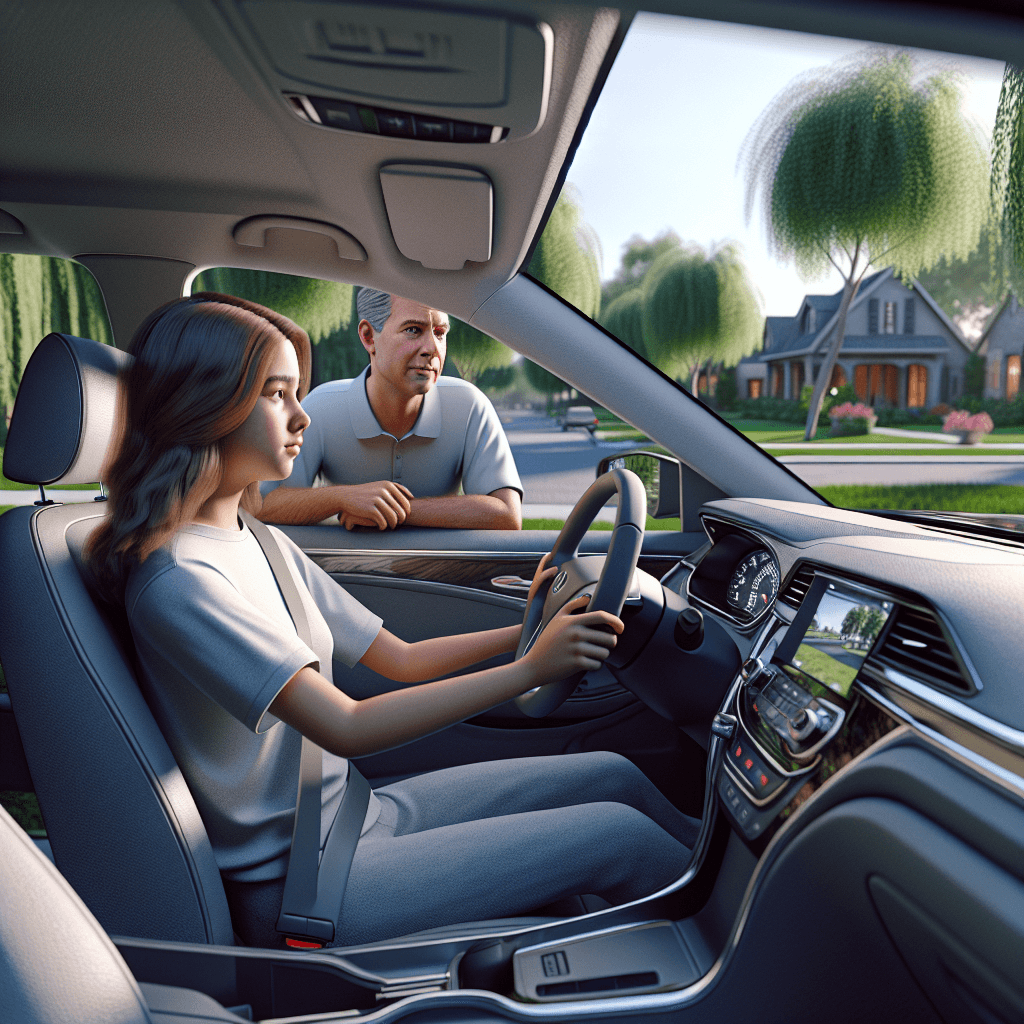
Your teen just got their license in another state and wants to drive your Pennsylvania-registered vehicle. Whether you're spending the summer here or moved mid-year, the answer depends on residency rules most parents don't know exist.
When Pennsylvania Accepts an Out-of-State Teen Driver License
Pennsylvania allows any validly licensed driver from another state to operate a vehicle here as long as they remain a non-resident. For teens, this creates a narrow window: your 16-year-old who got licensed in Ohio can legally drive your Pennsylvania-registered car during summer visits, college breaks, or while you're between moves. The license remains valid as long as Pennsylvania is not their primary residence.
The residency trigger is what catches parents off guard. Pennsylvania law requires anyone who moves here to surrender their out-of-state license and apply for a Pennsylvania license within 60 days of establishing residency. Residency is defined as living here with intent to remain, not by lease terms or voter registration. If your teen attends high school here full-time, lives with you year-round, or moved here permanently mid-year, the 60-day clock started on move-in day.
After 60 days, the out-of-state license becomes invalid for Pennsylvania driving. Your teen is now an unlicensed driver in the eyes of Pennsylvania law, even though the physical license looks fine and hasn't expired. This is not a grace period extension issue. The license stops being recognized entirely.
How Insurance Coverage Responds to an Invalid Out-of-State License
Carriers do not typically verify residency status when you add a teen driver to your Pennsylvania policy. If your teen holds a valid New Jersey or Maryland license, most insurers will note the out-of-state license number, confirm the issue date and class, and add the driver. The policy lists them as a covered driver. Premium increases as expected for a teen driver, typically $1,800–$3,200 annually depending on age, gender, vehicle assignment, and coverage limits.
The coverage failure happens at claim time. If your teen causes an accident after the 60-day residency window has closed, the carrier will investigate licensure as part of standard claims review. When they discover the out-of-state license is no longer valid under Pennsylvania residency law, they can deny the collision and comprehensive portions of the claim under the policy's valid license requirement. Liability coverage typically still applies to protect third parties, but damage to your own vehicle and any medical payments or personal injury protection for your teen may be denied entirely.
This is not a misrepresentation issue unless you affirmatively stated the teen was a non-resident when applying for coverage. It is a licensure validity issue. The policy requires all listed drivers to hold valid licenses. Once the out-of-state license becomes invalid due to residency, that condition is breached even if the carrier never asked about residency status and you never thought to update them.
See what adding a teen driver actually costs in your state
Compare quotes from carriers that offer good student discounts — most parents find savings they didn't know were available.
Get Your Free Quote✓ Good Student Discounts✓ No Obligation✓ Licensed Carriers✓ All 50 States
Pennsylvania Graduated Driver Licensing Rules for Newly Transferred Teens
When your teen transfers their out-of-state license to Pennsylvania, they do not start over from scratch, but Pennsylvania does apply its own Graduated Driver Licensing restrictions based on the teen's age and experience, not the credential they're surrendering. If your 16-year-old holds a full unrestricted license from a state with less stringent GDL rules, Pennsylvania will issue a Junior Driver's License with the state's standard GDL restrictions intact.
Pennsylvania's Junior License phase runs from age 16 until 6 months after the 17th birthday, assuming no violations. During this period, no more than one passenger under 18 who is not a family member is allowed unless a parent or guardian age 21 or older is in the vehicle. Nighttime driving is prohibited between 11 p.m. and 5 a.m. unless traveling to or from work or a school-sponsored event. All occupants must wear seat belts. Cell phone use is banned entirely, including hands-free, until age 18.
If your teen is 17 or older when transferring the license, Pennsylvania will issue a standard junior or unrestricted license depending on how long they've held the out-of-state credential and their violation history. The state DMV evaluates transfer applicants individually. Expect to provide the original out-of-state license, proof of identity, proof of Social Security number, two proofs of Pennsylvania residency, and payment for the license fee. Most teens will need to pass a vision screening but not a road test if transferring from another U.S. state with comparable licensing standards.
How the License Transfer Affects Your Pennsylvania Auto Insurance Rate
Transferring your teen's out-of-state license to a Pennsylvania credential does not reset the driver experience clock for insurance rating purposes in most cases. Carriers price based on years licensed and claims history, not the state that issued the current plastic card. If your teen has been licensed for 18 months in Virginia and you transfer them to a Pennsylvania Junior License, most carriers will still credit them with 18 months of experience when calculating the teen driver surcharge.
What does change is discount eligibility. Pennsylvania does not mandate a good student discount, but most major carriers writing here offer one requiring a 3.0 GPA or B average. That discount typically applies regardless of which state issued the license, but some carriers require the student to attend school in Pennsylvania to qualify. If your teen transferred mid-year and is still finishing the school year remotely or attending a prior-state school, confirm with your carrier whether the good student discount still applies or if they require current Pennsylvania school enrollment.
The driver training discount is more variable. Pennsylvania does not require driver education to obtain a Junior License, but carriers offering a driver training discount here generally accept completion certificates from other states as long as the course met that state's approved curriculum standards. If your teen completed driver education before moving, request an official certificate from the prior state's training provider and submit it to your Pennsylvania carrier. The discount, typically 5–10 percent for three years, often is not applied automatically when transferring coverage mid-term.
What to Do When Your Teen Moves to Pennsylvania with an Out-of-State License
Start the license transfer process within the first 30 days of establishing Pennsylvania residency, even though the legal deadline is 60 days. Appointments at Pennsylvania DMV centers often extend 2–3 weeks out in suburban Philadelphia and Pittsburgh areas, and any documentation issues discovered at the appointment push the process further. Waiting until day 55 leaves no margin for correction if the DMV requests additional residency proofs or flags an issue with the out-of-state license.
Notify your auto insurance carrier the same week you begin the transfer process. Provide the out-of-state license number, issue date, and state, and inform them you are transferring to a Pennsylvania license. Ask explicitly whether the teen remains a covered driver during the transfer window and what documentation the carrier needs once the Pennsylvania license is issued. Most carriers will continue coverage seamlessly, but a few require the new license number and state to be updated in their system within a specific timeframe to avoid a lapse notation.
If your teen is 16 and transferring from a state that issued an unrestricted license at 16, prepare them for Pennsylvania's Junior License restrictions. The passenger and nighttime limits are stricter than many states, and violations carry points that extend the Junior License period. A single violation during the Junior License phase adds six months to the restriction period. Two or more violations require completing a PennDOT-approved remedial driver improvement course before progressing to an unrestricted license. These violations also increase insurance rates significantly, typically adding $400–$800 annually for 3–5 years depending on the severity.
When an Out-of-State College Student Can Keep Their Home-State License
Pennsylvania does not require out-of-state college students to transfer their home-state licenses as long as they maintain legal residency in their home state. If your 18-year-old attends Penn State, Pitt, or Temple but remains a legal resident of New Jersey with a New Jersey license, they can drive in Pennsylvania on that credential for the duration of their enrollment without transferring. This is the clearest exception to the 60-day residency transfer rule.
For insurance purposes, your options depend on where the vehicle is registered and whether your teen keeps a car on campus. If your teen remains on your out-of-state family policy and does not bring a vehicle to Pennsylvania, most carriers apply a distant student discount that removes or significantly reduces the teen surcharge. The discount typically requires the school to be more than 100 miles from home and proof the student does not have regular access to a household vehicle. This can reduce your annual premium by $1,200–$2,400 compared to keeping the teen rated as a primary driver.
If your teen brings a vehicle registered in your home state to Pennsylvania for school, coverage continues under your existing policy as long as the vehicle remains registered at your home-state address. Pennsylvania does not require students to re-register vehicles titled and insured in another state. If your teen will drive a vehicle registered and insured in Pennsylvania, they must be listed on the Pennsylvania policy regardless of which state issued their license, and the full teen surcharge applies.