Car Insurance for Teen Drivers in Honolulu: What Parents Pay
Compare Teen Driver RatesWhat Adding a Teen Driver Actually Costs Honolulu Parents
Adding a 16-year-old driver to a parent's policy in Honolulu typically increases the annual premium by $1,800–$3,000, or roughly $150–$250 per month. That's the sticker shock number you're dealing with — and it's higher than many mainland states because Hawaii requires Personal Injury Protection (PIP) coverage as part of its no-fault system, which adds to the base cost before you even factor in your teen's risk profile.
The wide range depends on three primary factors: the vehicle your teen will drive most often, your current coverage limits, and whether your teen is classified as an occasional or primary driver of a specific vehicle. If your teen is listed as the primary driver of an older sedan, you're looking at the lower end. If they're the primary driver of a newer SUV or truck, expect the higher end or beyond.
Hawaii's no-fault system means every driver must carry $10,000 in PIP coverage, which pays for medical expenses and lost wages regardless of who caused an accident. For teen drivers — who statistically have higher accident rates — this mandatory coverage drives up the base premium more than in tort states where liability-only policies are cheaper. The Insurance Research Council found that no-fault states typically see 15–25% higher premiums than tort states for the same coverage profile, and that gap widens when you add a high-risk driver like a teen. Hawaii's graduated licensing requirements collision coverage
Hawaii's Mandated Good Student Discount: How to Lock It In
Hawaii is one of the few states where insurers are required by law to offer a good student discount — it's not carrier-discretionary. Under Hawaii Revised Statutes §431:10C-307, every auto insurer operating in the state must provide a discount to unmarried drivers under 25 who maintain a B average or equivalent. Most carriers apply a 10–20% reduction to the portion of the premium attributable to the teen driver, which translates to roughly $180–$600 in annual savings for Honolulu families.
The catch: you have to request it and provide documentation. Carriers won't automatically apply it when you add your teen. You'll need to submit a report card, transcript, or a letter from the school registrar showing at least a 3.0 GPA. Some insurers accept the principal's signature on a form; others require official transcripts. Check your carrier's specific documentation requirements — GEICO and State Farm typically accept report cards, while others may want something more formal.
Here's what most parents miss: the discount must be renewed. Most carriers require updated proof every six months or annually. If you don't submit it proactively, the discount quietly drops off mid-policy. Set a recurring calendar reminder for the end of each semester to submit updated grades. If your teen's GPA dips below 3.0 one semester, you lose the discount for that period — but you can reinstate it as soon as grades recover.


Add to Your Policy or Get a Separate Policy? The Hawaii-Specific Math
In almost every case, adding your teen to your existing Honolulu policy is significantly cheaper than buying them a separate policy. A standalone policy for a 16- or 17-year-old driver in Hawaii typically runs $400–$600 per month because it includes the full cost of PIP, liability, and any optional coverages without the benefit of multi-car, multi-policy, or loyalty discounts you've already earned on your own policy.
When you add your teen to your policy, they're rated as an additional driver on your existing coverage structure. You're paying the incremental risk cost — not rebuilding coverage from scratch. Your existing discounts (homeowner bundle, safe driver history, loyalty tenure) still apply to your portion of the premium, which keeps the blended rate lower. For most Honolulu families, adding the teen to the parent policy costs $1,800–$3,000 annually, while a separate policy for the same teen costs $4,800–$7,200.
The rare exception: if your teen will be driving a high-value vehicle (newer model worth $40,000+), and you carry low liability limits on your own policy (the state minimum of 20/40/10), the combined risk exposure might push your blended rate high enough that a separate policy with higher deductibles and lower coverage limits could be cheaper. Run quotes both ways, but for most families with moderate vehicles and standard coverage, keeping the teen on the parent policy is the clear winner.
How Hawaii's Graduated Licensing Law Affects Your Coverage
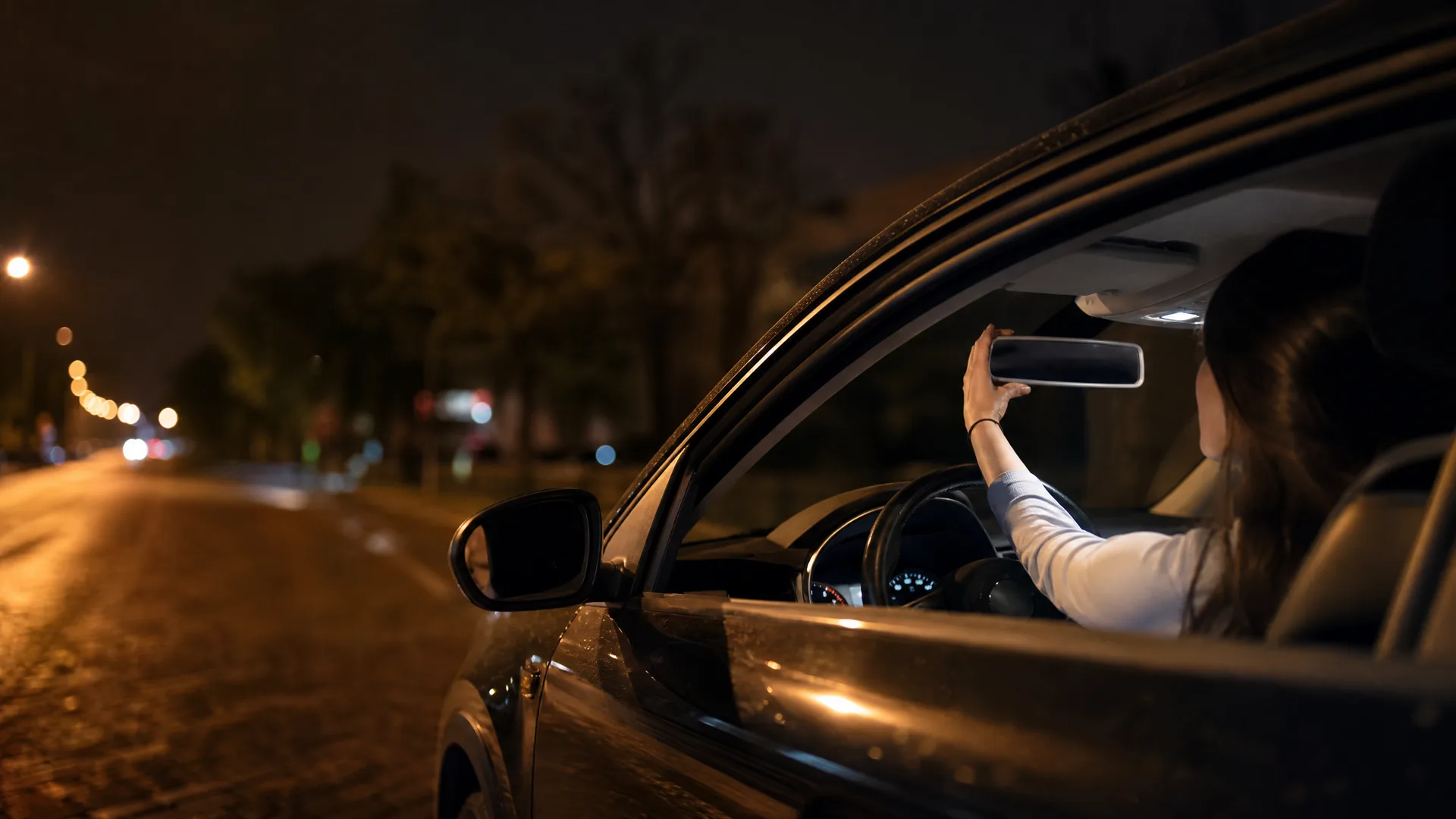
Hawaii's graduated driver licensing (GDL) program restricts when and how your teen can drive during the provisional license phase, which lasts until age 17. For the first six months after getting a provisional license at 16, your teen cannot drive between 11 p.m. and 5 a.m. unless accompanied by a licensed driver age 21 or older, and they cannot transport passengers under 18 who aren't immediate family members. After six months, the nighttime restriction shifts to midnight to 5 a.m.
These restrictions don't directly reduce your insurance premium — your carrier charges based on overall risk, not the GDL phase — but they do matter for claims. If your teen is involved in an accident while violating GDL restrictions, your insurer will still cover the claim (assuming the policy is active and the teen is a listed driver), but the violation could be used as evidence of negligence in a liability dispute. More importantly for your wallet: a GDL violation is a traffic citation that will appear on your teen's record and likely increase your premium at the next renewal.
Some Honolulu parents ask whether they can delay adding their teen to the policy until they have a full license at 17. The answer is no — Hawaii law requires that all household members of driving age be either listed on your policy or explicitly excluded. If your teen has a permit or provisional license and access to your vehicles, they must be listed. Failing to disclose them is material misrepresentation, which can void your coverage entirely if an accident occurs. liability insurance limits

Add Your Teen Without Doubling Your Bill
Compare Teen Driver Rates
Vehicle Choice and How It Changes Your Teen Driver Premium
The vehicle your teen drives most often has an outsized impact on your Honolulu premium. Insurers classify your teen as either an occasional driver (driving any household vehicle but not primarily one specific car) or the principal operator of a specific vehicle. If your household has multiple cars, and you can designate your teen as the principal operator of the least expensive, lowest-risk vehicle, you'll pay significantly less.
For example: if your household has a 2015 Honda Civic and a 2022 Toyota 4Runner, and you list your teen as the primary driver of the Civic, your increase might be $1,800–$2,200 annually. If they're listed as the primary driver of the 4Runner, expect $2,800–$3,500 or more. Newer vehicles with higher replacement costs drive up collision and comprehensive premiums, and larger vehicles like trucks and SUVs have higher liability costs because they cause more damage in accidents.
If you're buying a car specifically for your teen, older paid-off sedans or compact cars are the most insurance-friendly options. You can drop collision and comprehensive coverage entirely on an older vehicle (if it's paid off and worth less than $3,000–$4,000), which significantly reduces the teen-specific portion of your premium. You're still paying for liability and PIP — Hawaii's mandatory coverages — but eliminating the collision/comprehensive component can cut $600–$1,200 annually. Just make sure your teen understands that if they total the car, insurance won't pay to replace it.

Discount Stacking: Driver Training, Telematics, and Distant Student
Beyond the mandated good student discount, three additional discounts can further reduce your Honolulu teen driver premium: driver training (5–10% off), telematics programs (10–20% off), and the distant student discount (up to 30–40% off if applicable). Stacking all three with the good student discount can reduce the teen-specific portion of your premium by 30–50%, turning a $2,400 annual increase into $1,200–$1,700.
Hawaii doesn't mandate a driver training discount the way it does for good student, but most major carriers offer it. Your teen must complete an approved driver education course — typically 30 hours of classroom instruction plus 6 hours of behind-the-wheel training. Programs like those offered through Hawaii public high schools or private driving schools (AAA, DriversEd.com) qualify. You'll need a certificate of completion to submit to your insurer. The discount typically applies for three years or until your teen turns 21, depending on the carrier.
Telematics programs (State Farm's Drive Safe & Save, Progressive's Snapshot, GEICO's DriveEasy) monitor driving behavior through a smartphone app or plug-in device. Safe driving — minimal hard braking, no speeding, limited nighttime driving — earns discounts of 10–20% or more. For teen drivers, these programs are particularly valuable because they provide real-time feedback and create accountability. The distant student discount applies if your teen attends college more than 100 miles from home and doesn't take a car. If your teen goes to a mainland university or even UH Hilo from Honolulu without a vehicle, you can remove them as an active driver and cut 30–40% off the teen-specific premium increase while keeping them listed on the policy for holiday and summer breaks.
What Coverage Level Makes Sense for Your Honolulu Teen Driver
Hawaii's minimum required coverage is 20/40/10 liability ($20,000 per person for bodily injury, $40,000 per accident, $10,000 for property damage) plus $10,000 in PIP. That minimum is almost never adequate for families with assets to protect. If your teen causes a serious accident and you're carrying only the minimum, you're personally liable for damages beyond your policy limits — and Honolulu's cost of living and medical expenses make that exposure very real.
For most Honolulu families, 100/300/100 liability limits ($100,000 per person, $300,000 per accident, $100,000 property damage) provide a reasonable baseline. The cost difference between minimum coverage and 100/300/100 is typically $300–$600 annually — meaningful but manageable compared to the financial risk of underinsuring. If you own a home or have significant savings, consider an umbrella policy (usually $1 million in coverage starting around $200–$300/year) that sits on top of your auto policy and protects your assets in a catastrophic claim.
Collision and comprehensive are optional in Hawaii if your vehicle is paid off, but they're required by lenders if you're financing or leasing. If your teen drives an older car worth less than $4,000, many parents skip collision/comprehensive entirely and self-insure the vehicle. If the car is newer or financed, keep the coverage but consider raising deductibles to $1,000 or even $1,500 to lower the premium. A $1,000 deductible might save you $400–$700 annually compared to a $500 deductible — just make sure you have that amount set aside in case of a claim.
Frequently Asked Questions
Can I exclude my teen driver from my Honolulu auto insurance policy?
Yes, but only if your teen will never drive any vehicle on your policy — not even in an emergency. You must sign a named driver exclusion form with your insurer, and if your excluded teen drives and has an accident, your policy will not cover it. Most Honolulu parents find it's safer and only moderately more expensive to list the teen and restrict keys rather than formally exclude them.
How much does the good student discount actually save on Hawaii teen driver insurance?
Hawaii's mandated good student discount typically reduces the teen-specific portion of your premium by 10–20%, which translates to $180–$600 in annual savings for most Honolulu families. You must provide proof of a B average (3.0 GPA or higher) and renew documentation every six months or annually to keep the discount active.
Does Hawaii require Personal Injury Protection (PIP) for teen drivers?
Yes. Hawaii is a no-fault state, and every driver — including teens — must carry at least $10,000 in PIP coverage, which pays for medical expenses and lost wages regardless of fault. This mandatory coverage is one reason adding a teen driver in Honolulu costs more than in many mainland tort states.
Should I buy my Honolulu teen an old car to save on insurance?
Usually, yes. An older paid-off sedan or compact car lets you drop collision and comprehensive coverage entirely, cutting $600–$1,200 annually from your premium while still maintaining Hawaii's required liability and PIP. Just make sure your teen understands that if they total the car, insurance won't replace it.
What happens to my premium when my teen goes to college on the mainland?
If your teen attends college more than 100 miles away and doesn't take a car, you qualify for the distant student discount — typically a 30–40% reduction on the teen-specific portion of your premium. Your teen stays listed on your policy for breaks and visits home, but you're not paying the full active-driver rate while they're away without a vehicle.
Related Articles

Chicago Teen Driver Insurance: Coverage & Cost Guide
4/2/2026

Teen Driver Insurance Winston-Salem: Parent Cost Guide
4/2/2026
Who Qualifies for CA Good Student Teen Discount
5/19/2026

Oakland Teen Driver Insurance: Coverage Cost Guide
4/2/2026
Hiding a Teen Driver: What Happens When Caught
5/19/2026

Teen Driver Insurance Irvine: What Parents Pay
4/2/2026