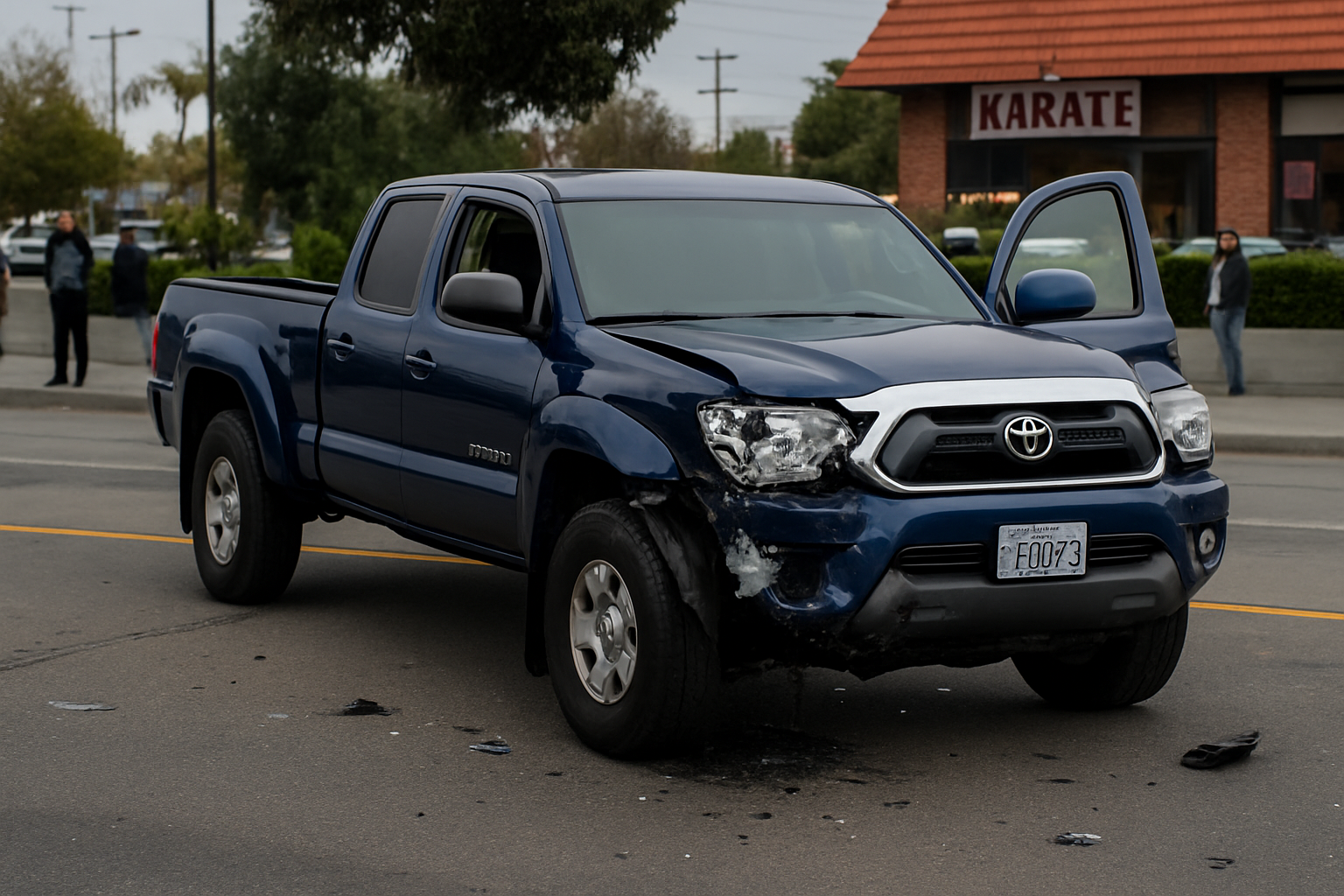
If you just got a quote for adding your teen driver in Tacoma, the $2,200–$3,800 annual increase probably stopped you cold. Here's what parents in Pierce County are actually paying, which discounts stack, and how Washington's graduated licensing law affects your coverage decisions.
What Adding a Teen Driver Costs in Tacoma
Adding a 16-year-old driver to a parent's policy in Tacoma typically increases the annual premium by $2,200 to $3,800, depending on the carrier, your current coverage level, and the vehicle your teen will drive. That's higher than Washington's state average of $1,900–$3,200, reflecting Pierce County's elevated accident rates and Tacoma's urban traffic patterns.
The largest increases occur when adding a teen male driver to a policy with a newer vehicle and full coverage. A Tacoma parent with State Farm paying $1,400 annually for their own coverage might see their total premium jump to $4,800–$5,200 after adding a 16-year-old son. Female teen drivers typically generate increases 10–15% lower, though this gap narrows significantly by age 18.
These figures assume you're adding the teen to your existing policy rather than purchasing a separate policy. A standalone policy for a 16-year-old in Tacoma — rare but sometimes pursued when a parent has a poor driving record — can run $6,000–$9,000 annually. For nearly all Tacoma families, adding the teen to the parent policy is the financially sound choice.
Washington's Graduated Driver Licensing Rules and Your Coverage
Washington's Intermediate License restricts drivers under 18 from carrying passengers under 20 (except family members) for the first six months, and prohibits driving between 1 a.m. and 5 a.m. unless for work or school. These restrictions do not directly reduce your insurance premium — carriers price based on the teen's presence on the policy, not their licensing phase — but they do matter for claims.
If your teen is involved in an accident while violating GDL restrictions, your insurer will still cover the claim under your liability coverage, but the violation becomes part of the claims record and will affect future renewals. Some carriers apply surcharges at renewal if a teen driver accumulates violations during the intermediate period. Tacoma parents should track their teen's GDL compliance not to avoid coverage gaps, but to avoid compounding the already high cost at the first renewal.
Washington requires all teen drivers to complete a state-approved driver training course before receiving an intermediate license. Completion of this course qualifies your teen for the driver training discount, which typically reduces the teen portion of the premium by 5–10%. Most Tacoma-area carriers apply this discount automatically when you add a teen who holds an intermediate license, but you should confirm it appears on your updated policy documents. Washington state pages
Discounts That Actually Stack in Washington
Washington is one of the few states that mandates the good student discount by law. Under RCW 48.19.035, insurers must offer a discount to students under 25 who maintain a B average or equivalent. This is not optional for carriers, and the discount must be at least substantial enough to reflect the reduced risk — most Tacoma carriers apply 10–20% to the teen's portion of the premium.
The mandated nature of this discount matters because you cannot be denied it if your teen qualifies. You'll need to submit proof — a report card, transcript, or letter from the school registrar — but once submitted, the carrier must apply it. Many Tacoma parents don't realize they need to resubmit this documentation every six or twelve months depending on the carrier's renewal cycle. If you don't proactively send updated proof, some carriers will quietly remove the discount mid-policy.
Beyond the good student discount, the highest-impact cost reduction tools for Tacoma families are telematics programs and the distant student discount. Programs like State Farm's Drive Safe & Save or Progressive's Snapshot monitor braking, speed, and nighttime driving. Tacoma teens who avoid hard braking and keep nighttime trips minimal can earn 10–30% reductions. The distant student discount applies when your teen attends college more than 100 miles from home without a car — it removes them as a regular driver and can cut the teen surcharge by 30–60%.
Add to Parent Policy or Separate Coverage?
For the vast majority of Tacoma families, adding the teen to the parent's existing policy is the only financially viable option. A separate policy for a 16–18-year-old in Tacoma runs $6,000–$9,000 annually, compared to a $2,200–$3,800 increase when added to a parent policy. The only scenarios where a separate policy makes sense are when the parent has multiple DUIs, recent at-fault accidents, or a suspended license — situations where the parent's own rate is already severely surcharged.
When you add a teen to your policy in Washington, they are covered under your liability limits. If your teen causes an accident, the claim is paid from your policy, and the at-fault accident appears on your household policy record. This affects your renewal premium regardless of whether the teen was the listed driver. Many Tacoma parents don't realize that their own claims-free discount can be impacted by a teen's at-fault accident, even if the parent wasn't driving.
If your teen will be driving an older vehicle worth less than $5,000, you can drop collision and comprehensive coverage on that vehicle and carry liability-only. This is one of the few cost reduction strategies that doesn't rely on discounts or driver behavior. A 2008 Honda Civic with liability-only might cost $1,800–$2,400 annually for a Tacoma teen driver, compared to $3,200–$4,200 with full coverage. The tradeoff is that damage to the teen's vehicle from an at-fault accident or theft is not covered.
Vehicle Choice and Rate Impact in Tacoma
The vehicle your teen drives has a direct, measurable impact on your premium increase. Insurers assign each vehicle a rating symbol based on repair costs, theft rates, and safety features. A 2015 Honda Accord assigned to your teen will generate a lower premium than a 2015 Ford Mustang, even if both vehicles are paid off and carry identical coverage.
Tacoma's elevated vehicle theft rates — Pierce County consistently ranks in the top five Washington counties for auto theft — make comprehensive coverage more expensive for popular theft targets. If your teen will drive a 1990s Honda Civic or Accord, expect comprehensive premiums to reflect that theft risk. Conversely, vehicles with strong safety ratings and low theft rates, like a Subaru Outback or Toyota Camry, typically generate 15–25% lower premiums than sportier or theft-prone models.
Many Tacoma parents purchase an older vehicle outright for their teen and carry liability-only coverage. This strategy works if you can absorb the financial loss of the vehicle being totaled or stolen. Washington requires minimum liability limits of 25/50/10 — $25,000 per person for injury, $50,000 per accident, and $10,000 for property damage. These minimums are widely considered inadequate. Most insurance professionals recommend 100/300/100 for households with teen drivers, as teens are statistically more likely to cause severe accidents, and a serious injury claim can easily exceed $25,000.
How Tacoma Rates Compare to Spokane, Bellevue, and Seattle
Tacoma's teen driver rate increases are higher than Spokane's but lower than Seattle's and Bellevue's. Spokane parents typically see annual increases of $1,700–$2,900 when adding a teen, reflecting lower population density and accident rates in Eastern Washington. Seattle and Bellevue parents face increases of $2,400–$4,200, driven by higher traffic congestion and collision frequency in King County.
Pierce County's accident rates sit between those extremes. According to the Washington Traffic Safety Commission, Pierce County recorded 8,847 crashes involving drivers aged 16–19 between 2018 and 2022, a rate of approximately 112 crashes per 1,000 teen drivers annually. That's higher than the statewide average of 98 per 1,000 but lower than King County's 121 per 1,000. Insurers price these differences into their rating models, which is why Tacoma parents see higher increases than the state average.
If you live in unincorporated Pierce County or nearby areas like Puyallup, Lakewood, or University Place, your rates may vary slightly from Tacoma proper due to differences in local accident data and population density. Some carriers apply ZIP code-level rating, meaning a family in Puyallup might see a 5–10% lower increase than a family in downtown Tacoma.
What to Do Before You Add Your Teen to Your Policy
Before you call your insurer to add your teen, confirm your current liability limits. If you're currently carrying Washington's minimum 25/50/10, this is the moment to increase to 100/300/100 or higher. The incremental cost of higher liability limits is small compared to the financial exposure of a serious at-fault accident caused by a teen driver. Many Tacoma parents increase liability limits and drop collision coverage on an older vehicle at the same time, which can make the overall increase more manageable.
Gather documentation for every discount your teen might qualify for: a current report card or transcript showing a B average or higher, a certificate of completion from a state-approved driver training course, and proof of college enrollment if your teen will be attending school out of the area without a car. Submitting all of this documentation upfront ensures you don't lose discount eligibility during the first policy period.
Ask your carrier specifically about their telematics program and whether participation is required or optional. Some Tacoma carriers offer the program as opt-in with a small upfront participation discount, then adjust at renewal based on actual driving data. Others require enrollment for teen drivers as a condition of coverage. Understanding the terms before you add your teen helps you set expectations with your teen about driving behavior that will be monitored and scored.