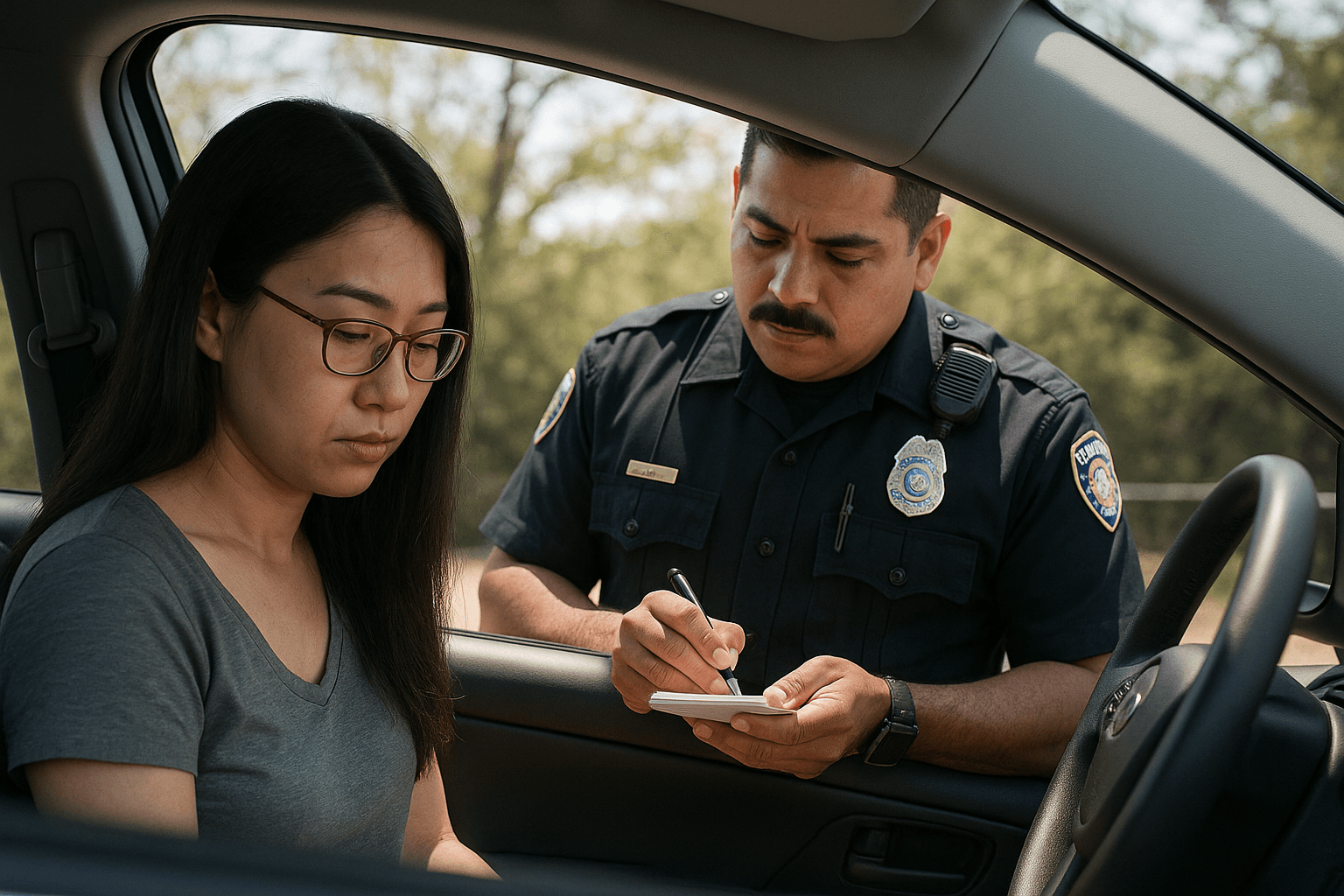
Your teen just got their first speeding ticket in California and you're staring at a premium increase quote that feels impossible. Here's how to find affordable coverage when carriers see your household as high-risk.
How Much Does Adding a Teen With a Speeding Ticket Cost in California?
Adding a 16-year-old driver to a California policy typically increases the annual premium by $2,800–$4,200 for a clean-record teen. A single speeding ticket adds another $800–$1,400 annually on top of that base increase, putting the total annual increase at $3,600–$5,600 depending on the carrier, your zip code, and the vehicles on the policy.
California carriers don't rate the teen in isolation. They rate your household. If your teen is listed as an occasional driver on all vehicles, most carriers apply the teen's violation surcharge to the entire policy, not just the teen's portion. A household with two vehicles and two adult drivers might see their premium jump from $2,400/year to $6,200/year after adding a teen with one ticket.
The cheapest path forward depends on whether you assign the teen to one specific vehicle or keep them rated as an occasional driver across all cars. That single decision changes which carriers quote competitively and how the violation surcharge applies.
Should You Add Your Teen to Your Policy or Get Them Standalone Coverage?
If your teen has a violation and you have multiple vehicles and a clean driving record yourself, splitting your teen onto a standalone policy often costs less for the household than adding them to your existing policy. California carriers price standalone teen policies at $4,800–$7,200/year for a driver with one speeding ticket, but your own policy premium stays unchanged. Total household cost: your current premium plus the standalone teen policy.
When you add the teen to your policy, your premium typically increases by $3,600–$5,600/year and your own rate per vehicle goes up because the household now includes a high-risk driver. Total household cost: often $1,200–$2,400 higher than the split-policy scenario, especially if you're currently rated as a preferred or standard driver.
The break-even point depends on your current rate tier. Parents with clean records paying under $1,800/year for their own coverage almost always save money splitting the teen off. Parents already in a nonstandard tier paying $3,000+/year sometimes save by keeping everyone together and negotiating a multi-car discount with a high-risk carrier.
See what adding a teen driver actually costs in your state
Compare quotes from carriers that offer good student discounts — most parents find savings they didn't know were available.
Get Your Free Quote✓ Good Student Discounts✓ No Obligation✓ Licensed Carriers✓ All 50 States
Which California Carriers Quote Lowest for Teens With One Speeding Ticket?
California Farm Bureau, GEICO, and Progressive typically quote $600–$1,200/year lower than State Farm and Allstate for parents adding a teen with a speeding ticket. California Farm Bureau offers the steepest good student discount in the state at 25% and does not apply the full violation surcharge if the teen is named to only one vehicle on a multi-car policy.
GEICO and Progressive both run usage-based telematics programs that can reduce a speeding ticket surcharge by 10–20% if the teen demonstrates consistent safe driving over 90 days. The discount applies even while the ticket is still on record. State Farm's Steer Clear program offers a similar structure but requires completion before the violation occurs, making it unavailable for parents in your situation.
Wawanesa and Mercury write in California and often quote competitively for teen drivers with violations, but neither offers a telematics program and both apply the full three-year violation surcharge with no early-removal option. If your teen can provide proof of a 3.0 GPA or higher and you can assign them to one specific vehicle, California Farm Bureau or GEICO will typically deliver the lowest household premium.
How to Lower Your Premium With the Good Student Discount
California carriers offer a good student discount ranging from 8% to 25% for teens maintaining a B average or 3.0 GPA. The discount applies to the teen's portion of the premium, not the household total, but on a $5,000/year increase that 25% discount saves $1,250 annually.
You must submit proof at policy inception and again at every renewal. Most carriers accept a report card, transcript, or letter from the school registrar dated within 90 days. If you don't resubmit proof at the 6-month or 12-month renewal, the discount disappears mid-policy without notification and you'll pay the non-discounted rate going forward.
Carriers verify GPA at renewal but rarely audit mid-term. If your teen's grades drop below 3.0 during the policy period, you're not required to report it until renewal. The discount stays in effect until the next renewal date when you must provide updated proof or lose the discount.
Does Driver Training or Defensive Driving Remove the Ticket Surcharge?
Completing a California DMV-licensed driver training course before your teen gets their license qualifies them for a driver training discount of 5–15% with most carriers, but it does not remove or reduce the speeding ticket surcharge once the violation is already on record. The two discounts stack, but they apply to different premium components.
California allows drivers to attend traffic school to keep one moving violation off their public driving record if they request it within 21 days of the ticket and the court approves. If your teen completed traffic school and the ticket does not appear on their DMV record, tell your carrier immediately. The violation should not affect your rate. If the carrier already applied a surcharge, request a re-rate and provide proof of traffic school completion.
If traffic school wasn't an option or your teen didn't complete it in time, the violation stays on record for three years from the conviction date. Defensive driving courses marketed by insurance websites do not remove California moving violations and most carriers do not offer a separate discount for post-violation defensive driving completion.
How Vehicle Assignment Affects Your Rate When Your Teen Has a Ticket
Most California carriers let you assign your teen as the primary driver of one specific vehicle or list them as an occasional driver on all vehicles. If your teen has a speeding ticket and you assign them to your oldest, lowest-value car, the violation surcharge applies primarily to that vehicle's premium, not the household total.
If you list them as an occasional driver on all vehicles, carriers apply the teen's age surcharge and violation surcharge across the entire policy. A household with a 2022 sedan and a 2018 SUV might see both vehicles re-rated at the teen's risk tier, increasing the household premium by $4,800/year instead of $3,200/year with single-vehicle assignment.
California Farm Bureau, Mercury, and Progressive allow named-driver assignment. State Farm and Allstate require teens to be rated as occasional drivers on all household vehicles unless you exclude them in writing from specific cars, which means they have zero coverage if they drive those vehicles even in an emergency.
What Coverage Do You Actually Need for a Teen Driver With a Violation?
California requires 15/30/5 liability minimums, but those limits are dangerously low for a household with a teen driver who already has a speeding ticket on record. If your teen causes an accident and the other party's damages exceed $15,000 per person, you're personally liable for the difference. A single moderate injury claim in California averages $40,000–$80,000.
Carry at least 100/300/100 liability limits if you own a home, have retirement accounts, or earn above $75,000/year. The difference in premium between 15/30/5 and 100/300/100 is typically $180–$280/year, but the liability protection is six times greater. If your teen is driving a vehicle worth under $5,000, you can drop collision and comprehensive on that car and apply the savings toward higher liability limits.
Uninsured motorist coverage is mandatory in California as of 2025 and must match your liability limits unless you reject it in writing. With 17% of California drivers uninsured, keep this coverage active. If your teen is hit by an uninsured driver, this coverage pays for your teen's injuries and vehicle damage up to your policy limits.