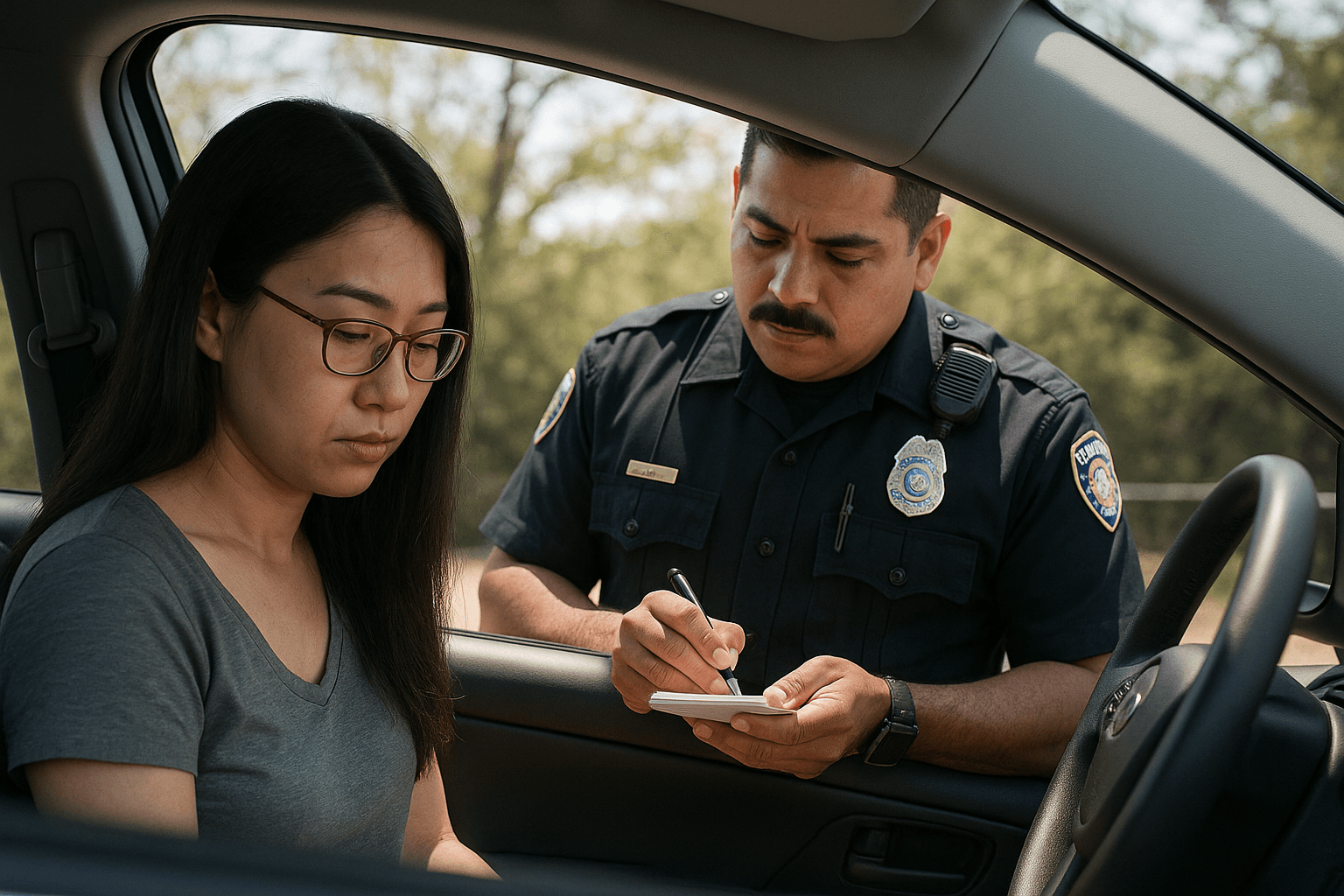
Your teen just got their first speeding ticket and you're staring at a premium increase quote that combines both teen driver surcharge and violation penalty. Here's how to find the lowest rate increase in Illinois and what discounts can offset both factors.
How Much Does Adding a Teen Driver With a Speeding Ticket Cost in Illinois?
Adding a 16-year-old driver to a parent policy in Illinois typically increases the annual premium by $2,200 to $3,800 depending on vehicle and coverage level. A single speeding ticket on top of that adds another $400 to $900 annually for the first year, declining over three years as the violation ages off the record.
The combined impact is not additive. Most carriers apply the teen driver rate multiplier first, then apply the violation surcharge to that already-elevated base. A family paying $1,200 annually before adding the teen might see the premium jump to $3,400 with the teen, then to $4,100 with the ticket factored in.
Illinois does not mandate rate structures for minor violations, so carrier pricing varies widely. State Farm and Country Financial historically apply smaller violation surcharges to young drivers already rated high-risk. Progressive and Allstate apply larger percentage increases but offer deeper telematics discounts that can offset both the teen and violation penalties if the teen demonstrates safe driving habits through the monitoring period.
Should You Add the Teen to Your Existing Policy or Get a Separate Policy?
Adding the teen to your existing policy is almost always cheaper in Illinois, even with a speeding ticket on record. A separate teen-only policy loses access to multi-car, multi-policy, and loyalty discounts that dramatically reduce the per-vehicle cost on a family policy.
A standalone policy for a 16-year-old with one speeding ticket typically costs $5,500 to $8,200 annually for minimum liability coverage in Illinois. That same teen added to a parent policy with two vehicles and homeowners bundling might increase the family premium by $2,800 to $4,200 annually — a difference of $2,700 to $4,000 per year.
The only scenario where a separate policy makes financial sense is when the parent has their own recent violations or accident history that has already moved them into non-standard pricing. In that case, adding a high-risk teen to a high-risk parent policy can trigger surcharges that exceed the cost of two separate policies. Run quotes both ways if the parent policy is already with a non-standard carrier like The General or Direct Auto.
See what adding a teen driver actually costs in your state
Compare quotes from carriers that offer good student discounts — most parents find savings they didn't know were available.
Get Your Free Quote✓ Good Student Discounts✓ No Obligation✓ Licensed Carriers✓ All 50 States
Which Illinois Carriers Offer the Lowest Rates for Teens With One Speeding Ticket?
State Farm, Country Financial, and Auto-Owners consistently quote 15 to 30 percent lower than Progressive, Allstate, or Farmers for Illinois families adding a teen driver with one minor violation. All three offer good student discounts and multi-policy bundling, and all three apply relatively smaller violation surcharges to drivers under 21.
Country Financial writes only in Illinois and a few neighboring states, so they price competitively for local risk pools and often beat national carriers on bundled family policies. State Farm offers a Steer Clear program — a driver improvement course that can reduce the violation surcharge by 10 to 15 percent if completed within six months of the ticket.
Progressive's Snapshot telematics program and Allstate's Drivewise can deliver 20 to 30 percent discounts for safe driving behavior, which offsets both the teen driver and violation surcharges if the teen drives cautiously during the monitoring period. These programs track hard braking, speeding, and nighttime driving. A teen with one speeding ticket who then drives conservatively for six months can end up with a lower rate than a clean-record teen who doesn't use telematics.
How to Stack Discounts to Offset the Speeding Ticket Surcharge
The good student discount — available from every major carrier in Illinois for a 3.0 GPA or higher — reduces the base teen driver premium by 10 to 25 percent depending on carrier. Because the violation surcharge is applied after the teen driver multiplier, reducing that base premium also reduces the dollar amount added by the ticket.
Driver training discounts apply if the teen completed an approved driver education course. Illinois does not mandate this discount, but State Farm, Country Financial, Allstate, and Auto-Owners all offer 5 to 15 percent reductions for proof of completion. The discount typically lasts until age 21 or until the teen is no longer a student.
Telematics programs — Progressive Snapshot, State Farm Drive Safe & Save, Allstate Drivewise — monitor actual driving behavior and can deliver 15 to 30 percent discounts. For a teen with one speeding ticket, demonstrating safe driving through telematics for six months often reduces the combined premium more than any other single intervention. These programs penalize hard braking and speeding incidents, so they only help if the teen drives cautiously during the monitoring window.
How Long Does the Speeding Ticket Affect Your Illinois Premium?
Illinois carriers typically surcharge a minor speeding ticket for three years from the conviction date, with the surcharge declining each year. The first year after conviction carries the full penalty — $400 to $900 annually depending on carrier and speed over the limit. Year two drops to 60 to 75 percent of the original surcharge. Year three drops to 25 to 40 percent.
After three years, the violation falls off the driving record for insurance rating purposes, though it remains visible on the Illinois Secretary of State driving abstract for four to five years. The rate returns to the base teen driver premium at that point, assuming no new violations occur.
Completing a state-approved defensive driving course within six months of the ticket can shorten the surcharge period or reduce the percentage applied by some carriers. State Farm's Steer Clear program and similar offerings from Country Financial allow one violation dismissal per driver if the course is completed before the policy renews.
What Coverage Level Should You Carry for a Teen Driver With a Ticket?
Illinois requires 25/50/20 liability minimums — $25,000 per person for injury, $50,000 per accident, and $20,000 for property damage. Those limits are inadequate for a family with assets to protect, especially when adding a statistically high-risk driver to the policy.
Raising liability limits to 100/300/100 costs an additional $15 to $35 per month on most Illinois family policies and provides meaningful protection if the teen causes a serious accident. The incremental cost is small relative to the base premium increase from adding the teen.
Collision and comprehensive coverage make sense if the teen drives a vehicle worth more than $5,000 or if the vehicle is financed. For an older paid-off vehicle with limited resale value, dropping collision and carrying only liability and comprehensive reduces the premium by 25 to 40 percent. Comprehensive remains inexpensive — typically $8 to $18 per month — and covers theft, vandalism, weather damage, and animal strikes.
Does It Matter Which Vehicle the Teen Drives on Your Illinois Policy?
Carriers in Illinois rate the teen driver against the most expensive vehicle on the policy unless you explicitly assign them to a specific car. If your policy covers a 2022 SUV and a 2012 sedan, call your carrier and request that the teen be rated as the primary driver of the older vehicle. That assignment alone can reduce the teen surcharge by $600 to $1,400 annually.
The vehicle assignment must reflect actual use. If the teen regularly drives the newer vehicle, misrepresenting the assignment constitutes material misrepresentation and can void coverage in an accident. But if the teen genuinely drives the older car to school and for errands while the parent drives the newer vehicle to work, the assignment is accurate and enforceable.
Adding a third inexpensive vehicle specifically for the teen can sometimes reduce the overall premium compared to rating the teen on an existing newer vehicle, especially if the added car qualifies for multi-car discounts that offset its incremental cost. Run quotes both ways before buying a car for the teen.