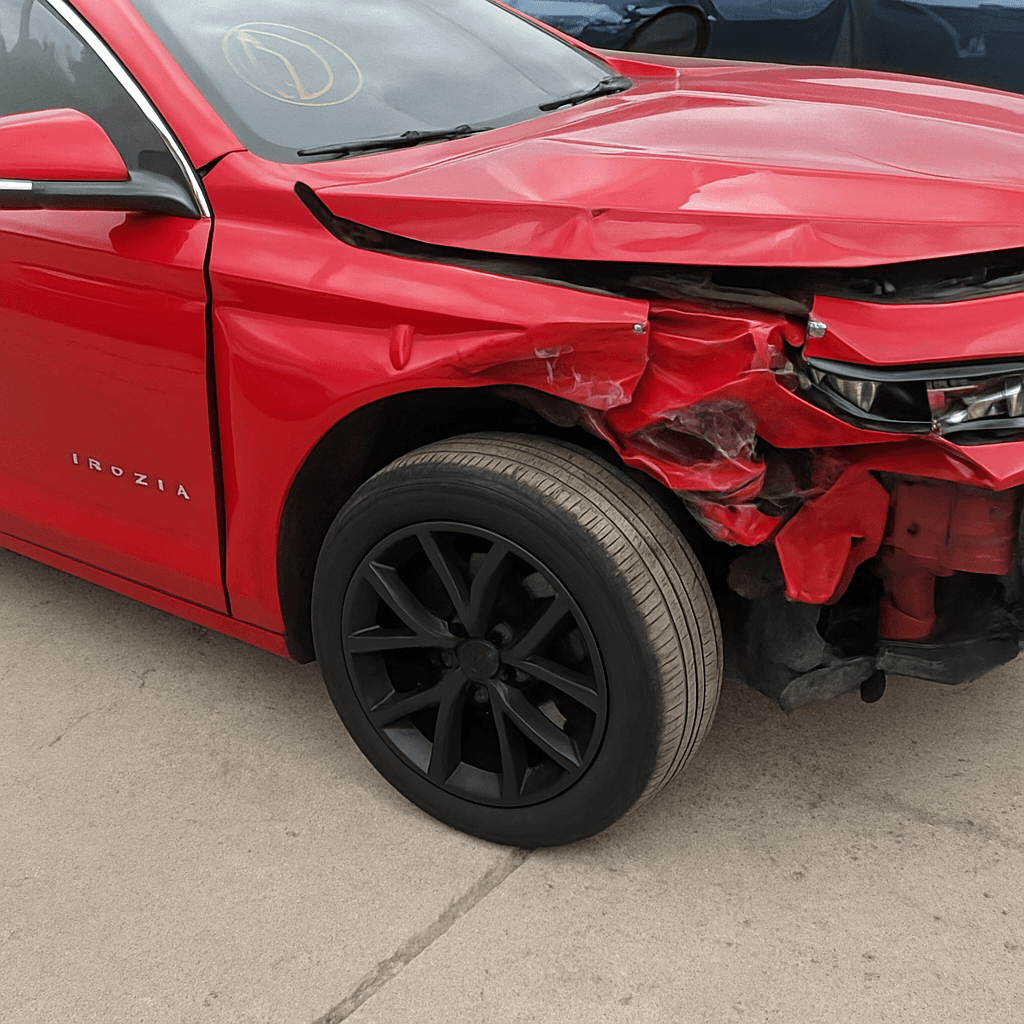
You just got the quote to add your 16-year-old to your Michigan policy and the premium jumped $2,400 a year. Here's how to cut that increase by stacking the good student discount, telematics programs, and vehicle assignment strategies most Michigan carriers offer but never explain upfront.
How Much Adding a Teen Driver Costs Michigan Parents
Adding a 16-year-old to a Michigan auto policy typically increases the annual premium by $2,200-$3,800 depending on your current coverage level, the vehicles on your policy, and your zip code. That translates to $185-$315 per month in additional premium the moment your teen gets their Level 2 Graduated Driver License. The surcharge peaks at age 16 and drops incrementally at 18, 21, and 25.
Michigan's no-fault system amplifies teen driver costs more than most states. Because Personal Injury Protection coverage is mandatory and carries no per-person cap under the default unlimited PIP option, carriers price teen drivers as high-probability claimants for catastrophic injury coverage. Parents who opted down to the $500,000 PIP limit when that became available in 2020 see smaller teen surcharges, but the difference is still $1,800-$3,200 annually.
The vehicle you assign your teen to drives half the rate variation. Assigning a 16-year-old as the primary driver of a 2022 SUV costs 60-80% more than listing them as an occasional driver of a 2012 sedan with liability-only coverage. Most Michigan carriers let you designate driver-vehicle assignments at policy setup, but they don't ask, so parents default to equal assignment across all vehicles and overpay from day one.
Add to Your Policy or Get a Separate Teen Policy
Adding your teen to your existing policy costs less than buying them a separate policy in nearly every Michigan scenario. A standalone policy for a 16-year-old with Michigan's minimum liability limits ($50,000/$100,000/$10,000) and $500,000 PIP runs $4,800-$7,200 annually. The same teen added to a parent policy with multi-car and homeowner bundle discounts already applied adds $2,200-$3,800.
The only time a separate policy makes financial sense is when the parent has multiple violations or accidents and is already in the non-standard market. In that case, adding a teen can push the household into assigned risk territory where premiums exceed $10,000 annually. A teen with a clean learner's permit history may qualify for standard market pricing on their own, especially if they complete driver training and maintain a 3.0 GPA.
Most Michigan parents keep their teen on the family policy until the teen turns 21 or moves out of state for college. The multi-car discount (10-25% depending on carrier) and the ability to assign the teen to an older paid-off vehicle with lower coverage limits outweigh the cost of a separate policy.
See what adding a teen driver actually costs in your state
Compare quotes from carriers that offer good student discounts — most parents find savings they didn't know were available.
Get Your Free Quote✓ Good Student Discounts✓ No Obligation✓ Licensed Carriers✓ All 50 States
Good Student Discount Rules in Michigan
Michigan does not mandate the good student discount, so eligibility and savings vary by carrier. Most Michigan carriers require a 3.0 GPA minimum and reduce teen premiums by 10-25% while the discount is active. The discount typically applies from age 16 through 24 as long as the student remains enrolled full-time and submits proof of GPA every six or twelve months.
Carriers process good student verification differently. Some accept report cards uploaded through the mobile app. Others require official transcripts mailed directly from the school. Some auto-renew the discount if you submitted documentation the prior term; others drop the discount mid-policy if you miss the renewal window and apply it prospectively only after you resubmit.
Parents lose an average of $340 per year by not resubmitting good student documentation on time. Set a recurring calendar reminder for the start of each semester and submit proof within 30 days of the term ending. If your carrier dropped the discount because you missed a deadline, call and ask for retroactive application once you submit current documentation. Some carriers allow it; most do not, but the call costs nothing.
Telematics Programs That Reduce Teen Surcharges
Telematics programs monitor driving behavior through a mobile app or plug-in device and discount premiums for safe driving patterns. Michigan carriers offering telematics for teen drivers include Progressive (Snapshot), State Farm (Drive Safe & Save), Allstate (Drivewise), Nationwide (SmartRide), and Travelers (IntelliDrive). Potential discounts range from 5-30% depending on the program and the teen's actual driving data.
Programs score based on hard braking, rapid acceleration, speed relative to posted limits, nighttime driving, and phone handling while the vehicle is in motion. Teens who drive during Michigan's GDL nighttime restriction window (midnight to 5 a.m. for Level 2 license holders) automatically score lower on most telematics programs, even if the driving itself is smooth, because night hours carry higher risk weights.
Enroll your teen in telematics the day they get their Level 2 license. The initial discount (usually 5-10%) applies immediately, and the behavior-based discount stacks on top after the first 90-day evaluation period. Parents who wait until the first renewal to enroll lose six to twelve months of potential savings.
Driver Training and Defensive Driving Discounts
Michigan carriers offer a driver training discount (sometimes called driver education discount) of 5-15% for teens who complete a state-approved driver education course before getting their Level 2 license. Segment 1 and Segment 2 courses approved by the Michigan Department of State qualify. The discount usually remains active until the teen turns 21, though some carriers drop it at 18.
Defensive driving discounts for teens work differently than for adults. Most Michigan carriers do not offer the standard defensive driving course discount to drivers under 21 because the actuarial benefit is unproven for that age group. A few carriers, including GEICO and Liberty Mutual, allow teens to take an approved defensive driving course for a 5-10% discount that stacks with the driver training discount, but you must confirm eligibility before enrolling your teen in the course.
Submit proof of driver training completion to your carrier before your teen's Level 2 license effective date. Some carriers apply the discount retroactively to the permit phase if the teen was already listed on the policy as a rated driver; others apply it prospectively from the license date only.
Vehicle Assignment Strategy to Lower Teen Premiums
Most Michigan carriers let you designate which vehicle each driver primarily operates. Assigning your teen as the principal operator of the oldest, lowest-value vehicle on your policy with the lowest coverage limits cuts the teen surcharge by 20-40% compared to default equal assignment across all vehicles. If you have a 2014 sedan with liability-only coverage and a 2021 SUV with full coverage, assign the teen to the sedan.
Carriers define principal operator as the driver who uses that vehicle more than 50% of the time. Michigan does not require telemetry proof of assignment, so the designation is based on your statement at policy setup. If your teen actually drives the newer vehicle regularly and you file a claim, the carrier can re-rate the policy retroactively and deny the claim for material misrepresentation, so assign honestly based on actual use.
If all your vehicles carry full coverage because they are financed, the assignment strategy has less impact. In that case, assign your teen to the vehicle with the lowest stated value and highest deductible. A $1,000 collision deductible on the teen's assigned vehicle costs less in premium than a $500 deductible, and teens statistically file small collision claims (parking lot damage, backing into mailboxes) where you would pay out of pocket anyway to avoid a rate increase.
Distant Student Discount for College-Bound Teens
If your teen attends college more than 100 miles from your Michigan address and does not take a vehicle to campus, most carriers offer a distant student discount of 10-35%. The teen remains on your policy as a listed driver but is rated as an occasional operator rather than a primary driver. You must provide proof of enrollment and confirm the vehicle remains at your Michigan address.
The discount applies during the academic year only. Summer break, winter break, and any period longer than 30 days when the student returns home typically suspends the discount unless you notify the carrier that the student is still without vehicle access. Some carriers auto-suspend for summer; others require you to call and reinstate standard rating from June through August.
If your teen takes a car to campus, you cannot use the distant student discount, but you may need to update your policy's garaging address to reflect where the vehicle is parked most nights. Michigan requires the garaging address to match the location where the vehicle is parked overnight more than 50% of the time. A car garaged in Ann Arbor (Washtenaw County) rates differently than one garaged in Detroit (Wayne County), and listing the wrong garaging address can void coverage in a claim.