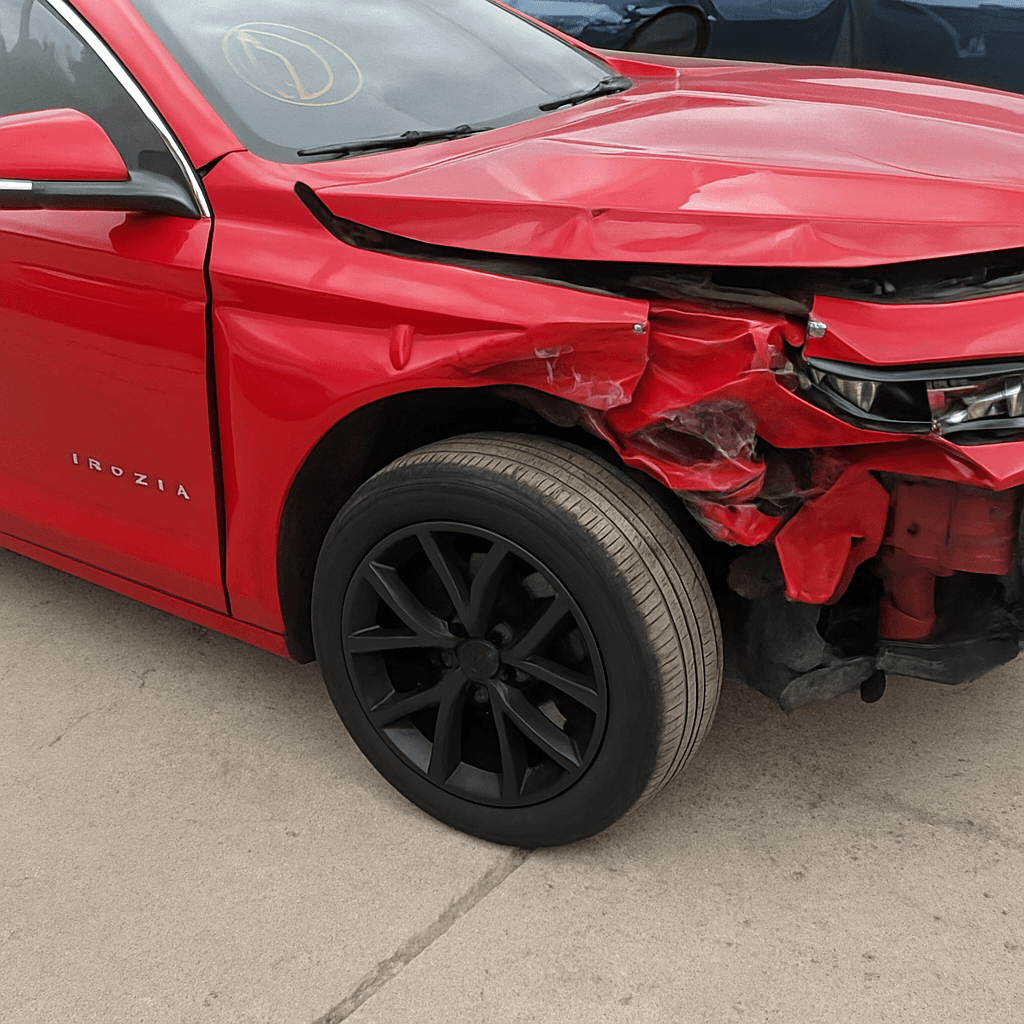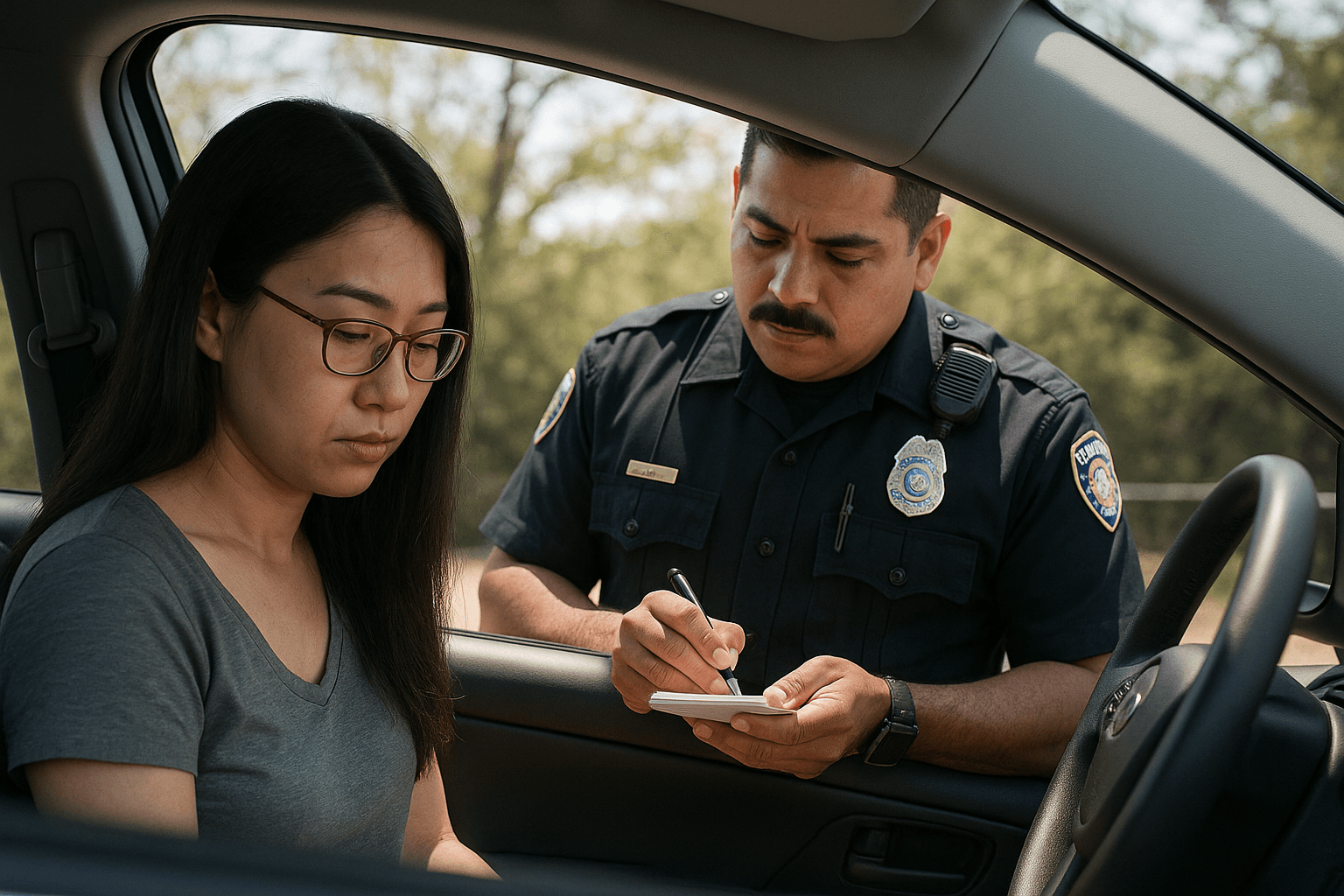
Your Michigan teen just got a speeding ticket before you even added them to your policy. The quote you feared just arrived, and it's worse than you expected—but stacking discounts and choosing the right carrier can still cut that increase by 30% or more.
How Much Adding a Michigan Teen Driver With a Speeding Ticket Actually Costs
Adding a 16-year-old driver with a clean record to a Michigan policy typically increases annual premiums by $2,800-$4,200. Add one speeding ticket and that increase jumps to $3,600-$5,800 depending on the carrier, your current coverage tier, and the speed cited. The violation surcharge itself ranges from $800-$1,600 annually for the first three years after conviction.
Michigan's no-fault system already produces some of the highest base rates in the country, and teen drivers carry the state's steepest age-based multipliers. A speeding ticket compounds that base rate before any discounts apply. But the surcharge percentage varies significantly by carrier—some apply a flat 25% increase for any moving violation, while others tier the surcharge by speed: 1-9 mph over typically adds 15-20%, 10-14 mph over adds 25-30%, and 15+ mph over can double the teen portion of your premium.
The carrier you're with now matters more than whether you shop after the ticket. If your current insurer applies violation surcharges at the higher end of the range and doesn't offer robust telematics discounts to offset them, you'll save more by switching than by staying and accepting the increase. Parents who compare quotes immediately after a teen violation report final premiums 18-35% lower than their current carrier's renewal quote, even with the ticket on record.
Good Student Discount Survival After a Speeding Ticket—What Carriers Don't Tell You
Michigan does not mandate the good student discount, so every carrier in the state sets its own eligibility rules. Most require a 3.0 GPA and allow the discount to stack with a single moving violation—but here's what happens in practice: carriers recalculate discount eligibility at every renewal and after every policy change, including adding a violation. If the system flags the teen driver for a ticket, many carriers automatically remove the good student discount without written notice, then require parents to resubmit GPA documentation and request reinstatement.
You'll see the discount disappear as a single line item reduction on your renewal declaration page, often months after the ticket. If you don't catch it and challenge it, you lose $400-$600 annually even though your teen still qualifies. Call your carrier within 30 days of any renewal where the good student discount is missing and ask explicitly whether the ticket disqualified your teen or whether the removal was procedural. In most cases, resubmitting a current transcript restores the discount immediately.
Progressive, State Farm, and Auto-Owners allow the good student discount to remain active after one moving violation as long as GPA still meets the threshold. GEICO and Allstate require manual reinstatement even if GPA hasn't changed. Farmers removes the discount automatically after any violation and requires a six-month claim-free period before reinstatement. Know your carrier's actual policy—don't assume the discount survives the ticket without confirmation.
See what adding a teen driver actually costs in your state
Compare quotes from carriers that offer good student discounts — most parents find savings they didn't know were available.
Get Your Free Quote✓ Good Student Discounts✓ No Obligation✓ Licensed Carriers✓ All 50 States
Telematics Programs That Offset Speeding Ticket Surcharges for Teen Drivers
Telematics programs measure actual driving behavior—braking, acceleration, speed, time of day, mileage—and adjust your rate based on data, not demographics. For a teen driver with a speeding ticket already on record, a telematics program is the fastest way to demonstrate improvement and earn back 10-30% in discounts within the first policy period.
Progressive's Snapshot and State Farm's Drive Safe & Save allow teen drivers to participate independently, and both programs explicitly state that prior violations don't disqualify enrollment. Parents report telematics discounts of 12-28% after six months of monitored safe driving, which directly offsets a significant portion of the violation surcharge. Allstate's Drivewise and Nationwide's SmartRide also accept teen drivers with tickets, though Allstate's discount caps at 15% for drivers under 21 even with perfect scores.
The monitoring period matters. Snapshot evaluates data for six months before finalizing your discount; Drive Safe & Save recalculates at every renewal. If your teen improves measurably during the first six months post-ticket, the telematics discount grows faster than the violation surcharge declines. Combine a 20% telematics discount with a retained good student discount and you've reduced the ticket's net cost by half before the surcharge even begins its three-year step-down.
Add to Your Policy or Get a Separate Teen Policy After a Ticket?
Adding your teen to your existing Michigan policy is cheaper than a standalone teen policy in nearly every scenario, even with a speeding ticket. Standalone policies for drivers under 18 are rare and prohibitively expensive—annual premiums for a 16-year-old with one violation typically start at $8,000-$12,000 because the carrier loses all multi-car, multi-policy, and tenure discounts that apply when the teen is listed on a parent policy.
The breakeven calculation changes slightly if your teen drives a separate vehicle that's financed. Collision and comprehensive requirements apply to the financed vehicle regardless of who owns the policy, and some parents explore whether titling that vehicle in the teen's name and maintaining minimum liability separately could reduce total household premium. In Michigan this almost never works—the loss of your own policy's multi-car discount and the teen's standalone rate both increase faster than the savings from separating the risk.
The one exception: if you carry a high-value umbrella policy and your teen's ticket significantly increases your liability exposure, some carriers allow you to list the teen on a non-owned vehicle endorsement or exclude them from specific vehicles while maintaining separate minimum coverage in their name. This structures the risk without triggering the full teen standalone rate, but it requires both policies to remain with the same carrier and both vehicles to stay registered at the same address. Fewer than 15% of Michigan carriers offer this structure, and it only makes financial sense if your umbrella premium increase exceeds the cost of maintaining two policies.
Which Michigan Carriers Penalize Teen Speeding Tickets Least
Auto-Owners applies the lowest violation surcharge for teen drivers in Michigan—typically 18-22% for a first speeding ticket under 15 mph over, and the surcharge begins stepping down after 12 months instead of 36. Auto-Owners also maintains the good student discount after one violation without requiring reapplication, and their telematics program stacks with both good student and driver training discounts.
State Farm's violation surcharge is mid-range at 25-30%, but they offer the most flexible discount stacking in the state: good student, Drive Safe & Save, Steer Clear (completion-based driver training), and multiple vehicle discounts all apply simultaneously even with a ticket on record. For parents who already carry State Farm and have multiple vehicles or home policies bundled, staying and stacking discounts produces a lower net cost than switching to a carrier with a smaller violation surcharge but fewer stackable offsets.
Progressive penalizes teen violations more heavily upfront—35-40% surcharge for any speeding ticket—but their Snapshot discount can recover 20-30% of that increase within six months, and they're one of the few Michigan carriers that publicly commit to evaluating telematics data independently from violation history. If your teen is willing to drive cautiously under monitoring, Progressive's net cost after 12 months often undercuts carriers with lower initial surcharges but no telematics option.
GEICO and Liberty Mutual apply the steepest teen violation surcharges in Michigan—40-50% increases that persist for the full three-year lookback period with minimal telematics offset. If you're currently with either carrier and your teen just got a ticket, request quotes from Auto-Owners, State Farm, and Progressive before your next renewal. Parents switching from GEICO to Auto-Owners after a teen ticket report average savings of $1,400-$2,200 annually even after accounting for lost tenure discounts.
Coverage Choices That Lower Costs Without Increasing Risk for Teen Drivers
Michigan's no-fault system requires personal injury protection, property protection, and residual liability, but you control the PIP medical limit. If your teen is covered under your health insurance with low deductibles and broad network access, reducing PIP from unlimited to $250,000 or $500,000 cuts your premium by 15-25% with minimal actual risk transfer. Unlimited PIP made sense before 2019 reforms, but post-reform coordination of benefits means your health insurer pays first in most scenarios.
Collision and comprehensive deductibles are the second-highest leverage point. Raising your deductible from $500 to $1,000 reduces premium by 8-12%, and if your teen drives an older vehicle worth under $5,000, dropping collision entirely saves another 20-30%. A 2012 sedan with 120,000 miles and a clean title has an actual cash value around $3,500—paying $900 annually for collision coverage on that vehicle means you're recovering your premium cost only if the car is totaled within four years, which is statistically unlikely even with a teen driver.
Residual liability limits default to state minimums for most families, but if you own a home or carry significant assets, increasing your liability to $250,000/$500,000 and adding a $1 million umbrella policy costs less than accepting state minimums and risking personal exposure after an at-fault accident involving a teen driver. The umbrella premium is typically $180-$300 annually and doesn't increase because of the teen's ticket—it's priced on total household risk, not individual driver history.
How Long the Speeding Ticket Affects Your Michigan Teen's Rate
Michigan insurers apply moving violation surcharges for three years from the conviction date, not the citation date. If your teen was cited in May but convicted in August, the three-year clock starts in August. The surcharge amount typically remains flat for the first 24 months, then steps down by 30-50% in the third year before dropping off entirely at the 36-month mark.
Some carriers reevaluate violation impact at each renewal rather than applying a fixed surcharge for the full three years. Auto-Owners and Hastings Mutual both reduce the surcharge percentage after 12 months if no additional violations occur, which means parents who stay with those carriers see measurable rate decreases at the second renewal post-ticket even though the violation is still technically on record. GEICO and Progressive hold the surcharge flat until month 36, then remove it entirely—no gradual step-down.
If your teen turns 18 or 19 during the three-year lookback period, the age-based rate reduction can offset or exceed the violation surcharge in the final year. A 16-year-old with a ticket pays more than a 19-year-old with the same ticket purely because of the age multiplier decline, and most Michigan carriers apply age-based reductions at every renewal, not just on the policy anniversary closest to the birthday. Request a renewal quote 30-60 days before your teen's 18th or 19th birthday to confirm the age reduction applied—some carriers require manual updates to the birthdate field and won't automatically recalculate the rate.