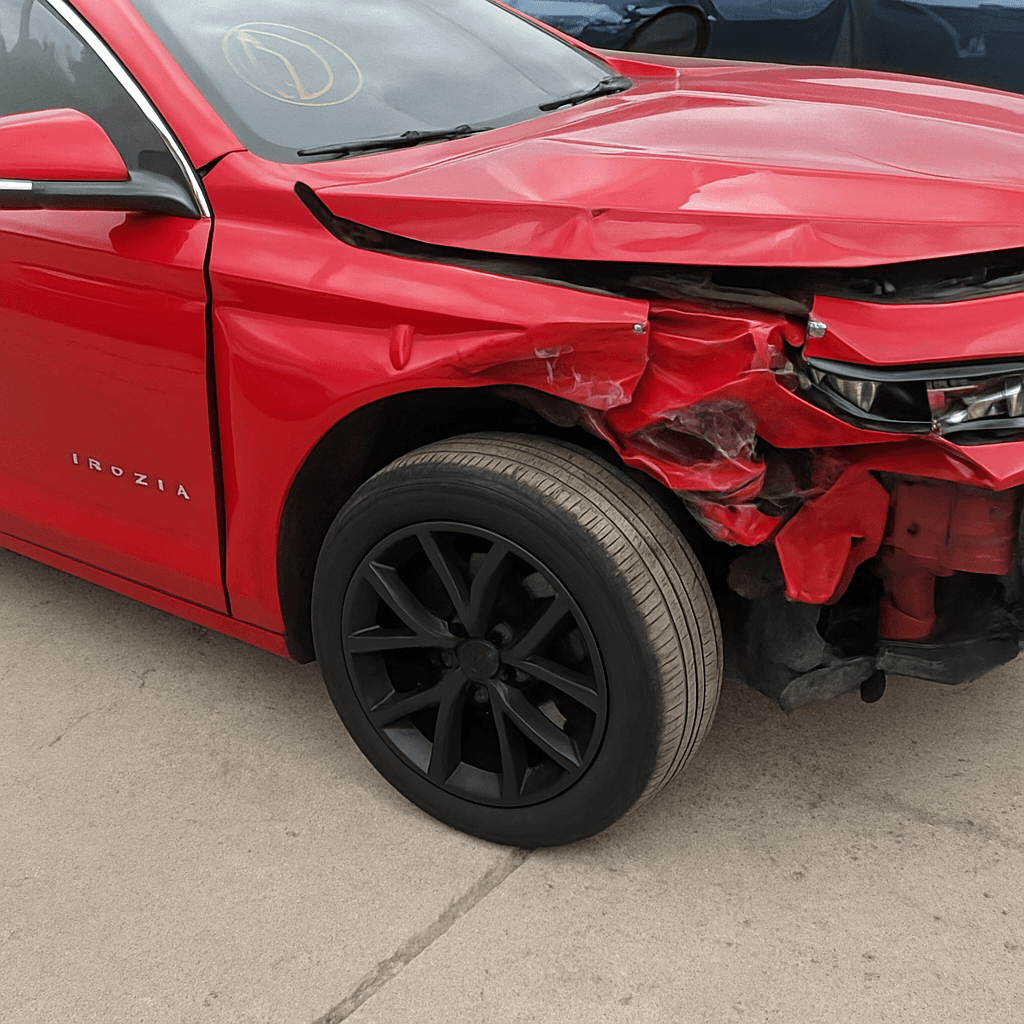
Your Ohio teen had one accident and the renewal quote jumped $3,000. Here's how to find the cheapest coverage without dropping collision or risking inadequate liability limits.
Why the At-Fault Accident Doubles the Teen Driver Surcharge in Ohio
Adding a teen driver to an Ohio policy typically increases annual premiums by $2,200 to $3,800 depending on the vehicle and coverage level. When that teen has one at-fault accident on record, carriers apply both the inexperienced-driver surcharge and the accident surcharge simultaneously, pushing the combined increase to $4,500 to $6,200 annually for most families. The accident surcharge in Ohio lasts three years from the incident date, not the policy renewal date.
Ohio uses a fault-based system, which means the at-fault driver's carrier pays. When a teen is listed as the at-fault party, that claim appears on their driving record and triggers surcharges at every carrier that pulls the record during underwriting. Even a low-speed parking lot collision with $1,800 in damage generates the same surcharge as a $15,000 intersection collision because carriers price on the fact of an at-fault claim, not the dollar amount.
Parents who already used their one-accident forgiveness benefit on a prior claim lose that protection when the teen's accident hits. The household no longer qualifies for accident forgiveness until the parent's record stays claim-free for the carrier's re-qualification period, typically three to five years. This is the hidden cost most parents discover only at renewal.
Add to Parent Policy or Separate Non-Standard Policy: The Math Changes With an Accident
Before the accident, adding a teen to a parent's standard policy was almost always cheaper than a separate teen policy. After one at-fault accident, that assumption breaks. Most standard carriers apply a 60% to 90% surcharge for a teen driver with one accident when added to a parent policy. Non-standard carriers price teen drivers with one accident at 40% to 60% above their base teen rate because their entire book is higher-risk and they don't penalize a single incident as severely.
Here's the calculation: if the parent's current Ohio policy costs $1,400 annually and adding the teen with one accident raises it to $6,800, the marginal cost is $5,400. A standalone non-standard policy for the teen with liability-only or liability plus collision on an older vehicle typically runs $2,800 to $4,200 annually in Ohio. The separate policy costs less and keeps the parent's policy clean.
The separate-policy route works best when the teen drives a vehicle the parent owns outright or a low-value vehicle with no lien. If the teen's vehicle has a loan, the lender requires collision and comprehensive, which raises the non-standard policy cost. Parents financing a car for a teen with one accident are usually stuck adding them to the family policy because non-standard carriers charge 20% to 40% more for full coverage than standard carriers charge for the same limits.
See what adding a teen driver actually costs in your state
Compare quotes from carriers that offer good student discounts — most parents find savings they didn't know were available.
Get Your Free Quote✓ Good Student Discounts✓ No Obligation✓ Licensed Carriers✓ All 50 States
Which Ohio Carriers Write Teens With One Accident and What They Charge
Progressive, GEICO, and Nationwide write teen drivers with one accident on standard policies but apply full inexperienced-driver and at-fault surcharges. State Farm and Allstate often decline to add a teen with an accident in the first 12 months of licensure, pushing families to non-standard markets. Non-standard carriers operating in Ohio include Dairyland, The General, and Bristol West, all of which specialize in higher-risk drivers and accept teens with one accident without declination.
Progressive's Snapshot telematics program can reduce the teen accident surcharge by 10% to 15% if the teen demonstrates consistent safe driving over six months, but the discount applies only after the monitoring period ends. GEICO offers a smaller telematics discount in Ohio through DriveEasy but caps the maximum reduction at 10%. Neither program forgives the accident or removes it from the record, they only discount the future premium.
Nationwide and State Farm both offer accident forgiveness as an add-on for an additional $40 to $80 annually in Ohio, but the forgiveness does not apply retroactively to an accident that already occurred. Parents can add it now to protect against a second accident, but it will not erase the surcharge from the first.
Stacking the Good Student Discount and Driver Training to Offset the Accident Surcharge
Ohio does not legally mandate the good student discount, so eligibility and discount amounts vary by carrier. Progressive offers 8% to 12% off for a GPA of 3.0 or higher with report card or transcript proof required every six months. State Farm and Nationwide both offer 10% to 15% but require the teen to be on the honor roll or in the top 20% of their class, a higher bar than most parents realize. GEICO's good student discount in Ohio is 7% and requires proof only at initial application, not at renewal.
Driver training discounts in Ohio range from 5% to 10% and require completion of an approved driver education course that includes both classroom hours and behind-the-wheel instruction. The discount typically lasts until age 21 or for three years, whichever comes first. Parents can stack the good student discount and driver training discount, but the combined savings rarely exceed 20% of the total premium because most carriers apply percentage discounts sequentially, not additively.
For a teen with one accident facing a $5,400 annual surcharge when added to a parent policy, stacking both discounts reduces the cost by $900 to $1,100. That's meaningful but not enough to bring the combined premium below the cost of a separate non-standard policy. The discount stack works best for families committed to keeping the teen on the parent policy for coverage continuity or to maintain multi-vehicle discounts.
Coverage Strategy: Liability Limits That Protect Parent Assets Without Overpaying
Ohio's minimum liability limits are $25,000 per person, $50,000 per accident for bodily injury, and $25,000 for property damage. These minimums are inadequate for any household with assets to protect, especially when a teen with one accident is driving. If the teen causes a second accident with serious injuries, the parent's assets are exposed to a lawsuit for any damages exceeding the policy limit because the teen is a household member and the parent typically owns the vehicle.
Most Ohio families with a teen driver should carry at least $100,000/$300,000/$100,000 liability limits, which cost $180 to $280 more annually than state minimums. Parents with significant home equity or retirement accounts should consider $250,000/$500,000 limits or a $1 million umbrella policy. The umbrella in Ohio costs $150 to $250 annually and requires underlying auto liability of at least $250,000/$500,000, but it covers the entire household, not just the teen.
Collision coverage on the teen's vehicle makes sense if the car is worth more than $5,000 or if the family cannot afford to replace it out of pocket. A $1,000 deductible keeps the collision premium 30% to 40% lower than a $500 deductible. Comprehensive coverage in Ohio costs $80 to $150 annually for a teen's vehicle and covers theft, vandalism, and deer strikes, which are common in suburban and rural Ohio counties.
How Long the Accident Surcharge Lasts and What Happens at Year Three
Ohio carriers apply accident surcharges for three years from the date of the incident, not from the date of the claim payment or the next renewal. If the accident occurred on March 10, 2024, the surcharge falls off on March 10, 2027, assuming no additional claims appear during that window. The surcharge does not decrease gradually, it drops to zero once the three-year mark passes and the next policy term begins.
Switching carriers does not remove the surcharge because the accident appears on the teen's motor vehicle record and every carrier pulls that record during underwriting. Parents who switch to a non-standard carrier to save money during the surcharge period can switch back to a standard carrier once the three-year window closes, but the teen will still be rated as a young driver until age 25.
Some carriers, including Erie and Auto-Owners in Ohio, apply a smaller surcharge percentage than Progressive or GEICO but have stricter underwriting rules and may decline to add the teen entirely. Parents switching carriers to chase a lower surcharge should confirm the new carrier will accept the teen before canceling the existing policy.
The Distant Student Discount: Does It Apply If the Teen Had an Accident?
If the teen attends college more than 100 miles from home and does not take a car to campus, most Ohio carriers offer a distant student discount of 20% to 35% off the teen's portion of the premium. The discount applies even if the teen had an accident before leaving for school, but the accident surcharge remains in effect and is calculated before the distant student discount is applied.
Progressive, State Farm, and Nationwide all honor the distant student discount in Ohio but require proof of enrollment and written confirmation that the student does not have access to a vehicle at school. If the teen brings a car to campus or drives a roommate's car regularly, the discount is void and coverage may not apply in an accident. Parents must notify the carrier if the student's vehicle access changes mid-semester.
The distant student discount does not stack with the good student discount at most carriers, they apply the larger of the two. If the good student discount saves 12% and the distant student discount saves 25%, the carrier applies 25%, not 37%. This reduces the total savings parents expect when their teen leaves for college with an accident still on record.