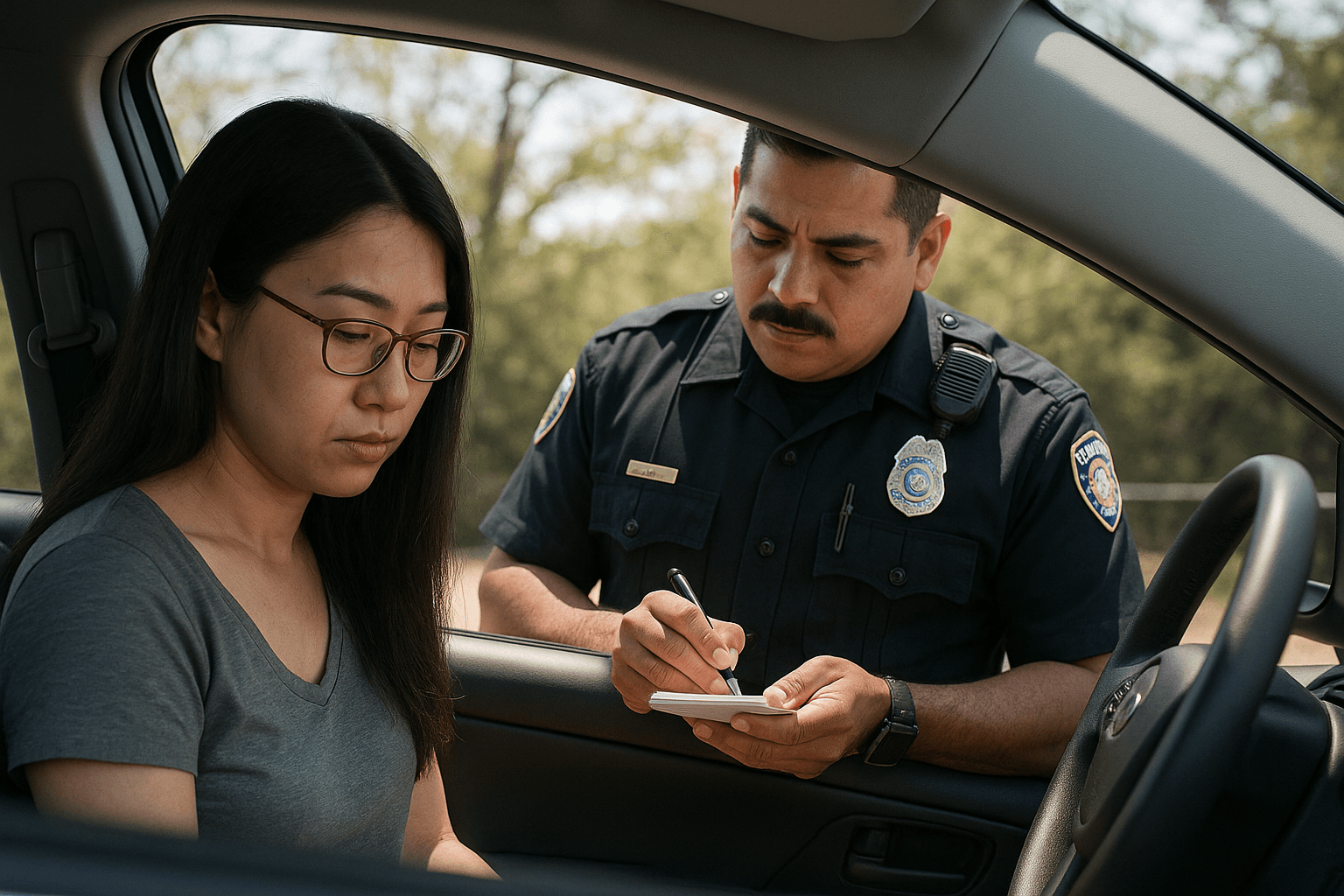
Your teen's first speeding ticket already pushed your premium up. Now you're weighing whether keeping them on your policy or getting a separate one actually costs less after the violation.
How Much Does Adding a Teen With One Speeding Ticket Cost in Ohio
Adding a 16-year-old with a clean record to a parent's Ohio policy typically increases the annual premium by $2,400–$3,800 depending on vehicle and coverage. A single speeding ticket adds another $600–$1,200 annually on top of that base teen surcharge. That puts the combined monthly increase at $250–$420 for most Ohio families.
The carrier matters more after a violation than before. Progressive and State Farm in Ohio typically apply smaller percentage surcharges to teens with one minor violation if the teen has been listed on the policy for at least six months before the ticket. GEICO and Allstate tend to apply flat violation surcharges regardless of how long the teen has been insured. If your teen got the ticket within their first few months of being licensed, you're already on the policy and the damage is done. If they got it before you added them, you're facing the highest possible combined surcharge.
The good student discount and telematics enrollment won't erase the violation surcharge, but they can offset 15–25% of the total increase if your teen qualifies for both. That brings the realistic monthly cost down to $210–$320 for most Ohio parents after stacking available discounts.
Should You Keep Your Teen on Your Policy or Get Them a Separate One After a Ticket
Keeping your teen on your existing policy costs less in nearly every scenario, even with the speeding ticket. A separate policy for a teen driver with one violation in Ohio runs $320–$580/month for state minimum liability. Adding them to your policy, even with the violation surcharge, typically costs $210–$320/month because they benefit from your multi-car discount, homeowner bundle, and claims-free history.
The only situation where a separate policy makes sense is if your own driving record includes multiple violations or an at-fault accident in the past three years. In that case, the teen's standalone rate might be comparable to the combined household surcharge. Pull quotes for both scenarios before deciding.
If your teen is headed to college more than 100 miles from home without a car, the distant student discount reduces their portion of the premium by 20–35% while they're away. You keep them listed on the policy but pay significantly less during the school year. Most Ohio carriers require proof of enrollment and out-of-state residence to qualify.
See what adding a teen driver actually costs in your state
Compare quotes from carriers that offer good student discounts — most parents find savings they didn't know were available.
Get Your Free Quote✓ Good Student Discounts✓ No Obligation✓ Licensed Carriers✓ All 50 States
Which Ohio Carriers Offer the Lowest Rates for Teens With One Speeding Ticket
State Farm and Nationwide consistently quote 10–18% lower than the Ohio market average for teens with one minor violation, particularly when the teen qualifies for the good student discount. Progressive's Snapshot telematics program can reduce the violation surcharge by an additional 10–15% if your teen demonstrates consistent safe driving habits over the first six months.
GEICO and Allstate apply higher base teen surcharges in Ohio but offer aggressive multi-vehicle discounts. If you're insuring three or more vehicles, GEICO often becomes competitive despite the higher teen rate. Erie Insurance writes in Ohio and tends to apply smaller violation surcharges to drivers under 21, but their good student discount requires a 3.5 GPA instead of the standard 3.0.
Rate variation between carriers for a teen with one ticket in Ohio ranges from $190/month to $520/month for the same coverage and vehicle. The only way to confirm the lowest rate for your specific household is to pull quotes from at least four carriers. The carrier that was cheapest before adding your teen is rarely the cheapest after.
What Coverage Do You Actually Need for a Teen Driver With a Ticket in Ohio
Ohio requires $25,000 per person and $50,000 per accident in bodily injury liability, plus $25,000 in property damage liability. Those minimums are inadequate for any household with assets to protect, especially when adding a statistically high-risk driver with a violation. If you own a home or have retirement savings, carry at least $100,000/$300,000/$100,000 in liability coverage.
Collision and comprehensive depend entirely on the vehicle. If your teen drives a car worth less than $5,000, paying $80–$140/month for collision and comprehensive coverage doesn't make financial sense. You'd recover the vehicle's value in deductible and premiums within 18–24 months even if no claim occurs. Drop both and bank the savings. If the car is worth $12,000 or financed, keep full coverage but raise your deductible to $1,000 to reduce the monthly cost by $40–$70.
Uninsured motorist coverage costs $8–$15/month in Ohio and covers your family if your teen is hit by a driver with no insurance or insufficient liability limits. Approximately 13% of Ohio drivers are uninsured. This is the one coverage you should not reduce to save money.
How to Stack Every Available Discount After Your Teen Gets a Speeding Ticket
The good student discount requires a 3.0 GPA and reduces the teen surcharge by 8–15% with most Ohio carriers. You'll need to submit a report card or transcript at the time you add your teen and again at each policy renewal. State Farm and Nationwide accept unofficial transcripts. GEICO requires an official school document with a registrar seal. If your carrier never asks for updated proof, submit it anyway at renewal. Most parents quietly lose this discount mid-policy because they assume the carrier will request documentation.
Driver training completion reduces the base teen surcharge by 5–10% if your teen took an approved course within the past three years. Ohio does not mandate driver training for licensure, so this discount is carrier-discretionary. Progressive, State Farm, and Nationwide honor it. GEICO applies it only if the course was completed within 12 months of the policy effective date.
Telematics programs like Progressive Snapshot, State Farm Drive Safe & Save, and Nationwide SmartRide monitor driving behavior through a mobile app. Safe habits can reduce your teen's portion of the premium by 10–20% after the first policy term. Hard braking, rapid acceleration, and late-night driving decrease the discount. If your teen drives carefully, enrollment is worth $25–$50/month in savings after six months. If they don't, the program can increase the rate.
What Happens to the Rate After the Speeding Ticket Ages Off
Most Ohio carriers surcharge a minor speeding ticket for three years from the violation date, not the conviction date. If your teen was cited in June 2024, the surcharge applies through June 2027 regardless of when you added them to the policy or when the ticket was adjudicated. After three years, the violation no longer affects the rate and your premium drops by the amount of the original surcharge.
A second violation before the first one ages off compounds the surcharge and can move your teen into the high-risk tier with some carriers. Two tickets within three years typically doubles the violation surcharge rather than adding incrementally. If your teen receives a second citation, re-shop immediately. The carrier that was competitive after one ticket is rarely cheapest after two.
Once the ticket is off your teen's record and they turn 19 or 20, expect the rate to drop by 30–45% compared to what you paid at 16 with the violation. Age and claims-free time are the two most powerful rating factors for young drivers. The first ticket matters, but every year of safe driving after it reduces the rate significantly.
Can You Remove Your Teen From the Policy to Avoid the Surcharge
You cannot legally remove a licensed household member from your auto policy if they have regular access to your vehicles. Ohio carriers require all licensed household residents to be listed as rated drivers or formally excluded. If your teen is excluded and gets into an accident while driving your car, your liability coverage will not respond and you'll be personally liable for all damages.
Some parents attempt to list the teen at a different address to avoid the household surcharge. This is misrepresentation. If a claim occurs and the carrier discovers the teen actually lives with you, they will deny the claim and can rescind the entire policy retroactively. The short-term savings are not worth the exposure.
The only legitimate way to reduce the surcharge is to have your teen listed on a policy at a different address where they genuinely reside most of the year. If your teen attends college out of state and keeps a car there, they can maintain their own policy at the school address. If they live with you and drive your vehicles, they must be rated on your policy.