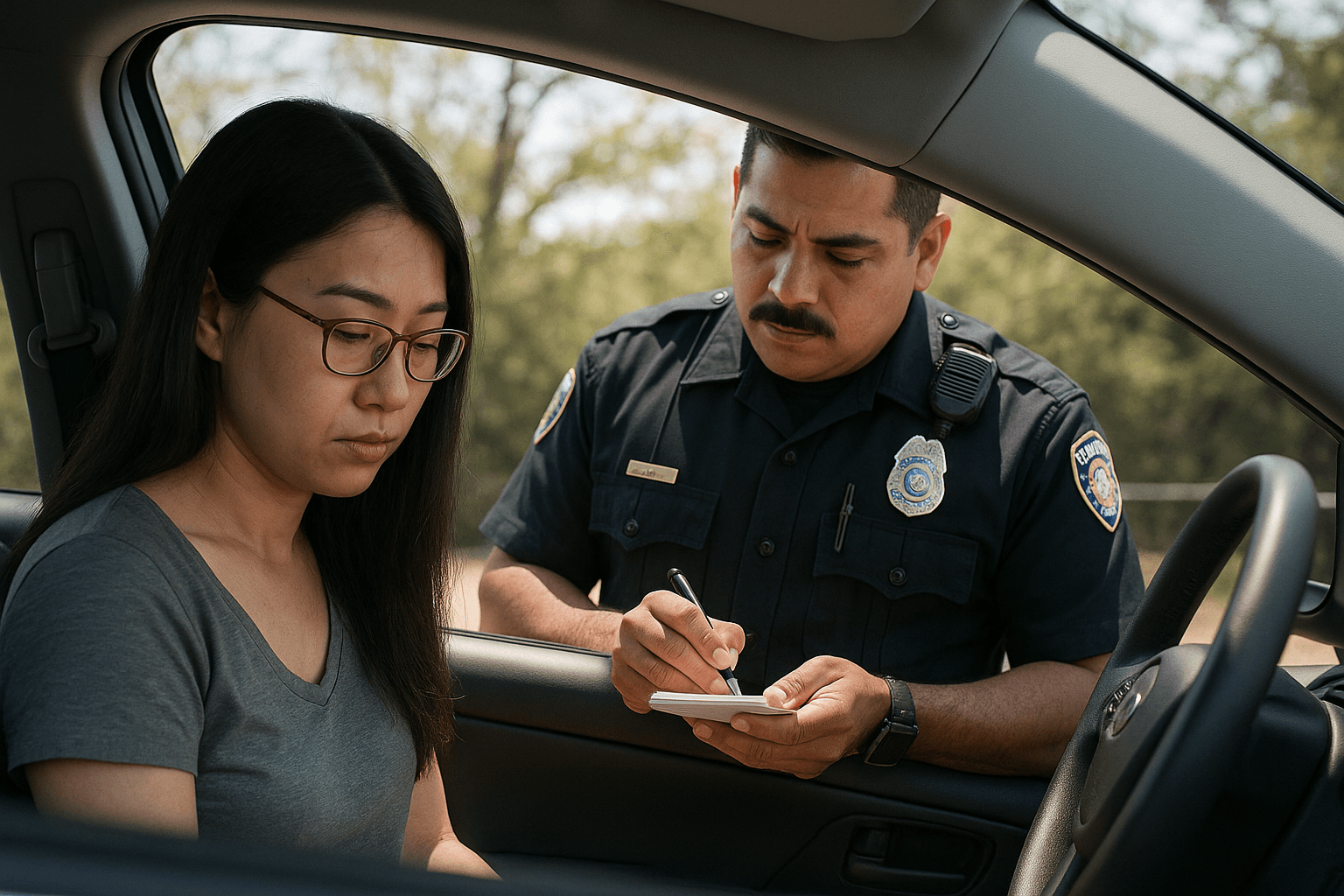
Your teen just passed their road test in Pennsylvania. You have 30 days to add them to your policy before your coverage gap creates liability exposure — here's what happens to your premium and which discounts can reduce the increase.
Does Pennsylvania Require Immediate Policy Notification After Your Teen Gets Licensed?
Pennsylvania law requires you to notify your carrier within 30 days of your teen receiving their junior driver's license. Most policies define newly licensed household members as material changes to risk, and failing to report creates a coverage gap. If your teen drives your vehicle and causes an accident before you've added them, your carrier can deny the claim based on misrepresentation.
The 30-day window starts from the date the PennDOT examiner issues the license, not the date you call your agent. Carriers don't receive automatic notification from the state when your teen passes the road test. You initiate the add.
Most parents assume their existing policy automatically extends to a newly licensed teen because the teen lives in the household. It doesn't. Pennsylvania operates under named-driver rules for young drivers. Until your carrier formally adds your teen to the policy declarations page, they're not covered.
How Much Does Adding a Teen Driver Increase Your Pennsylvania Premium?
Adding a 16-year-old driver to a Pennsylvania policy typically increases the annual premium by $2,400 to $4,200, depending on your current coverage level, vehicle, and rating tier. That breaks down to roughly $200 to $350 per month in additional cost. The increase is highest in the first year and decreases as your teen ages and builds a clean driving record.
Pennsylvania uses age-banded rating for young drivers. A 16-year-old costs more to insure than an 18-year-old, even with identical driving records, because actuarial data shows crash rates decline sharply between ages 16 and 19. Carriers in Pennsylvania include State Farm, GEICO, Progressive, Erie, Allstate, and Nationwide all apply this banded structure.
The vehicle your teen drives matters as much as their age. If your teen primarily drives a 10-year-old sedan with no loan, you can drop collision and comprehensive on that vehicle and cut the teen surcharge significantly. If they're driving a newer financed SUV, you're paying full coverage on the highest-risk driver in your household.
See what adding a teen driver actually costs in your state
Compare quotes from carriers that offer good student discounts — most parents find savings they didn't know were available.
Get Your Free Quote✓ Good Student Discounts✓ No Obligation✓ Licensed Carriers✓ All 50 States
Should You Add Your Teen to Your Existing Policy or Get Them a Separate Policy?
Add your teen to your existing Pennsylvania policy unless you're a single-vehicle household with a high-value car and your teen needs their own vehicle immediately. Standalone teen policies cost 60 to 80 percent more than adding the teen to a parent policy because you lose multi-car, multi-policy, and loyalty discounts.
Pennsylvania carriers price teen coverage based on household risk pooling. When you add your teen to your policy, the carrier averages their high risk against your established driving record and multi-vehicle discount structure. A separate policy rates the teen in isolation with no offsetting factors.
The only scenario where a separate policy makes sense: your teen has already caused an at-fault accident or received a major violation before you added them, and splitting them off prevents your own premium from spiking at renewal. Even then, most Pennsylvania agents recommend keeping them on your policy and accepting one renewal increase rather than locking the teen into a non-standard market for three years.
What Discounts Apply to Teen Drivers in Pennsylvania?
The good student discount reduces teen surcharges by 10 to 25 percent for students maintaining a 3.0 GPA or higher. Pennsylvania does not mandate this discount by law, so availability and percentage vary by carrier. State Farm, GEICO, Erie, and Nationwide all offer it. You must submit proof — a report card or transcript — every six months or annually depending on the carrier's renewal cycle.
Driver training discounts apply if your teen completed an approved driver education course beyond the minimum required for junior license eligibility. Pennsylvania requires six hours of behind-the-wheel training for all junior license applicants, but carriers define "approved course" differently. Some accept any PennDOT-approved provider; others require specific curriculum certifications. The discount typically runs 5 to 15 percent and expires after three years.
Telematics programs — Progressive Snapshot, State Farm Drive Safe & Save, Allstate Drivewise — offer the highest potential savings for teen drivers because they measure actual driving behavior rather than demographic risk. A teen who demonstrates consistent safe driving through app monitoring can reduce their surcharge by 20 to 30 percent within the first policy term. The program requires your teen to accept tracking and avoid hard braking, rapid acceleration, and late-night driving.
Does Pennsylvania's Junior License Restriction Affect Your Coverage or Rate?
Pennsylvania's junior license restricts drivers under 18 from driving between 11 p.m. and 5 a.m. unless accompanied by a parent or guardian, and limits passengers under 18 to one non-family member unless a parent is present. These restrictions do not reduce your insurance rate — carriers price based on annual mileage and vehicle assignment, not GDL compliance.
Violating the junior license passenger or curfew restriction does not void your coverage in an accident, but it does create liability exposure if your teen causes a crash while violating GDL rules. The other party's attorney will argue negligence per se, and your carrier may subrogate part of the claim back to you if they determine your teen was operating outside license restrictions.
The junior license restriction lifts automatically when your teen turns 18 or after six months of violation-free driving, whichever comes first. Your rate does not drop when the restriction lifts. Age-banded pricing continues until your teen turns 25 or moves out and establishes their own policy.
What Happens If You Don't Add Your Teen Immediately After They Get Licensed?
If your teen gets licensed and you don't notify your carrier within 30 days, you're operating with a coverage gap. Most Pennsylvania carriers conduct periodic household audits and will discover the unlisted driver at your next renewal. When they do, they'll backdate the premium increase to the date the teen was licensed and bill you for the coverage gap — or they'll non-renew your policy.
Some parents delay adding their teen intentionally, hoping to avoid the surcharge for a few months. This creates material misrepresentation. If your teen causes an accident during that gap period, your carrier can deny the claim and rescind your policy retroactively. Pennsylvania law allows carriers to void coverage when a policyholder fails to disclose a material change in risk.
The correct sequence: call your agent the same week your teen passes the road test. Request the formal add with an effective date matching the license issue date. Confirm the new premium and payment schedule in writing. Ask for the updated declarations page showing your teen as a listed driver. That declarations page is your proof of coverage if your teen is pulled over or involved in an accident.
How Do You Actually Add Your Teen to Your Pennsylvania Policy?
Contact your carrier or agent directly — by phone or through your online account portal if the carrier supports mid-term policy changes digitally. Provide your teen's full legal name, date of birth, driver's license number, and issue date. The carrier will generate a policy endorsement adding your teen as a listed driver and recalculate your premium.
Most Pennsylvania carriers process the add within 24 to 48 hours. You'll receive a revised declarations page showing your teen, the new premium, and the effective date of the change. If you're adding your teen mid-term, you'll owe a prorated premium increase from the add date through your next renewal. If you're adding them at renewal, the new rate starts on your renewal date.
If your teen will be the primary driver of a specific vehicle in your household, tell your agent during the add. Carriers rate based on vehicle assignment. Assigning your teen to the lowest-value vehicle in your garage — rather than letting the carrier default them to the newest or most expensive — can reduce the surcharge by 15 to 25 percent.