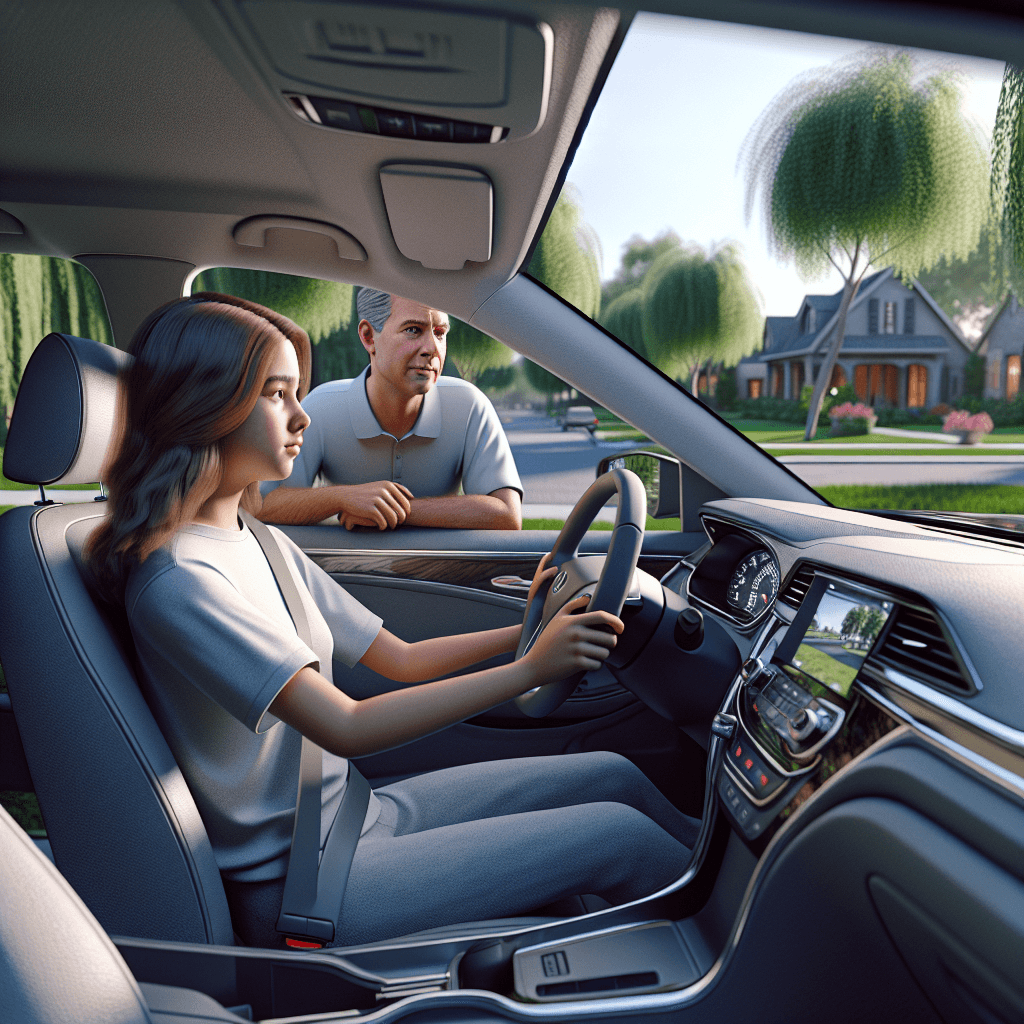
California insurers require notification as soon as your teen receives their learner's permit, even though they can't drive alone yet. Delaying that call can void coverage if an accident happens during a supervised drive.
When Does California Require You to Add a Learner's Permit Holder?
California requires you to notify your insurer as soon as your teen receives their learner's permit, not when they get their provisional license. Most carriers add the teen to your policy immediately at a reduced rate compared to a licensed driver, but some apply the full teen surcharge from day one. The DMV doesn't enforce this directly, but your insurance contract does: if your permit-holding teen is involved in an accident during a supervised drive and you never disclosed them to the carrier, the claim can be denied for material misrepresentation.
The California learner's permit requires 16-year-olds to complete 50 hours of supervised driving (10 at night) before taking the behind-the-wheel test. That's 50 hours of covered exposure your insurer prices into your premium. Waiting until the provisional license to notify them means you've been driving uninsured for months.
Call your agent or log into your carrier portal the same week your teen gets the permit. Ask whether the carrier charges the full teen rate immediately or applies a learner's permit discount until the provisional license is issued. Some carriers reduce the surcharge by 30–50% during the permit phase because the teen cannot drive unsupervised.
How Much Does Adding a 16-Year-Old Learner's Permit Holder Cost?
Adding a 16-year-old with a learner's permit to a California policy typically increases the annual premium by $1,200–$2,400 depending on the carrier, your current coverage level, and the vehicle the teen will drive most often. That translates to roughly $100–$200 per month. The surcharge jumps another 20–40% once the teen gets their provisional license and can drive unsupervised.
Carriers price learner's permit holders based on household risk, not individual driving history. If you have a clean record and multi-vehicle discount already in place, the increase is lower. If you're a single-vehicle household with prior claims, the increase is higher. The vehicle matters more than most parents expect: assigning your teen as the primary driver of a 10-year-old sedan with no collision coverage costs far less than listing them on a new SUV with full coverage.
Estimates based on available industry data; individual rates vary by driving history, vehicle, coverage selections, and location. Request a quote from your current carrier first before shopping elsewhere — keeping your teen on your existing policy is almost always cheaper than starting a separate policy for them.
See what adding a teen driver actually costs in your state
Compare quotes from carriers that offer good student discounts — most parents find savings they didn't know were available.
Get Your Free Quote✓ Good Student Discounts✓ No Obligation✓ Licensed Carriers✓ All 50 States
Should You Add Your Teen to Your Existing Policy or Start a Separate One?
Add your teen to your existing policy. A separate policy for a 16-year-old learner's permit holder in California costs 2–3 times more than adding them to a parent policy because the teen has no driving history, no multi-vehicle discount, no homeowner discount, and no loyalty tenure. Carriers price standalone teen policies as high-risk from day one.
The only scenario where a separate policy makes sense is if your own driving record is severely damaged — multiple at-fault accidents, a DUI, or a suspended license — and adding the teen would push your household into non-standard carrier territory. In that case, compare the cost of adding the teen to your current non-standard policy against placing them on a separate standard-market policy if they qualify based on your household address and vehicle ownership.
If you're keeping the teen on your policy, confirm that your liability limits are adequate. California's minimum liability requirement is 15/30/5 (fifteen thousand per person, thirty thousand per accident, five thousand for property damage). That's far too low for a household with an inexperienced driver and any assets to protect. Consider increasing to 100/300/100 or adding an umbrella policy if your net worth exceeds your auto liability limit.
What Discounts Are Available for California Teen Drivers?
California law does not mandate a good student discount, but nearly every carrier writing in the state offers one. The discount typically requires a 3.0 GPA or better (B average) and reduces the teen surcharge by 10–25%. You must submit proof every 6 or 12 months depending on the carrier — most parents don't realize the discount expires automatically if you miss the renewal deadline, and carriers rarely send reminders.
Driver training completion discounts are available from most carriers if your teen completes a state-approved driver education course before getting their permit. The discount is usually 5–15% and applies for 3 years in most cases. California requires driver education for all teens under 17.5 years old before they can apply for a permit, so this discount is nearly automatic if you submit the certificate.
Telematics programs (usage-based insurance) can reduce teen premiums by 15–30% if your teen demonstrates safe driving habits during the monitoring period. Programs like Progressive Snapshot, State Farm Drive Safe & Save, and Allstate Drivewise track speed, braking, mileage, and time of day. The discount is not guaranteed — it's based on actual driving behavior — but it's one of the few ways to lower a teen premium based on performance rather than demographics.
The distant student discount applies if your teen attends college more than 100 miles from home without a vehicle. You can remove them as a rated driver and keep them listed as an occasional driver for school breaks. The discount is typically 30–40% of the teen surcharge. Confirm your carrier's specific distant student rules before your teen leaves for school.
Does the Vehicle Your Teen Drives Affect the Premium Increase?
The vehicle assignment is the single biggest cost variable parents control when adding a teen driver. If your household has multiple vehicles, assign your teen as the primary driver of the oldest, lowest-value vehicle with the least coverage. Carriers rate teen drivers based on the vehicle they drive most often, not the most expensive vehicle in the household.
If your teen will drive a vehicle with no loan or lease, consider dropping collision and comprehensive coverage on that vehicle. California does not require physical damage coverage by law. If the vehicle is worth less than $4,000 and you could replace it out-of-pocket, dropping collision and comp can reduce the teen-related premium increase by 30–50%. You still need liability coverage at or above state minimums.
Never assign your teen as the primary driver of a high-performance vehicle, a luxury vehicle, or any vehicle with a loan balance requiring full coverage unless you've run the rate comparison first. The combination of teen driver surcharge and full coverage on an expensive vehicle can triple your household premium. If your teen needs to drive a newer financed vehicle, expect the annual cost increase to exceed $3,000 in most California markets.
What Happens If You Don't Notify Your Insurer About the Permit?
If your teen has an accident during a supervised drive and you never added them to your policy, your carrier can deny the claim for material misrepresentation or fraud. California insurance contracts require disclosure of all household members of driving age, and a learner's permit qualifies. The fact that the teen wasn't driving alone or wasn't at fault doesn't matter if the carrier was never notified.
Some parents assume learner's permit holders are automatically covered under the household policy's permissive use clause. That clause covers occasional drivers and friends borrowing your vehicle — not household members who drive regularly. Carriers treat undisclosed household drivers as misrepresentation because they would have charged a higher premium if they'd known.
If your carrier discovers the undisclosed permit after a claim, they can retroactively charge you for the missing premium and surcharge going back to the permit issue date, deny the current claim, or cancel your policy entirely. California law allows carriers to cancel policies for material misrepresentation within the first 60 days, and non-renew for any reason with proper notice after that.
How Do California's Graduated Licensing Restrictions Affect Coverage?
California's graduated driver licensing program restricts provisional license holders (under 18) from driving between 11 p.m. and 5 a.m. for the first 12 months unless accompanied by a licensed driver 25 or older, and from transporting passengers under 20 unless accompanied by a parent, guardian, or licensed driver 25 or older for the first 12 months. Violating these restrictions doesn't void your insurance coverage, but if your teen causes an accident while in violation, the carrier may subrogate against you or apply a surcharge at renewal.
Most California carriers do not adjust premiums based on GDL compliance — they price the teen as a provisional license holder regardless of time-of-day or passenger restrictions. The restrictions reduce actuarial risk, but carriers have not unbundled that discount in pricing models yet. Parents should enforce the restrictions regardless of coverage implications: teen crash rates triple during nighttime driving and increase 50% with multiple passengers.
Once your teen turns 18, California's GDL restrictions expire automatically and the provisional license converts to a standard Class C license. Notify your carrier when this happens — some apply a small discount (5–10%) when the teen ages out of provisional status, though the larger rate reduction happens at age 19 and again at 25.