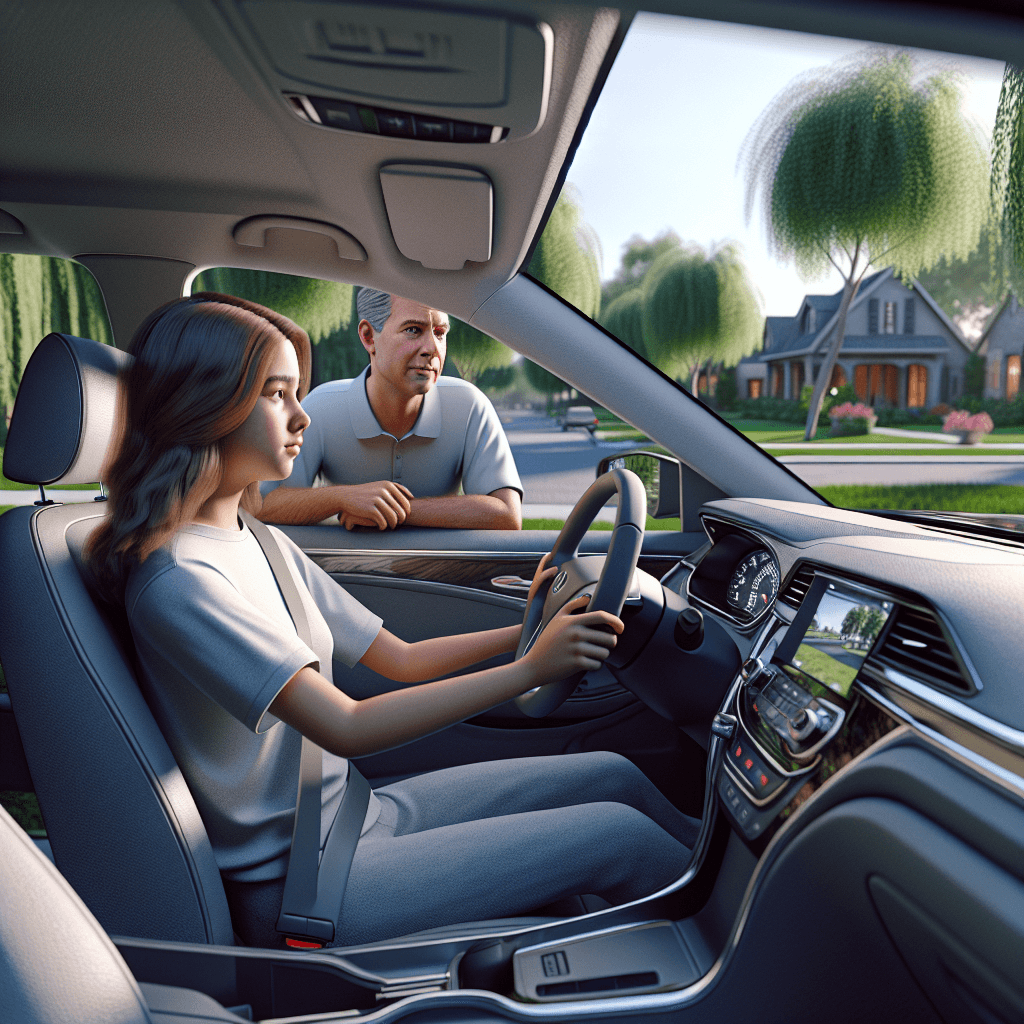
Your teen's learner permit doesn't automatically add them to your insurance policy, but most carriers require you to list them as a household driver even before they're licensed — and whether you wait or add them immediately can affect both your premium and your coverage if they're in an accident.
When You're Required to Add a Learner's Permit Holder to Your Policy
Carrier requirements vary significantly, but most national insurers require you to list any household member with a learner permit once they begin driving, even under supervision. State Farm, Allstate, and Progressive typically require disclosure within 30 days of permit issuance, though enforcement is inconsistent until the teen applies for a provisional license. The financial difference is substantial: adding a 16-year-old with a learner permit increases annual premiums by an average of $1,200–$2,400 depending on state and vehicle, but waiting until after an accident to disclose can result in claim denial and potential policy rescission for material misrepresentation.
Some regional carriers and a few national insurers allow parents to wait until the teen receives their provisional license, treating the learner period as an extension of unlicensed status. USAA and Geico have historically been more flexible during the permit phase, though both require immediate addition upon provisional licensure. The key distinction is whether your policy defines "household drivers" to include permit holders or only licensed drivers — this language appears in your policy declarations and is worth reviewing before your teen starts behind-the-wheel practice.
The safest approach is to contact your carrier directly when your teen receives their permit and ask three specific questions: Does your policy require listing permit holders? What is the notification deadline? And what happens to coverage if the teen drives before being added? Document the answers with the representative's name and date. If your carrier does not require immediate addition, confirm whether supervised driving by an unlisted permit holder is covered under your liability policy — most standard policies extend liability coverage to any driver you give permission to, but collision and comprehensive coverage on your vehicle may be excluded if the driver isn't listed.
What Coverage Actually Applies During the Learner Permit Phase
When a listed learner permit holder drives your vehicle under supervision, your auto policy's liability, collision, and comprehensive coverage typically apply exactly as they would if you were driving. The parent's policy is primary, and the coverage limits you carry are the limits that respond if the teen causes an accident. This is why parents with state minimum liability limits — often 25/50/25 in many states — face significant financial exposure during the learner phase: a teen driver causing a multi-vehicle accident could easily exceed $25,000 in property damage or $50,000 in total bodily injury liability.
If your teen is driving under a learner permit and is not yet listed on your policy, coverage depends entirely on your carrier's definition of permissive use. Most insurers extend liability coverage to any driver operating your vehicle with your permission, which includes supervised learner permit driving. However, physical damage coverage — collision and comprehensive — is frequently excluded for unlisted household drivers, even with a permit. This creates a gap: if your teen backs into a mailbox during a practice session, your collision coverage may not respond, leaving you responsible for repairs out of pocket.
The distinction between listed and permissive use becomes critical if the learner permit holder drives unsupervised, which is illegal in all 50 states during the permit phase. If your teen takes the car without permission and causes an accident, most policies will deny the claim entirely — both liability and physical damage. If you gave permission for unsupervised driving despite permit restrictions, the insurer may cover third-party liability to avoid bad faith claims but will almost certainly exclude collision/comprehensive coverage on your vehicle and may non-renew your policy. Graduated Driver Licensing (GDL) violations, including unsupervised permit driving, are treated as material misrepresentation by most carriers.
See what adding a teen driver actually costs in your state
Compare quotes from carriers that offer good student discounts — most parents find savings they didn't know were available.
Get Your Free Quote✓ Good Student Discounts✓ No Obligation✓ Licensed Carriers✓ All 50 States
How Adding a Permit Holder Affects Your Premium and What Discounts Apply Immediately
Adding a learner permit holder increases your premium, but typically at a lower rate than adding a fully licensed teen driver. The average increase for a listed permit holder is 30–50% of what you'll pay once the teen receives their provisional license. If adding a 16-year-old driver to your policy would increase your annual premium by $2,800, listing them during the permit phase might add $1,200–$1,400. The reason: the teen is still categorized as a supervised driver with restricted mileage, and actuarial risk is significantly lower than an independently licensed driver.
Several major discounts become available immediately upon adding a permit holder, and stacking them can offset 20–35% of the learner-phase increase. The good student discount — typically requiring a 3.0 GPA or higher — is available in most states as soon as you provide a report card or transcript, and saves 10–25% depending on the carrier. Driver training or driver's education completion discounts, worth 5–15%, apply once your teen completes an approved course, which is often required for permit eligibility anyway. Some carriers, including State Farm and Nationwide, offer these discounts retroactively if you submit proof within 30–60 days of adding the teen.
Telematics programs like Allstate's Drivewise, Progressive's Snapshot, or State Farm's Drive Safe & Save are available during the learner permit phase and can deliver some of the highest savings — 10–30% based on monitored driving behavior. Because learner permit holders drive fewer miles and are always supervised, telematics scores during this phase tend to be higher than after independent licensure, locking in better rates. Enrollment is typically free, and the monitoring period begins as soon as the device is installed or the app is activated. If your teen's monitored driving during the permit phase earns a strong score, some carriers allow that rate to carry forward into the provisional license period, creating a financial incentive to enroll early.
State-Specific Permit Rules and How They Affect Coverage Decisions
Graduated Driver Licensing laws vary significantly by state, and those variations directly affect how long your teen holds a learner permit and what driving activities are allowed during that period. In California, teen drivers must hold a permit for at least six months and complete 50 hours of supervised driving (10 at night) before applying for a provisional license. In Virginia, the requirement is nine months and 45 hours (15 at night). In Texas, it's six months and 30 hours (10 at night). The longer the mandatory permit period, the longer you'll carry the permit-phase premium increase — but also the more opportunity your teen has to complete driver training and build a telematics score before independent driving begins.
Some states mandate specific insurance discounts that apply during the learner permit phase. California requires insurers to offer a good student discount, and most carriers in the state apply it to permit holders as soon as proof is submitted. New York does not mandate the discount, but most carriers offer it voluntarily. Florida allows but does not require it. Checking your state's Department of Insurance website for mandated discounts can reveal savings opportunities your carrier may not proactively mention.
Permit supervision requirements also vary and have coverage implications. Most states require a licensed adult 21 or older in the front passenger seat, but some states allow supervision by an 18- or 19-year-old licensed driver, and a few require the supervisor to be a parent or guardian specifically. If your teen is involved in an accident while supervised by someone who does not meet your state's legal requirements — for example, a 19-year-old sibling in a state requiring age 21 — the insurer may argue the permit holder was driving unsupervised in violation of GDL law, which can affect claim handling and potentially void coverage. Always confirm your state's specific supervision rules and ensure any adult supervising your teen's practice driving meets those requirements.
The Add-Now vs Wait-Until-License Decision and What It Costs You
If your carrier does not require immediate disclosure of a learner permit holder, you face a financial trade-off: pay the increased premium during the 6–12 month permit phase, or wait until provisional licensure and risk a coverage gap. The cost difference is measurable. A parent in Georgia adding a 16-year-old permit holder in month one will pay roughly $1,400–$1,800 over the six-month permit period. Waiting until the provisional license means saving that amount but accepting that any accident during the permit phase may not be fully covered, particularly for physical damage to your own vehicle.
The risk calculation depends on how much driving your teen will actually do during the permit phase and what vehicle they'll practice in. If your teen drives three times per week in an older sedan with no loan and you carry liability-only coverage, the financial exposure is limited to third-party claims, which are typically covered under permissive use even if the teen isn't listed. If your teen drives daily in a leased SUV with full coverage, an at-fault accident during the permit phase could leave you responsible for collision repairs on a vehicle worth $35,000–$50,000 if the claim is denied due to non-disclosure.
Another factor: some insurers reward early addition with better rate positioning once the teen is fully licensed. Adding your permit holder immediately and enrolling in telematics establishes a monitored driving history before independent driving begins, and carriers like Progressive and Allstate use that data to set the provisional license rate. If your teen demonstrates safe driving habits over six months of permit-phase monitoring, the resulting discount can exceed the permit-phase premium you paid. Parents who wait until licensure to add their teen miss that data-building window and start the provisional period at standard high-risk new driver rates.
What Happens If Your Permit-Holding Teen Has an Accident Before Being Listed
If your learner permit holder causes an accident while driving your vehicle and is not listed on your policy, the claim outcome depends on whether the driving was permissive, whether your policy explicitly excludes unlisted household drivers, and whether the carrier determines you intentionally concealed a material fact. Most standard auto policies cover permissive users for liability, meaning third-party medical bills and property damage will likely be paid even if the permit holder isn't listed. This protects injured parties and prevents bad faith claims against the insurer.
Physical damage to your own vehicle is a different matter. Collision and comprehensive coverage often contain household driver exclusions that deny claims if the driver is a household member who should have been listed but wasn't. If your permit-holding teen crashes your car during a supervised practice session and you haven't added them to the policy, the insurer may pay the other driver's damages under your liability coverage but deny your collision claim, leaving you to repair or replace your own vehicle out of pocket. A $12,000 collision repair bill on a financed vehicle becomes your responsibility, and the deductible becomes irrelevant because the coverage doesn't apply.
Beyond the immediate claim, the insurer will almost certainly require you to add the teen to the policy going forward and may apply the rate increase retroactively to the date the permit was issued. Some carriers impose a material misrepresentation surcharge — an additional 10–20% penalty on top of the standard teen driver increase — for failure to disclose a household permit holder. In severe cases, particularly if the insurer believes you intentionally concealed the permit to avoid premium increases, the policy can be rescinded entirely, meaning all coverage is voided as if the policy never existed. This is rare but not unprecedented, and it leaves you personally liable for all damages from the accident, potentially including six-figure medical claims if injuries are serious.
How Vehicle Choice During the Permit Phase Affects Your Rate and Coverage Strategy
The vehicle your teen practices in during the permit phase determines both the premium increase when you add them and the financial exposure if an accident occurs. Teens are typically rated on the vehicle they drive most frequently, but during the learner permit phase with supervised driving only, some carriers apply a blended rate across all household vehicles rather than assigning the teen to one specific car. This can work in your favor if you have a mix of vehicle values and types.
If you plan to designate an older, lower-value vehicle for your teen's use once licensed, having them practice primarily in that vehicle during the permit phase can reduce the rating impact. A 16-year-old permit holder practicing in a 2012 Honda Civic with liability-only coverage will add significantly less to your premium than the same teen practicing in a 2022 leased Toyota Highlander with full coverage. Once the teen receives their provisional license, most carriers require you to designate a primary vehicle, and the rate is locked to that assignment. Using the permit phase to establish the lower-value vehicle as the teen's primary can save $600–$1,200 annually compared to rating them on a newer, higher-value SUV or truck.
If your teen will practice in a vehicle you're still paying off or leasing, maintaining collision and comprehensive coverage is non-negotiable, and listing the teen immediately becomes even more important. A denied collision claim on a leased vehicle leaves you liable for repair costs while still owing monthly payments on a damaged car. If the vehicle is totaled and the claim is denied, gap insurance will not cover the shortage because the underlying collision coverage didn't respond — gap only pays the difference between actual cash value and loan balance when a covered claim pays out. For financed or leased vehicles, the cost of listing a permit holder is almost always lower than the financial risk of an uncovered total loss.