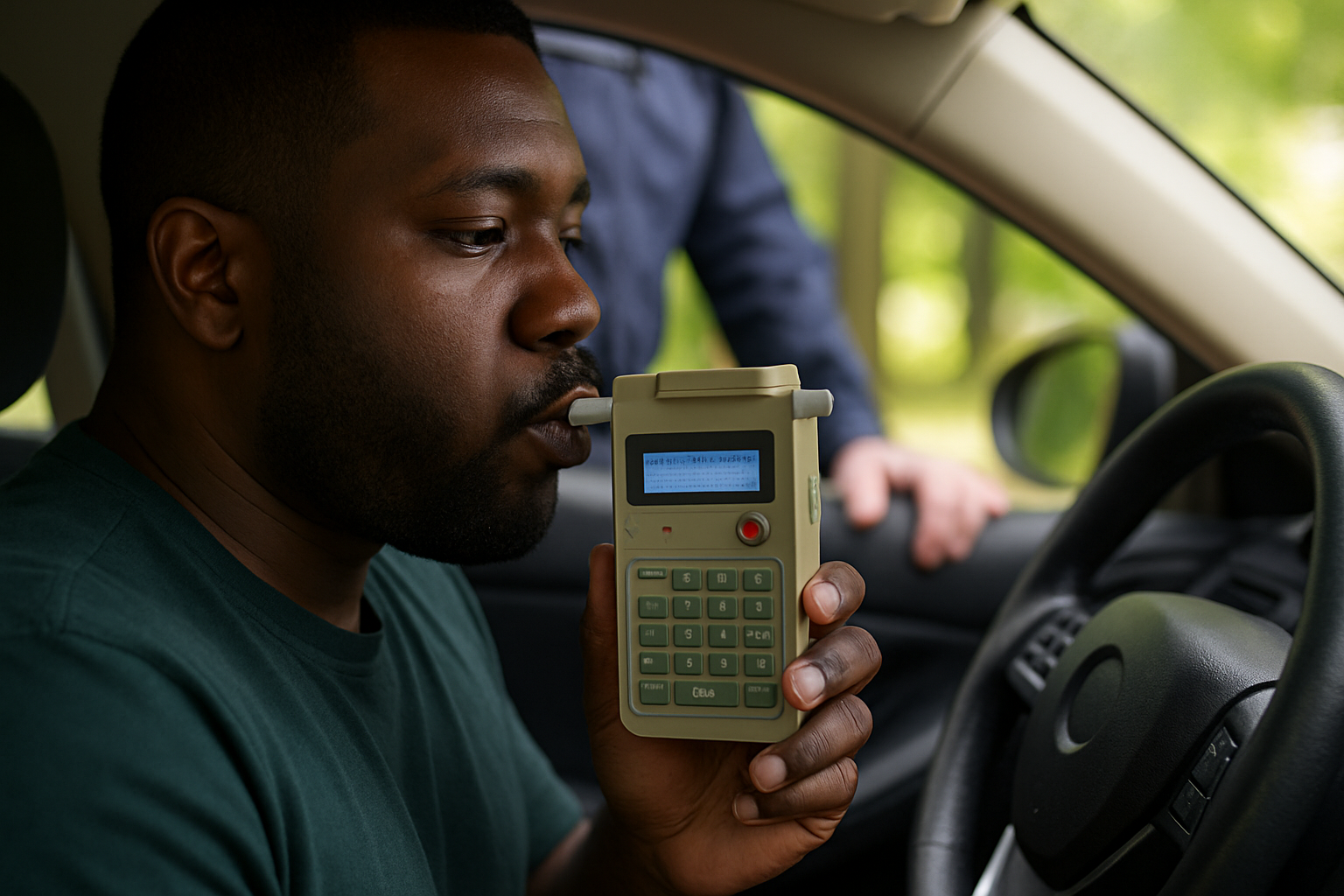
Your teen got a DUI and you're facing policy non-renewal, a massive rate increase, or assignment to a high-risk carrier. Here's what insurers actually do when a teen driver has an alcohol violation on your policy.
What Happens When Your Teen Gets a DUI — Policy Response by Carrier Type
If your teen driver is convicted of a DUI, your insurer will find out at the next policy renewal when they pull motor vehicle records — typically within 3 to 6 months. What happens next depends entirely on which carrier you're with and whether they write high-risk policies in your state. Standard carriers like State Farm, Allstate, and GEICO have internal underwriting rules about alcohol violations for drivers under 21, and most will either non-renew your entire household policy or offer renewal at a dramatically increased rate.
Non-renewal means your carrier will not cancel your policy mid-term, but they will send a notice 30 to 60 days before your renewal date stating they will not renew your coverage. You are not being dropped for non-payment or fraud — you are being non-renewed because your household no longer meets their underwriting guidelines. This is legal in all states as long as proper notice is given. Your current coverage continues until the renewal date, but you must find a new carrier before that date or risk a lapse in coverage.
If your carrier does offer to keep you, expect the annual premium increase to range from $3,000 to $6,000 depending on your state, your teen's age, and your prior driving history. A household that was paying $2,400 per year with a clean teen driver could see renewal quotes of $5,000 to $8,000 annually once the DUI is factored in. Some carriers apply a flat surcharge for the violation (commonly $1,500 to $2,500 per year), while others recalculate the teen's risk profile entirely and price them as a high-risk driver.
Not all carriers handle teen DUIs the same way. Progressive, The General, and some regional carriers maintain high-risk divisions and may keep your policy in-house but move you to a non-standard tier. Others — particularly preferred and standard-only carriers — do not write high-risk policies at all and will non-renew automatically.
Should You Remove the Teen from Your Policy or Keep Them Listed?
You cannot simply remove your teen from your policy to avoid the rate increase if they live in your household and have a license. All licensed household members must be listed as drivers on your policy, and omitting a driver — especially one with a recent DUI — is considered material misrepresentation. If your teen drives your vehicle and has an accident while unlisted, your insurer can deny the claim entirely and retroactively cancel your policy for fraud.
The only scenario where you can exclude your teen is if your state and carrier allow a named driver exclusion. This is a formal endorsement you add to your policy that explicitly states the excluded driver will never drive any vehicle on your policy, and if they do, there is zero coverage. Named driver exclusions are not available in all states — New York, Michigan, and several others prohibit them entirely. In states that do allow exclusions, you must sign a specific form acknowledging that if your excluded teen drives your car and causes an accident, you are personally liable for all damages with no insurance protection.
If your teen has their own vehicle titled and registered in their name, you may be able to get them a separate high-risk policy rather than keeping them on yours. This only works if they truly have financial independence — if you're paying for the car, the insurance, or they live with you full-time, most carriers will still require them to be listed on your household policy as a rated driver. Separate policies for high-risk teen drivers typically cost $400 to $700 per month for minimum liability coverage, and that assumes they can find a carrier willing to write them without a parent as a named insured.
The most common path for parents is to keep the teen listed on the household policy, absorb the rate increase, and wait for the violation to age off. DUI surcharges typically remain in effect for 3 to 5 years depending on the state, and after that period the violation may still appear on the record but no longer affects pricing as heavily. state-specific insurance requirements
High-Risk and Assigned Risk Pool — What It Costs and How Long You're Stuck There
If your current carrier non-renews your policy and you cannot find coverage in the voluntary market, you will be assigned to your state's high-risk pool — formally called the assigned risk plan, shared market, or residual market depending on the state. Every state maintains this system to ensure drivers who cannot get coverage elsewhere can still meet legal insurance requirements. Assigned risk policies are significantly more expensive than standard market policies, and coverage options are limited.
In most states, assigned risk premiums for a household with a teen DUI driver range from $6,000 to $10,000 annually for minimum liability coverage — and some high-cost states like Michigan, Louisiana, and Florida see assigned risk premiums exceed $12,000 per year. You cannot get collision or comprehensive coverage through the assigned risk pool in many states, meaning if your teen is driving a financed vehicle, you may not be able to meet your lender's insurance requirements. Some families are forced to sell the teen's vehicle or transfer the title out of the teen's name to avoid this issue.
You are not permanently stuck in the assigned risk pool. Most states allow you to move back to the voluntary market after 1 to 3 years of continuous assigned risk coverage without claims. Some states require proof of violation-free driving for a minimum period before voluntary carriers will quote you again. During this time, you should request quotes from high-risk specialists like The General, Bristol West, or Dairyland — these carriers write non-standard policies that are cheaper than assigned risk but still more expensive than standard market rates.
Progressive is one of the few large carriers that writes its own high-risk policies in most states, so if your household is non-renewed elsewhere, Progressive may offer a quote that keeps you out of assigned risk. Parents should get quotes from at least three non-standard carriers and the assigned risk pool to compare. Some agents specialize in high-risk placement and can access multiple non-standard carriers that do not sell directly to consumers. liability insurance requirements
State-Specific Penalties and How They Compound Insurance Consequences
A teen DUI is not just an insurance issue — it triggers immediate legal and administrative penalties that vary widely by state and directly affect what coverage options are available. Most states suspend a teen's license for 6 months to 1 year on a first-offense DUI, and some states impose longer suspensions for drivers under 21 due to zero-tolerance laws. During the suspension period, your teen cannot legally drive, but they must still be listed on your policy as a licensed household member once the suspension is lifted.
Many states require an SR-22 or FR-44 filing after a DUI conviction. This is not a type of insurance — it is a certificate your insurer files with the state DMV proving you carry at least the state-required minimum liability coverage. Your insurer charges a filing fee (typically $15 to $50) and must notify the state immediately if your policy lapses. If you cancel your policy or miss a payment, the state will re-suspend your teen's license within days. SR-22 filings are usually required for 3 years, and not all carriers offer them — this is another reason standard carriers non-renew households with teen DUI drivers.
Some states impose mandatory ignition interlock device (IID) requirements even for first-time offenders under 21. The device costs $70 to $150 per month to lease and install, and your teen cannot drive any vehicle without it. A few carriers will give a small rate reduction if an IID is installed because it reduces the risk of a repeat offense, but most do not. Parents who share vehicles with a teen driver on IID restrictions must have the device installed on every household vehicle the teen might access, which adds to the total monthly cost.
Finally, many states mandate alcohol education programs, community service, or DUI court for teen offenders. Completion of these programs does not reduce the insurance surcharge, but failure to complete them can result in extended license suspension or additional penalties that keep your teen uninsurable for even longer.
Discounts You Lose and the Few You Can Keep After a Teen DUI
Most carriers withdraw good student discounts, safe driver discounts, and claims-free discounts from your policy once a teen DUI is reported. The good student discount — typically 10% to 25% off the teen's portion of the premium — is almost always revoked because a DUI is considered a major violation that disqualifies the driver from safe driver criteria, even if the teen maintains a qualifying GPA. Some carriers allow you to reinstate the discount after 1 to 2 years of violation-free driving, but this is not automatic — you must request it and provide updated transcripts.
Telematics discounts from programs like Snapshot, SmartRide, or Drivewise may still apply if your teen was already enrolled before the DUI, but expect the insurer to monitor driving behavior much more closely. Any hard braking, speeding, or late-night driving incidents will result in higher rates or removal from the program. A few parents report that enrolling a teen in telematics after a DUI resulted in a small discount (5% to 10%), but this is carrier-specific and not widely available.
Multi-car and multi-policy discounts typically remain in place because they apply at the household level, not the individual driver level. If you also have homeowners or renters insurance with the same carrier, that bundling discount will continue unless the carrier non-renews your entire relationship. Some carriers do withdraw multi-policy discounts when a household is moved to a non-standard tier, so confirm this before assuming your rate structure stays the same.
Completing a defensive driving course after the DUI may qualify your teen for a small discount (3% to 5%) in some states, but this is not a substitute for the good student discount and does not offset the DUI surcharge. A few states mandate that insurers offer discounts for court-ordered alcohol education programs, but these are rare and the discount is minimal compared to the surcharge.
How Long the DUI Affects Rates and What to Do When It Finally Drops Off
A DUI typically remains on your teen's driving record for 5 to 10 years depending on the state, but the insurance surcharge period is shorter — usually 3 to 5 years. After the surcharge period ends, the violation still appears on the motor vehicle record, but carriers either stop applying a rate increase for it or reduce the surcharge significantly. This does not happen automatically at the 3-year mark — it happens at the first renewal after the surcharge period expires, so if your policy renews every 6 months, you may wait an extra 6 months before seeing rate relief.
Once the surcharge period ends, parents should immediately request quotes from multiple carriers. The teen will still be rated as a young driver, but without the active DUI surcharge, rates typically drop by 40% to 60% compared to the high-risk period. This is the best time to move back to a standard carrier if you were forced into the non-standard or assigned risk market. Do not assume your current carrier will give you the best rate once the violation ages off — shop aggressively.
Some states allow drivers to petition for early removal of a DUI from their record if they complete all court requirements, maintain a clean record for a set period, and pay additional fees. This process is called expungement or record sealing, and it is not available in all states. Even if the court grants expungement, insurers may still have the violation in their internal records and continue to rate for it, so expungement does not guarantee an immediate rate reduction.
Parents should also monitor when their teen turns 21 and 25 — these are major age-based rating thresholds, and the combination of aging out of the highest-risk age bands plus the DUI surcharge expiring can result in dramatic rate decreases. A 19-year-old with a fresh DUI might pay $600 per month, but the same driver at 25 with the violation aged off might pay $150 per month for the same coverage.
Coverage Decisions After a DUI — What You Actually Need and What You Can Drop
After a teen DUI, parents face pressure to maintain high liability limits while also dealing with unaffordable premiums. If your teen is driving a paid-off older vehicle worth less than $3,000, dropping collision and comprehensive coverage makes sense — the premium for those coverages may exceed the vehicle's value, and you're already paying a DUI surcharge on top of it. Maintain liability coverage at your state's minimum or higher, but do not pay for physical damage coverage on a low-value car when you're in a high-risk rating tier.
If the teen is driving a financed or leased vehicle, you cannot drop collision or comprehensive without violating your loan agreement, and your lender will force-place coverage at an even higher cost. In this situation, raising your deductible to $1,000 or $2,500 can lower your monthly premium by 15% to 30%, and the savings over a year may be worth the higher out-of-pocket risk. Some families choose to sell the financed vehicle and buy an inexpensive used car outright to eliminate the collision and comprehensive requirement entirely.
Liability limits are not optional. Even if your state allows 25/50/25 minimum coverage (which is far too low), a teen driver with a DUI is statistically much more likely to cause a serious accident, and you are personally liable for damages that exceed your policy limits. Many parents reduce their high-risk premiums by accepting state minimums, but this exposes your household assets to significant risk. A better approach is to maintain 100/300/100 liability limits and cut costs elsewhere — drop unnecessary coverages like rental reimbursement, roadside assistance, or coverage on vehicles the teen will never drive.
Uninsured motorist coverage is critical and relatively inexpensive even in high-risk tiers. This protects your teen if they are hit by a driver with no insurance or insufficient coverage, and it applies even if your teen is partially at fault in some states. Do not drop this coverage to save $10 or $20 per month — the risk of being hit by an uninsured driver is higher than the risk of many other covered losses.