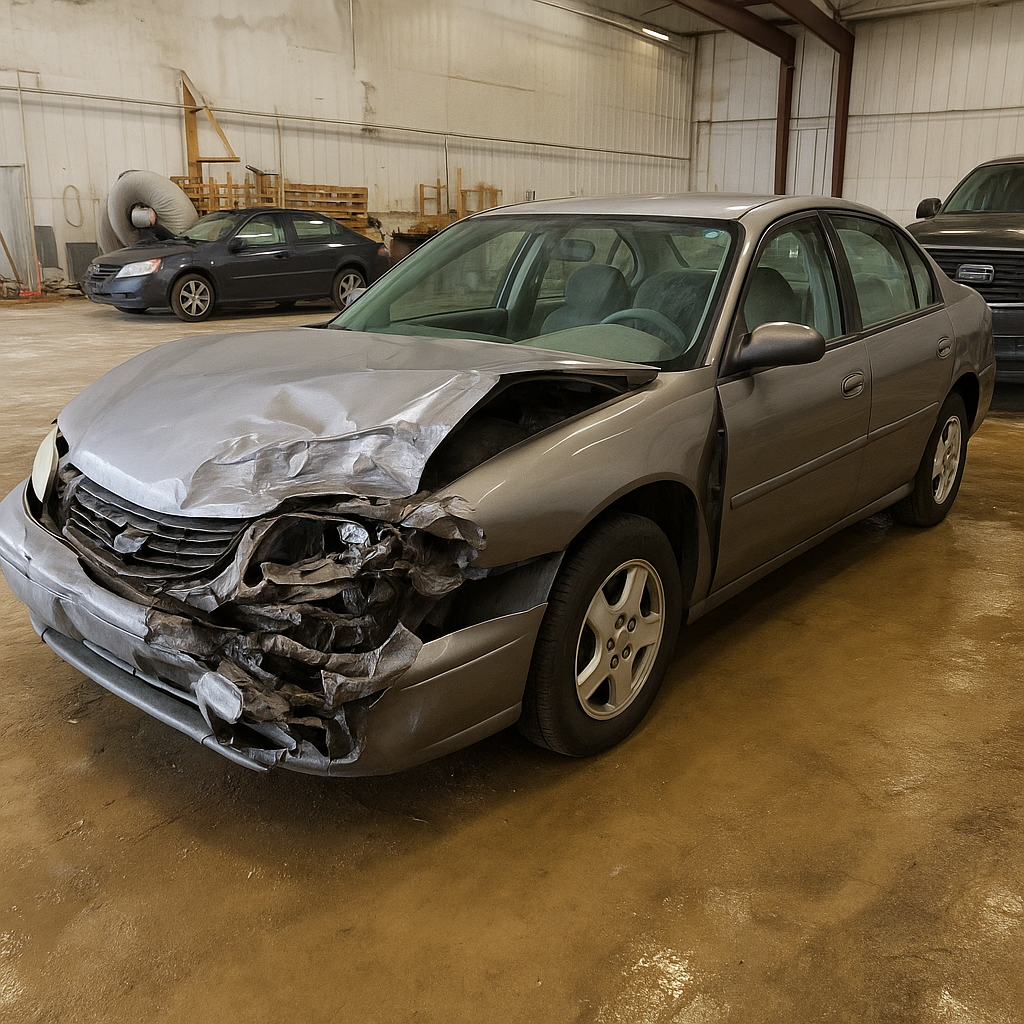
Your teen just had their first minor accident. Here's exactly how much your premium will increase, what factors insurers weigh, and which steps can reduce the damage to your rate.
The Real Cost of a Teen's First At-Fault Accident
Most parents adding a teen driver see their annual premium jump by $1,800–$3,500 depending on state and coverage level. After a teen's first at-fault fender bender, that increase compounds. Industry data from the Insurance Information Institute shows that a single at-fault accident with $2,000–$5,000 in property damage typically raises the premium by an additional 40–60% at the next renewal. For a parent already paying $4,500/year with a teen on the policy, that's another $1,800–$2,700 annually — bringing the total to $6,300–$7,200.
The percentage increase is often steeper for teen drivers than for adults with the same accident because insurers weigh claims history more heavily when the driver already falls into a high-risk category. A 35-year-old with a clean record who has one fender bender might see a 25–35% increase. A 16-year-old with less than two years of driving experience can see 50% or higher, even for a minor claim.
The increase isn't permanent. Most insurers apply an accident surcharge for three to five years from the date of the claim, depending on state regulations and carrier policy. After that lookback period, the accident falls off the record used for rating purposes — but only if no additional claims occur during that window. whether liability-only or full coverage makes sense for your teen's vehicle what coverage level makes sense for a teen driving an older vehicle
What Insurers Actually Count: Fault, Claim Amount, and Driver Age
Not every fender bender triggers the same rate response. Insurers evaluate three primary factors: fault determination, total claim cost, and the age and experience level of the driver. If your teen is found at fault — meaning they caused the accident through a violation like failure to yield, following too closely, or distracted driving — the claim becomes a surcharge event. If the other driver is at fault and you file through their liability coverage, your own rate typically remains unchanged.
Claim amount matters significantly. A fender bender resulting in $800 of bumper damage may fall below some insurers' surcharge threshold, particularly if you have accident forgiveness or a minor violation waiver. Once the claim exceeds $1,000–$2,000, most carriers will apply a surcharge. The National Association of Insurance Commissioners notes that insurers use claim severity — the dollar amount paid out — as a predictor of future risk, so a $5,000 fender bender has more rating impact than a $1,500 one, even if both are categorized as "minor."
Driver age compounds the effect. A teen driver's first at-fault accident signals to underwriters that the statistical risk predicted by age and inexperience has materialized. For a 40-year-old with 20 years of clean driving, one accident is an anomaly. For a 16-year-old with six months behind the wheel, it's confirmation of elevated risk. That's why the surcharge percentage is often significantly higher for young drivers.
When Filing the Claim Costs More Than Paying Out of Pocket
Parents face a critical decision immediately after a teen's fender bender: file a collision claim and accept the premium increase, or pay for repairs out of pocket and keep the record clean. The math depends on repair cost, your deductible, and the projected surcharge duration. If the total damage is $2,200, your collision deductible is $1,000, and the insurer would pay out $1,200, you need to compare that $1,200 benefit against three to five years of increased premiums.
Using the earlier example: if your current premium is $4,500/year with a teen driver, and a 50% surcharge adds $2,250 annually for three years, the total cost of filing the claim is $6,750 in additional premium over three years. Paying $2,200 out of pocket is the better financial outcome by $4,550. This calculation changes if the damage exceeds $5,000–$7,000 or if injuries are involved — at that point, filing becomes necessary despite the rate impact.
Some insurers offer accident forgiveness, which waives the surcharge for the first at-fault accident. This feature is sometimes included automatically after a certain number of claim-free years, or it can be purchased as an add-on for $50–$150 annually. If your teen is the primary driver of the vehicle and you don't already have accident forgiveness on your policy, adding it before an accident occurs can save thousands. However, it typically doesn't apply if the teen has been on the policy for less than a year or if they already have a violation on record.
How State Laws Shape Your Rate Increase After an Accident
The premium impact of a teen's fender bender varies significantly by state due to differences in rating regulations, lookback periods, and mandated surcharge limits. California, for example, prohibits insurers from considering gender or marital status in rating but allows accident history to be weighted heavily. The state also limits the lookback period to three years for most at-fault accidents under $1,000 in severity.
In Michigan, Massachusetts, and Hawaii, state regulators impose tighter restrictions on how much insurers can increase rates after a single at-fault accident, particularly for drivers under 21. Massachusetts uses a "safe driver insurance plan" that assigns drivers to risk categories; a teen with one at-fault accident may move up one or two steps, but the increase is capped by statute. In states without rate increase caps — including Texas, Georgia, and Florida — insurers have more latitude, and surcharges of 60–80% for teen drivers are not uncommon.
Graduated licensing laws also intersect with post-accident rating. In states where a teen driver is required to hold a learner's permit or provisional license with restrictions, some insurers apply a smaller surcharge if the accident occurred while the teen was driving under supervision or within restricted hours. This is carrier-specific and not universal, but it's worth asking your insurer whether supervised driving status affects the surcharge calculation. how your state's graduated licensing laws affect your coverage decision
Discount Strategies That Offset a Post-Accident Rate Hike
Even after a teen's at-fault accident, stacking available discounts can reduce the net premium increase. The good student discount — typically 10–25% off the teen driver portion of the premium — remains available if your teen maintains a B average or 3.0 GPA. This discount doesn't disappear after an accident unless the insurer's policy explicitly ties it to a clean driving record, which is rare. If your teen wasn't previously enrolled in the good student program, now is the time to submit a transcript or report card.
Telematics programs that monitor driving behavior can also reduce rates post-accident if your teen demonstrates consistent safe driving habits. Programs like Progressive Snapshot, State Farm Drive Safe & Save, and Allstate Drivewise offer discounts of 10–30% based on metrics like hard braking, speed, time of day, and mileage. A teen who scores well on telematics after an accident signals to the insurer that the claim was an isolated event, not a pattern. Some insurers will reduce or remove the accident surcharge earlier if telematics data shows sustained improvement.
Driver training and defensive driving courses can provide a one-time discount or a reduction in the surcharge. In some states, completing an approved defensive driving course after an at-fault accident can reduce the surcharge by 10–15% or shorten the lookback period by one year. Texas, Florida, and New York explicitly allow this; other states leave it to carrier discretion. The course must be state-approved and typically costs $25–$100, but the premium reduction often justifies the expense within the first year.
Should You Switch Carriers After a Teen's Accident?
After a teen driver's at-fault accident, some parents assume they're locked into the current insurer's surcharge. That's not the case. Shopping for a new policy can sometimes result in a lower total premium even with the accident on record, because insurers weigh claims history differently. One carrier may apply a 60% surcharge for a teen's fender bender, while another applies 40% — and if the second carrier's base rate is lower to begin with, the final premium can be significantly cheaper.
Timing matters. If your current policy renews within 30–60 days of the accident, the surcharge will appear on your renewal notice, and that's the optimal time to shop. Get quotes from at least three other carriers, disclose the accident honestly, and compare the total annual cost. According to a 2023 Consumer Federation of America study, parents who compared quotes after adding a teen driver saved an average of $600–$900 annually by switching carriers — and post-accident savings can be even larger due to variation in surcharge formulas.
Some insurers specialize in high-risk or non-standard coverage and may offer better rates for families with teen drivers who have an accident. These carriers — often regional or state-specific — don't always appear in national comparison tools, so working with an independent agent who represents multiple companies can surface options you wouldn't find on your own. The trade-off is sometimes fewer digital tools or slightly less robust customer service, but if the premium difference is $1,000–$1,500 annually, that trade-off is often worthwhile.
What Happens If Your Teen Has a Second Accident
A second at-fault accident within the three-to-five-year lookback period dramatically increases the likelihood of non-renewal or assignment to a high-risk pool. Insurers view two accidents in quick succession as confirmation of pattern risk, not bad luck. According to the National Association of Insurance Commissioners, teen drivers with two at-fault claims within three years are 3–4 times more likely to be non-renewed than those with one claim or none.
If your current insurer non-renews the policy, you'll need to find coverage in the voluntary market or, if that's not available at any price, through your state's assigned risk pool. Assigned risk coverage is significantly more expensive — often double or triple the cost of standard coverage — and offers fewer coverage options. In most states, you'll stay in the assigned risk pool for three years before you can reapply for voluntary market coverage.
Preventing a second accident becomes a financial priority. Consider restricting your teen's driving to supervised trips, limiting vehicle access during high-risk times (late night, weekends with passengers), or enrolling them in an advanced driver training course that focuses on hazard recognition and defensive techniques. Some insurers offer premium credits or surcharge waivers for teens who complete programs like Street Survival by the Tire Rack or B.R.A.K.E.S. (Be Responsible and Keep Everyone Safe), both of which emphasize real-world accident avoidance.