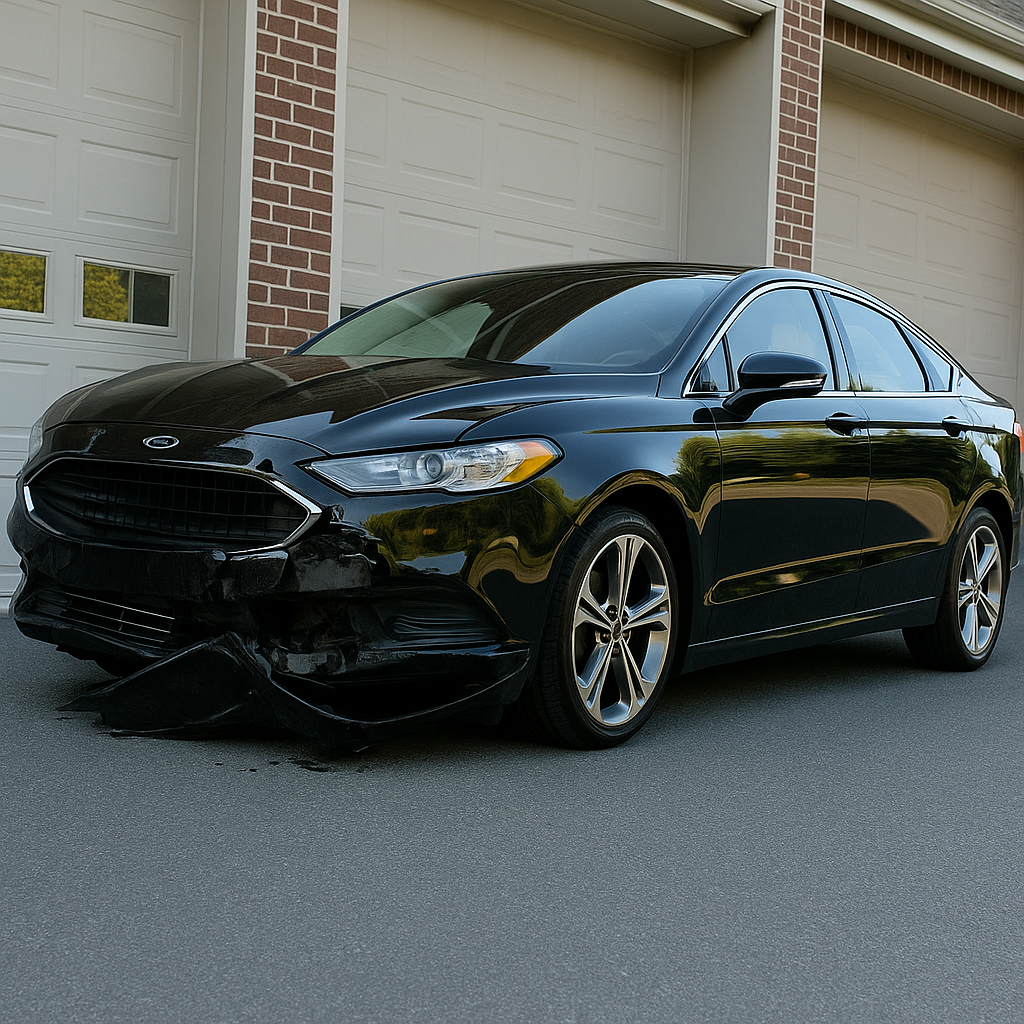
Your teen just had their first accident in Austin and you're wondering how much your premium will increase, whether you'll be dropped, and what to do next. Here's what actually happens after a teen driver claim in Texas.
What Happens to Your Rate After a Teen Driver Accident in Austin
Adding a teen driver to your Austin policy already costs $150–$280/mo depending on the vehicle and carrier. After a first at-fault accident, expect an additional premium increase of 30–60% on the teen's portion of the policy at your next renewal. For a parent paying $220/mo with a teen driver, that's an additional $65–$130/mo for the next three to five years.
Texas Insurance Code Article 5.13-2 does provide limited first-accident forgiveness: carriers cannot surcharge or cancel your policy for a single at-fault accident if total damages are under $1,500. The problem is that threshold is nearly impossible to stay under. A typical fender-bender in Austin — rear-end collision at a stoplight, sideswipe in a parking lot — generates $2,500–$4,500 in repair costs even without injuries. Bumper replacement alone on a modern vehicle with sensors often exceeds $1,500.
The surcharge appears at your policy renewal, not immediately. If your teen had an accident in March and your policy renews in September, you'll see the increase then. Most Texas carriers apply accident surcharges for three years from the violation date, though some extend to five years. The surcharge decreases over time at many carriers — 50% in year one, 30% in year two, 20% in year three — but this varies by insurer and isn't required by law. liability coverage in Texas collision coverage
Will Your Insurer Drop You or Your Teen Driver?
Texas carriers cannot cancel your policy mid-term due to a single at-fault accident, but they can choose not to renew at your policy expiration. Non-renewal is more common with teen drivers than adult drivers because the carrier has already identified the policy as high-risk due to the teen's age, and the accident confirms that risk profile.
You'll receive non-renewal notice at least 30 days before your policy expires if the carrier decides not to continue coverage. This is not the same as cancellation — you have coverage through the end of your current term. Use that 30-day window immediately to compare quotes from other carriers. Some Texas insurers specialize in non-standard or high-risk coverage and will accept teen drivers with one accident, though at higher premiums than standard market rates.
If you're non-renewed, your teen driver becomes significantly harder to insure affordably. Expect quotes $100–$200/mo higher than your pre-accident rate if you need to move to a non-standard carrier. This makes accident prevention and immediate post-accident decisions critical — even a minor claim can lock you into elevated premiums for years.
Should You File a Claim for Minor Damage?
If your teen caused an accident and total damages (your vehicle plus the other party's vehicle) are under $3,000, you face a difficult calculation. Filing a claim triggers the surcharge described above — $65–$130/mo for three years is $2,340–$4,680 in additional premiums. Paying out of pocket avoids the surcharge but requires immediate cash and only makes sense if you're certain total costs won't exceed your financial threshold.
Texas law requires you to report any accident involving injury, death, or property damage over $1,000 to the Texas Department of Transportation within 10 days, but this report does not automatically notify your insurer. However, if the other driver files a claim against your policy, your carrier will be notified regardless of whether you file your own claim. You cannot avoid a surcharge by simply not filing if the other party files.
For accidents with clear liability and damages estimated under your deductible plus one year of surcharge costs, paying out of pocket is often the better financial decision. Get written repair estimates from licensed shops for both vehicles, add 20% as a buffer for hidden damage, and compare that total to your three-year surcharge cost. If your teen hit a parked car and caused $1,800 in damage with no other party claim, paying directly saves you money. If your teen rear-ended another vehicle and that driver has neck pain or their repair estimate is $3,500, file the claim — your liability coverage is the only protection against a lawsuit.
Austin-Specific Graduated Driver License Rules After an Accident
Texas graduated driver license (GDL) restrictions don't change after an accident, but they're worth reviewing because violations can compound your insurance problems. Drivers under 18 with a provisional license cannot drive between midnight and 5 a.m. except for work, school, or emergencies, and cannot transport more than one passenger under 21 who isn't a family member during the first 12 months.
If your teen receives a traffic citation in connection with the accident — following too closely, failure to yield, running a red light — that violation appears separately on their driving record and triggers its own surcharge. A teen driver with both an at-fault accident and a moving violation on record will see premium increases of 50–80% rather than 30–60%. The citation also extends their provisional license period if they haven't yet turned 18.
After an accident, many parents restrict their teen's driving beyond what Texas law requires — limiting night driving even after the midnight restriction expires at 12 months, or requiring an adult passenger for six months. These personal restrictions don't reduce your premium directly, but enrolling your teen in a telematics program after the accident can. Programs like Allstate Drivewise or State Farm Drive Safe & Save monitor braking, speed, and time of day, and demonstrating improved driving habits post-accident can earn you 5–15% back even with the accident surcharge in place. Texas teen driver insurance requirements
How to Reduce Your Premium After Your Teen's Accident
The accident surcharge is largely non-negotiable, but the base premium underneath it is not. After an accident, this is the time to verify every available discount is applied to your policy. The good student discount (15–25% for a B average or higher) is not legally mandated in Texas, so you must submit proof — report cards or transcripts — every semester or annually depending on your carrier's requirement. If your teen earned the discount before the accident, confirm it's still applied after renewal.
Driver training discounts (5–15%) require completion of a state-approved course, and some carriers allow you to add this retroactively even after your teen is already on the policy. If your teen didn't complete driver training before being added, enrolling them now can offset part of the accident surcharge. The Texas Department of Licensing and Regulation lists approved providers at tdlr.texas.gov.
Raising your collision and comprehensive deductibles from $500 to $1,000 saves 10–15% on those coverages. If your teen drives an older vehicle worth under $5,000, dropping collision and comprehensive entirely makes sense — paying $80/mo to insure a $4,000 car means you're recovering your premium cost in claims only if you total the vehicle within 50 months. You still need liability coverage, which is mandatory in Texas, but you're not required to carry physical damage coverage on a paid-off vehicle.
Finally, compare quotes from at least three other carriers at renewal. After a teen accident, some insurers will increase your rate 60% while others increase it 30% for the identical driver and accident. Texas is a competitive market for auto insurance, and Austin has dozens of carriers writing policies. The rate difference between the most expensive and least expensive quote for a teen with one accident can be $150/mo or more.
What Your Teen Driver Needs to Do After the Accident
If your teen is shaken after their first accident, that's normal — but they need to take specific steps at the scene and afterward. At the accident scene: move vehicles to the shoulder if possible and safe, call 911 if there are injuries or if vehicles are blocking traffic, exchange insurance and contact information with the other driver, photograph all vehicle damage and the accident scene including street signs and lane markings, and get contact information from witnesses.
Texas requires a police report for any accident involving injury or apparent damage over $1,000. In Austin, call the non-emergency police line at 3-1-1 for minor accidents without injuries. The officer will complete a CR-3 crash report, which becomes part of your teen's driving record. Do not leave the scene before the officer arrives and completes the report — leaving the scene, even of a minor accident, is a criminal offense in Texas and will result in policy cancellation, not just a surcharge.
After leaving the scene, your teen should write down everything they remember about the accident while it's fresh: time, location, weather, road conditions, what they were doing immediately before impact, and their perception of what the other driver did. This statement is critical if there's a liability dispute. Insurers investigate teen driver accidents more carefully than adult accidents because teens are statistically more likely to provide incomplete or inaccurate accounts, not due to dishonesty but due to inexperience in knowing what details matter. A clear written account from your teen within two hours of the accident is more credible than a verbal account given three days later when the adjuster calls. compare quotes from multiple carriers