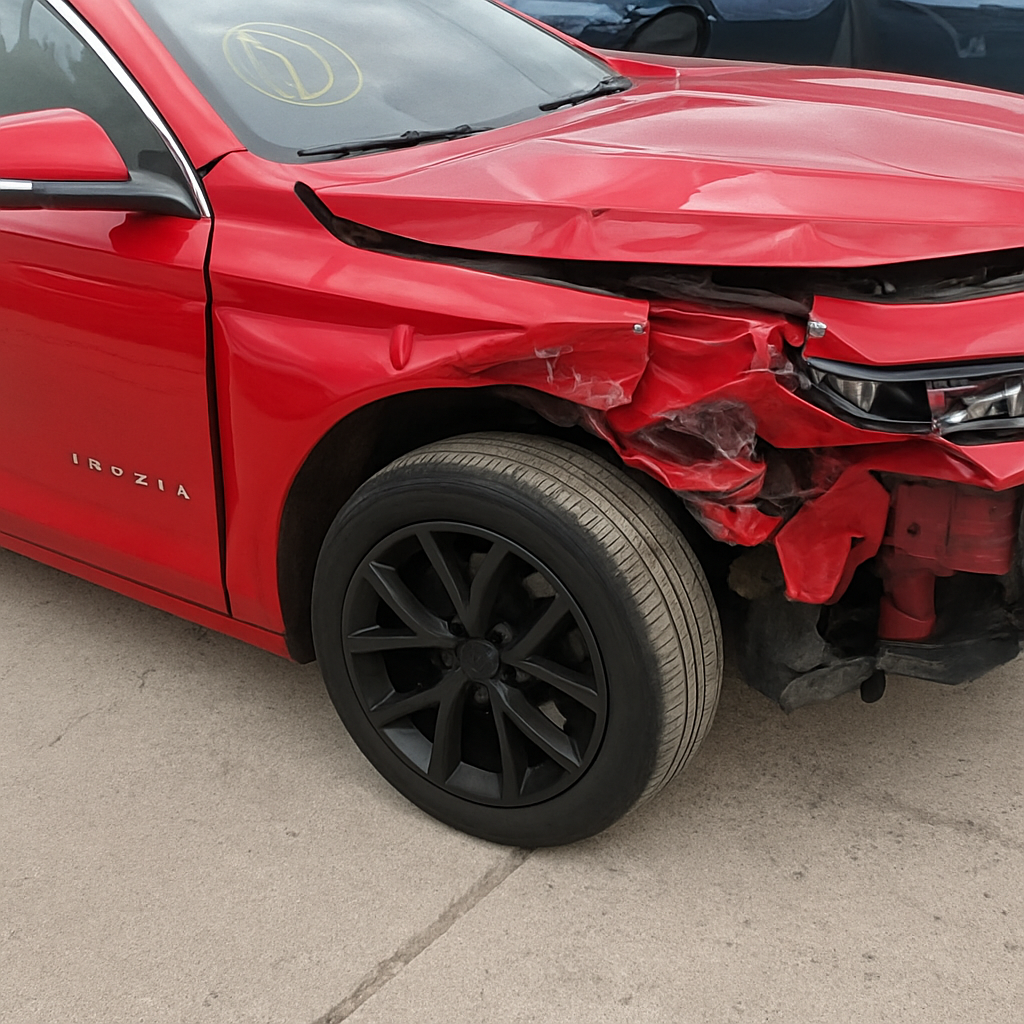
Your teen just had their first accident in Houston. Here's exactly how much your premium will increase, what to report to your insurer, and whether filing the claim is worth it.
How Much Your Houston Premium Will Increase After a Teen Driver Accident
The average premium increase after a teen driver's first at-fault accident in Texas ranges from 35% to 65% depending on your carrier, your current premium, and the severity of the claim, according to 2024 data from the Texas Department of Insurance. For a Houston family already paying $400/month with a teen driver on the policy, that's an additional $140 to $260 per month — or $1,680 to $3,120 annually.
Texas carriers typically surcharge at-fault accidents for three to five years from the date of the incident. If your current premium is $4,800/year with your teen included, a 50% surcharge means you'll pay an extra $7,200 to $12,000 over the surcharge period. That's why the decision to file a claim or pay out-of-pocket matters so much for minor accidents.
The increase is steeper in Houston than in many other Texas cities because Harris County already has some of the highest baseline teen driver rates in the state — adding a 16-year-old to a parent policy in Houston typically increases the annual premium by $2,200 to $3,800 before any accidents occur. A first accident compounds that cost significantly, especially if the teen is rated as the primary driver on a newer vehicle. liability insurance minimums in Texas whether to keep collision coverage
The 30-Day Reporting Window: What Texas Law Requires vs. What You Should Do
Texas law requires drivers to report any accident involving injury, death, or property damage exceeding $1,000 to the Texas Department of Transportation within 10 days. You must also notify your insurance carrier promptly — most policies define "promptly" as within 24 to 72 hours — but reporting the accident to your insurer does not mean you must file a claim immediately.
Most Texas carriers give you a window — typically 30 days from the date of the accident — to decide whether to formally file a claim or withdraw your report and handle the damage out-of-pocket. This grace period exists because insurers want the accident documented even if you ultimately don't file. If you report the accident, get a claim number, and then decide within 30 days to pay for repairs yourself, many carriers will close the claim as "report only" and won't apply a surcharge.
The critical step: get a repair estimate immediately. If the damage to both vehicles totals less than $2,000 and no one was injured, paying out-of-pocket almost always costs less over three years than the premium surcharge you'll face. If the other driver's vehicle sustained $3,500 in damage and your teen's car needs $1,200 in repairs, you're looking at $4,700 total — in that case, filing the claim makes sense because the surcharge will still be less than paying $4,700 upfront.
When to File the Claim vs. Pay Out-of-Pocket: The Houston Breakeven Calculation
Start with your current annual premium and multiply by the surcharge percentage your carrier applies to at-fault accidents — call your agent and ask directly what percentage increase applies to a first at-fault accident for a teen driver. If your annual premium is $6,000 and the surcharge is 50% for three years, you'll pay an extra $9,000 total. If the accident damage is $2,500, paying out-of-pocket saves you $6,500.
Texas does not mandate accident forgiveness programs, and most carriers reserve those programs for drivers with five or more years of claims-free history — which means your teen won't qualify. Some Houston-area carriers including USAA and State Farm offer a first-accident waiver for teen drivers if the teen has completed a defensive driving course within the past 12 months, but availability varies and you must ask for it explicitly when reporting the accident.
If the other driver is threatening to sue or claims injury even for a minor fender-bender, file the claim immediately. Liability claims involving injury can escalate to tens of thousands of dollars, and your liability coverage exists for exactly this scenario. Don't try to settle an injury claim out-of-pocket — even if the other driver says they're fine at the scene, symptoms can appear days later and Texas law allows injury claims up to two years after the accident date.
What Happens to Your Teen's Driver Record in Texas
An at-fault accident appears on your teen's Texas driving record maintained by the Department of Public Safety and remains visible to insurers for three years. This is separate from your insurance claims history — even if you pay out-of-pocket and don't file a claim, the accident still appears on the DPS record if it was reported to law enforcement or involved damages over $1,000.
Texas uses a point system for moving violations but does not assign points for at-fault accidents unless a traffic citation was also issued. If your teen was cited for failure to control speed, running a red light, or another violation in connection with the accident, those points apply and can trigger a Driver Responsibility Program surcharge if your teen accumulates six or more points in three years. The DRP surcharge is separate from your insurance premium and is paid directly to the state.
When you shop for new coverage after an accident, expect every carrier to see both the claims history and the DPS driving record. This is why some Houston parents switch carriers after a teen accident — a new carrier may offer a better rate than your current insurer's post-accident renewal, especially if you're moving from a standard carrier to one that specializes in non-standard or high-risk drivers like Direct Auto or Acceptance Insurance.
Steps to Take Immediately After Your Teen's First Houston Accident
First: confirm everyone is safe and call 911 if there are any injuries, no matter how minor. Houston Police Department or Harris County Sheriff's Office will dispatch an officer to the scene for any accident involving injury, a fatality, or property damage where a vehicle must be towed. If the accident is minor — both vehicles are drivable and no one is hurt — Texas law allows you to move the vehicles out of traffic and exchange information without waiting for an officer.
Second: take photos of all vehicle damage, the accident scene, street signs, traffic signals, skid marks, and the position of both vehicles before moving them. Your insurer will ask for these during the claims process, and they're critical if the other driver's story changes later. Get the other driver's name, phone number, insurance carrier, policy number, and license plate — and write down the make, model, and color of their vehicle.
Third: call your insurance agent or carrier within 24 hours to report the accident even if you haven't decided whether to file a claim. Explain that your teen was involved in an accident, provide the basic facts, and ask explicitly: what is the surcharge percentage for a first at-fault teen driver accident, how long does the surcharge apply, and do I have 30 days to decide whether to formally file? Get a claim number for your records. Then get repair estimates from at least two body shops — one you choose and one recommended by the other driver's insurer if they've already filed.
How This Accident Affects Your Coverage Decisions Going Forward
After a first accident, many Houston parents re-evaluate whether to keep collision and comprehensive coverage on the teen's vehicle — especially if the teen drives an older paid-off car. If your teen's car is worth $4,000 and your collision deductible is $1,000, the maximum you can recover from a collision claim is $3,000. If you're paying $800/year for collision coverage, you'll break even in less than four years — but after an accident, that collision premium may increase to $1,200/year, making the coverage less cost-effective.
Texas requires all drivers to carry liability insurance with minimum limits of 30/60/25 — $30,000 per person for bodily injury, $60,000 per accident for bodily injury, and $25,000 for property damage. Those minimums are dangerously low in Houston, where the average vehicle on the road is worth $25,000 and a multi-vehicle accident can easily result in $100,000+ in combined injuries. After a teen accident, do not reduce your liability limits to save money — if anything, consider increasing to 100/300/100 because your teen is now statistically more likely to be involved in a second accident within the next two years.
Some parents move the teen to a separate policy after a first accident to isolate the rate increase, but this rarely saves money in Texas. A standalone policy for a teen driver with an at-fault accident will cost $500 to $800 per month in Houston, compared to the $140 to $260 monthly surcharge you'd face by keeping them on your policy. The only scenario where a separate policy makes sense is if you're at risk of losing your own coverage entirely due to the teen's accident — some carriers non-renew policies after a second teen driver claim within 24 months.