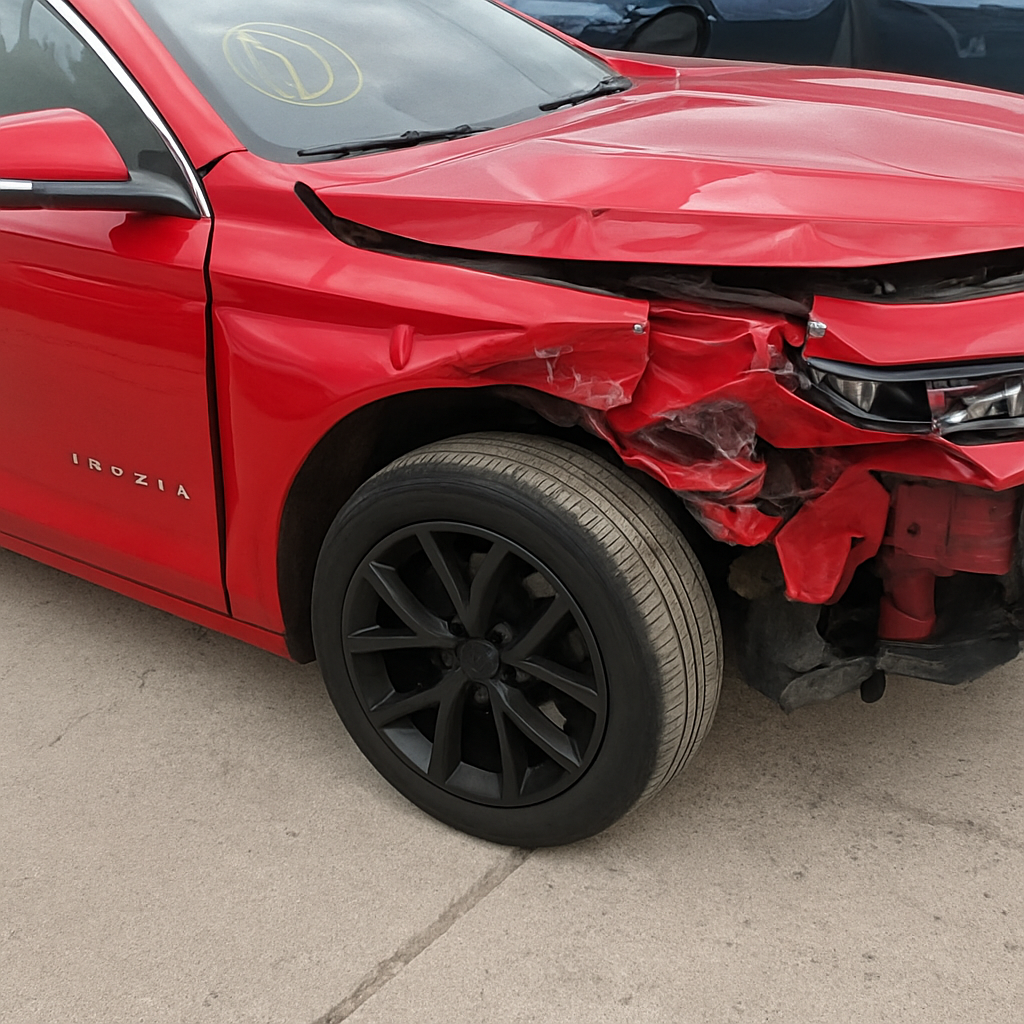
Your teen just had their first accident in Pittsburgh. Here's exactly how much your premium will increase, what violations add on top of the base accident surcharge, and how Pennsylvania's accident forgiveness rules work for teen drivers.
How Much a First Accident Increases Your Teen's Premium in Pittsburgh
Adding a 16-year-old driver to a Pittsburgh parent's policy typically costs $2,200–$3,800 annually depending on the vehicle and carrier. After a first at-fault accident, that same teen driver sees an additional surcharge of 30–60% applied to their portion of the premium, which translates to an extra $660–$2,280 per year for three to five years depending on the carrier's lookback period.
The surcharge amount depends on claim severity. A minor backing accident with $2,500 in property damage typically triggers a lower surcharge (30–40%) than a multi-vehicle collision with injury claims ($5,000+ in damages), which can push the surcharge to 50–60%. Pennsylvania doesn't cap accident surcharges by statute, so carriers set their own multipliers.
Most Pennsylvania carriers apply the accident surcharge at your next policy renewal, not immediately. If your teen had an accident in March and your policy renews in August, you'll see the increase in August. The surcharge remains for 3–5 years from the accident date depending on the carrier — GEICO and State Farm typically use a 3-year lookback, while Nationwide and Erie often apply a 5-year window. liability insurance limits in Pennsylvania
Pennsylvania's Accident Forgiveness Rules for Teen Drivers
Pennsylvania does not mandate first-accident forgiveness, so whether your teen's accident is forgiven depends entirely on your carrier and policy type. Most carriers exclude drivers under 21 from accident forgiveness programs even if the parent policyholder qualifies. GEICO's accident forgiveness in Pennsylvania, for example, applies only to the primary named insured after five years claim-free — not to listed teen drivers.
Some carriers offer accident forgiveness as an optional endorsement you can purchase before a claim occurs. Erie Insurance and Nationwide both offer this in Pennsylvania, typically adding $40–$80 annually to your premium. The endorsement usually requires all household drivers to be claim-free for 3–5 years before it activates, which means if you add it the day your teen gets licensed, it won't cover an accident that happens six months later.
If your policy doesn't include accident forgiveness and your teen has their first at-fault accident, the surcharge applies. Your only mitigation path is the defensive driver course credit some carriers offer, which we cover below. Pennsylvania teen driver insurance requirements
What Counts as an At-Fault Accident in Pennsylvania
Pennsylvania is a choice no-fault state, meaning you select either limited tort or full tort when you buy your policy. That choice affects your right to sue, but it doesn't change how insurers determine fault for surcharge purposes. An accident counts as at-fault if your teen is assigned 51% or more responsibility for the collision, regardless of whether you file through your own collision coverage or the other driver's liability coverage.
Common first-accident scenarios for Pittsburgh teen drivers include rear-end collisions (nearly always at-fault for the rear driver), backing accidents in parking lots (at-fault if your teen was moving), and left-turn collisions at unprotected intersections (typically at-fault for the turning driver). Even if no citation is issued, the accident still appears on your claims history and triggers the surcharge if you file a claim.
Not-at-fault accidents — where another driver is 100% responsible and you file through their liability coverage — do not trigger a surcharge in Pennsylvania. However, filing multiple not-at-fault claims within a short window can still signal risk to underwriters and complicate future policy applications, even if no surcharge applies.
Pennsylvania Traffic Violations That Stack on Top of the Accident Surcharge
If your teen receives a traffic citation in connection with the accident, you'll face both the accident surcharge and a separate violation surcharge. The most common Pittsburgh teen violations are speeding (15+ mph over), following too closely, failure to yield, and distracted driving under Pennsylvania's texting ban.
A speeding ticket (15+ mph over the limit) adds an additional 20–35% surcharge on top of the accident surcharge. If your teen's accident already triggered a 40% increase, a speeding ticket pushes the combined impact to 60–75%. Pennsylvania uses a point system for license suspension purposes, but insurers set their own surcharge schedules — the points themselves don't directly determine your premium, though accumulating six points within two years triggers a PennDOT warning letter and possible license suspension.
Distracted driving citations carry particularly steep insurance penalties in Pennsylvania. A first offense under the state's texting-while-driving law adds 25–40% to the teen driver's premium, and some carriers classify it as a major violation comparable to reckless driving. If your teen was cited for distracted driving in connection with their first accident, expect the combined surcharge to approach or exceed 80%.
How to Reduce the Surcharge: Defensive Driver Courses and Policy Adjustments
Most Pennsylvania carriers offer a defensive driver discount of 5–15% if your teen completes an approved course, and some will apply this discount retroactively to offset part of an accident surcharge if the course is completed within 90 days of the claim. Erie Insurance and State Farm both honor this timing window in Pennsylvania, though you must request the adjustment manually — it's not applied automatically.
PennDOT maintains a list of approved defensive driving courses through the Pennsylvania Driver Improvement Program. The course costs $50–$100 and takes 6–8 hours, available online or in-classroom. Completion also removes up to three points from your teen's driving record if taken before accumulating six points, which can delay or prevent a license suspension if multiple violations are involved.
Beyond the defensive driver course, review whether your teen is maximizing all available discounts. The good student discount (3.0 GPA or higher) typically reduces the teen driver premium by 10–20%, and adding a telematics device (Erie RateWatch, GEICO DriveEasy, Nationwide SmartRide) can reduce rates by 5–25% based on monitored driving behavior. Stacking these discounts doesn't erase the accident surcharge, but it reduces the base premium the surcharge is applied to, which lowers your overall cost.
Should You File a Claim or Pay Out of Pocket?
If your teen's first accident involves minor damage and no injuries, paying out of pocket may cost less over three to five years than filing a claim and absorbing the surcharge. The break-even calculation depends on repair costs, your deductible, and your current premium.
Example: Your teen backs into a mailbox, causing $1,800 in damage to your vehicle. You have a $500 deductible, so your net claim payout is $1,300. If the accident surcharge adds $900 annually for three years ($2,700 total), you'll pay $1,400 more over that period than if you'd paid the $1,800 out of pocket. For claims under $2,000–$3,000 where no other party is involved, paying out of pocket often makes financial sense.
You must file a claim if the accident involves another vehicle, property damage to someone else's property (fence, building, parked car), or any injury — even minor. Pennsylvania law requires drivers to report any accident involving injury, death, or vehicle damage requiring towing. Failing to report a reportable accident can result in license suspension and complicates your legal position if the other party files a claim later.
Graduated Licensing Restrictions After an Accident in Pennsylvania
Pennsylvania's graduated licensing system imposes passenger and nighttime restrictions on junior drivers (under 18 with a junior license). An at-fault accident does not automatically extend these restrictions, but accumulating points from traffic violations can trigger additional penalties or delay full licensure.
If your teen accumulates six or more points within two years, PennDOT requires completion of a Special Point Examination and possible license suspension. An at-fault accident itself doesn't add points to the driving record unless a citation is issued, but common accident-related violations (speeding, failure to yield, following too closely) each carry 2–4 points. Two violations in connection with a single accident can push your teen close to or over the six-point threshold.
Some parents choose to impose additional supervised driving or curfew restrictions after a first accident as a condition for continued vehicle access. While this has no direct insurance benefit, it can reduce exposure during the high-surcharge period and supports a safer driving record going forward, which ultimately matters more than any single discount.