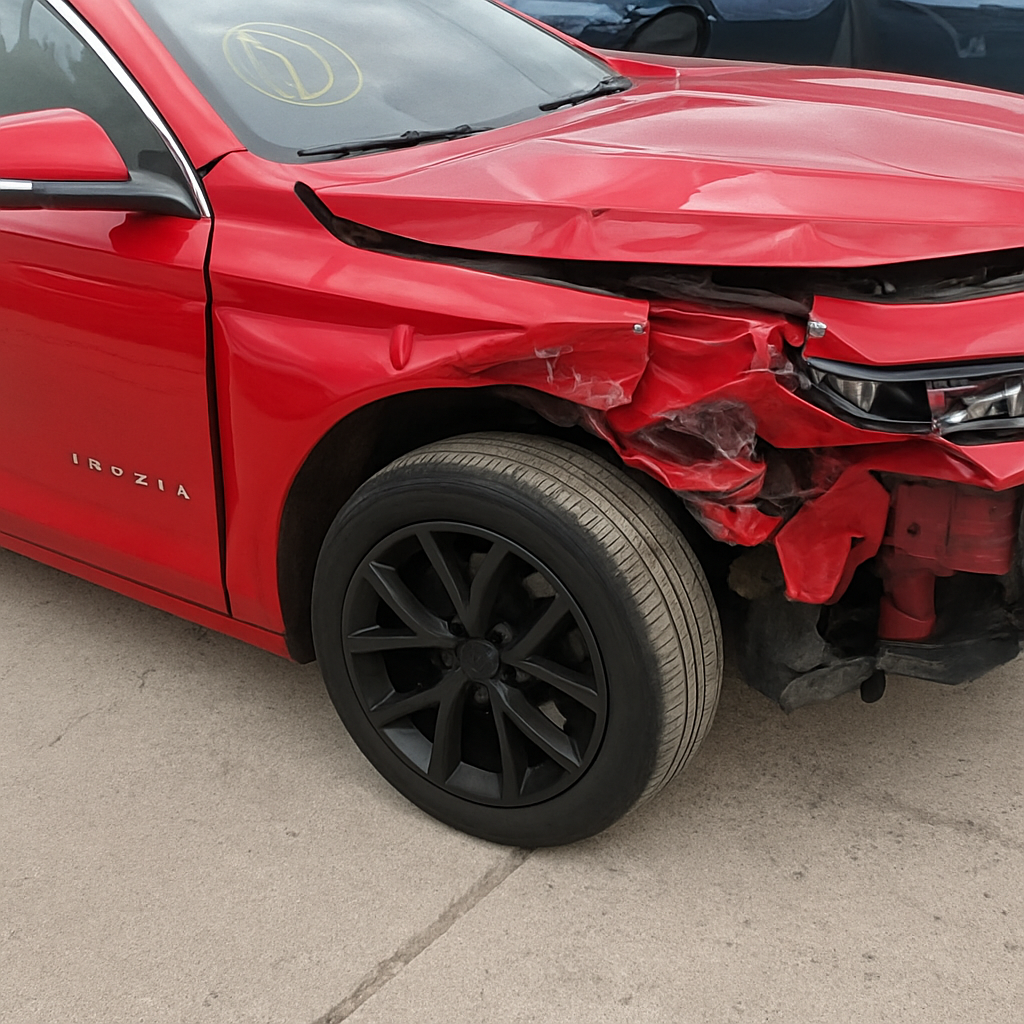
Your teen just had their first accident in Reno, and you're wondering how much your premium will increase and whether filing a claim makes sense. Here's what actually happens to your rate and what to do next.
How Much a First Accident Raises Your Nevada Teen Driver Premium
A single at-fault accident typically increases your Nevada premium by 20–40% at your next renewal, which translates to an additional $800–$1,800 per year when a teen driver is on the policy. The exact increase depends on your carrier's tier system, your current rate, and the severity of the accident. State Farm and GEICO — two of the largest carriers in Reno — tend toward the lower end of that range for first accidents under $2,000 in damages, while Allstate and Progressive historically apply steeper surcharges.
Nevada does not mandate accident forgiveness for first-time incidents, so carriers are free to surcharge at will. Some insurers offer optional accident forgiveness as an add-on endorsement, but it typically costs $50–$150 per year and must be purchased before the accident occurs. If you already have it on your policy, your teen's first at-fault accident may be forgiven — but read your policy language carefully, as some carriers exclude drivers under 21 from forgiveness provisions even when it's active on the parent's policy.
The surcharge stays on your record for three years from the accident date in Nevada. That means if your teen had a fender-bender in March 2025, you'll pay the elevated rate through March 2028 unless you switch carriers. Switching doesn't erase the accident — Nevada insurers pull your CLUE report (Comprehensive Loss Underwriting Exchange), which tracks all claims filed in your name for seven years — but some carriers weigh recent accidents less heavily than others, and shopping after the first renewal post-accident can sometimes reduce your total cost. Nevada's graduated licensing restrictions
Filing Through Your Policy vs. the Other Driver's Insurer
If your teen was at fault and caused damage to another vehicle or property, you have no choice — the claim goes through your liability coverage, and the accident will appear on your record. But if your teen was not at fault, or if fault is unclear, you face a decision: file through your own collision coverage and pay your deductible, or pursue a claim against the other driver's liability insurer.
Filing through your own collision coverage gets your teen's car repaired fastest — usually within days — but it counts as an at-fault claim on your record even if your teen wasn't actually at fault, unless your insurer successfully subrogate (recovers the full cost from the other driver's carrier). Subrogation can take 60–90 days, and if your insurer recovers, the claim is reclassified as not-at-fault and your deductible is refunded. But during that period, the claim appears on your record, and if you switch carriers before subrogation closes, the new insurer may count it as at-fault.
Filing through the other driver's liability coverage avoids any impact to your own policy, but it requires proving the other driver was at fault — often through police reports, witness statements, or dashcam footage — and the other driver's insurer controls the timeline. If the other driver was uninsured or underinsured, you'll likely need to file through your own uninsured motorist property damage coverage (UMPD) or collision, which brings you back to the deductible and claims-record question. Nevada does not require UMPD coverage, so if you declined it and the other driver has no insurance, your only option is collision coverage or paying out of pocket.
When Not to File: The $2,000 Threshold Decision
If the total damage is under $2,000 and your teen was at fault, many Reno parents choose to pay out of pocket rather than file a claim. The math: if your collision deductible is $500 or $1,000, you're only recovering $500–$1,500 from the insurer, but you're triggering a three-year surcharge that will cost you $800–$1,800 per year — a total of $2,400–$5,400 over the lookback period. Paying the $2,000 repair yourself keeps your record clean and avoids the long-term rate impact.
This calculation shifts if the damage exceeds $3,000, if there are injuries involved, or if the other party is threatening to sue. Once a claim involves bodily injury, you must report it to your insurer immediately even if you think your teen wasn't at fault — your liability policy includes a duty to defend, and failing to notify your carrier can void your coverage. The Nevada Department of Insurance requires insurers to be notified of any accident involving injury or more than $750 in property damage within a reasonable time, typically interpreted as 30 days, though your policy may specify sooner.
Get at least two repair estimates before deciding. Reno body shops often provide free estimates, and the difference between a $1,800 repair and a $2,400 repair can flip the decision. If you're close to the threshold, ask whether any damage is cosmetic and could be deferred — a scratched bumper doesn't affect safety, but a bent frame does.
Nevada Graduated Licensing and How It Affects Post-Accident Coverage
Nevada's graduated licensing program restricts teen drivers under 18 in ways that can complicate post-accident claims. A teen with an instruction permit must have a licensed adult 21 or older in the front seat at all times, and if your teen was driving alone with only a permit when the accident occurred, your insurer may deny the claim entirely. Intermediate license holders (typically ages 16–17) cannot drive between 10 p.m. and 5 a.m. unless traveling to or from work or a school event, and cannot transport passengers under 18 who are not immediate family members for the first six months.
If your teen violated a GDL restriction at the time of the accident, your insurer will investigate whether the violation contributed to the crash. Driving after curfew doesn't automatically void coverage, but it strengthens the insurer's argument for denying the claim or applying a policy exclusion. Some carriers include explicit GDL compliance clauses in teen driver endorsements — if yours does, and your teen was in violation, you may be personally liable for all damages with no coverage.
This is also why you should verify your teen's license status before allowing them to drive. Some Reno parents assume their teen's intermediate license grants full driving privileges, but Nevada DMV does not automatically lift GDL restrictions at age 18 — your teen must hold the intermediate license for at least six months and meet all requirements before applying for a full unrestricted license. If your 17-year-old with an intermediate license causes an accident while violating a GDL rule, the consequences extend beyond the rate increase — you could face personal liability for tens of thousands in damages.
What to Do Immediately After Your Teen's First Reno Accident
At the scene: confirm everyone is safe, call 911 if there are any injuries, and exchange information with the other driver — name, phone, insurance carrier, and policy number. Nevada law requires drivers to remain at the scene; leaving before exchanging information is a misdemeanor even in minor accidents. Take photos of all vehicle damage, the surrounding area, street signs, and any skid marks or debris. If there are witnesses, ask for their contact information — witness statements often determine fault when the police report is inconclusive.
File a police report if damage exceeds $750 or if anyone is injured. Reno Police Department and Washoe County Sheriff handle accident reports depending on location, and you typically have five days to file if officers didn't respond to the scene. The report establishes an official record of fault and becomes critical evidence if the other driver later disputes their responsibility. Even if the officer doesn't assign fault in the report, the damage descriptions and witness statements provide leverage when negotiating with insurers.
Notify your insurance carrier within 24–48 hours even if you're not sure you'll file a claim. Reporting the accident doesn't automatically trigger a rate increase — filing a claim does — but late reporting can give your insurer grounds to deny coverage later if the other driver files a claim against you. When you call, you're opening a claim file, not committing to repairs. Ask your agent or claims adjuster for a damage estimate and a projection of how your rate would change if you proceed, then make the file-or-pay decision with actual numbers.
Shopping After an Accident: What Reno Carriers Actually Do
Once the accident is on your record, shop aggressively at your first renewal. Different carriers weigh accidents differently, and the rate spread widens significantly after a teen driver claim. GEICO and State Farm often remain competitive for parents with one teen accident, particularly if you stack the good student discount and a telematics program like DriveEasy or Drive Safe & Save. USAA, if you're military-affiliated, typically applies the smallest surcharges for first accidents and offers the most flexible accident forgiveness programs for families.
Progressive and Allstate tend to apply steeper initial surcharges, but their Snapshot and Drivewise telematics programs can offset 10–30% of the post-accident increase if your teen demonstrates safe driving habits over the next six months. Nevada Farm Bureau and Employers Insurance Company — two regional carriers with significant Reno market share — often quote 15–25% lower than national carriers for parents with teen drivers post-accident, though their discount programs are less robust.
Get quotes from at least four carriers, and run them both with and without your teen on the policy. In rare cases — usually when the parent has their own accidents or violations on record — it's cheaper to move the teen to a separate non-owner policy or a named-operator policy on a grandparent's insurance. The Nevada DMV requires proof of financial responsibility (insurance) for all licensed drivers, so your teen cannot remain uninsured, but the configuration that costs least varies by family claims history.
How Long Until Your Rate Returns to Normal
Nevada's three-year lookback means your rate will remain elevated until three years from the accident date, at which point the surcharge falls off and your premium drops back to pre-accident levels — assuming no new claims. But the drop isn't automatic: some insurers require you to request re-underwriting, and if you don't, they'll continue charging the higher rate. Mark your calendar for 36 months post-accident, then call your agent or file a policy review request 30 days before that date.
During those three years, your teen's driving record matters more than ever. A second accident before the first one ages off can move you into a high-risk tier or get you non-renewed entirely. Reno parents managing post-accident rate increases should prioritize telematics monitoring — it's the only tool that provides real-time feedback on your teen's driving and generates documented proof of improvement, which some carriers will consider for early re-rating even before the three-year mark.
If your carrier non-renews you after the accident, you'll likely need to move to Nevada's assigned risk plan (the Nevada Automobile Insurance Plan) or seek coverage through a non-standard carrier like The General or Acceptance Insurance. Non-standard policies cost 50–150% more than standard market rates, but they're a bridge: once you complete 6–12 months of claims-free coverage, you can often move back to a standard carrier at a lower rate.