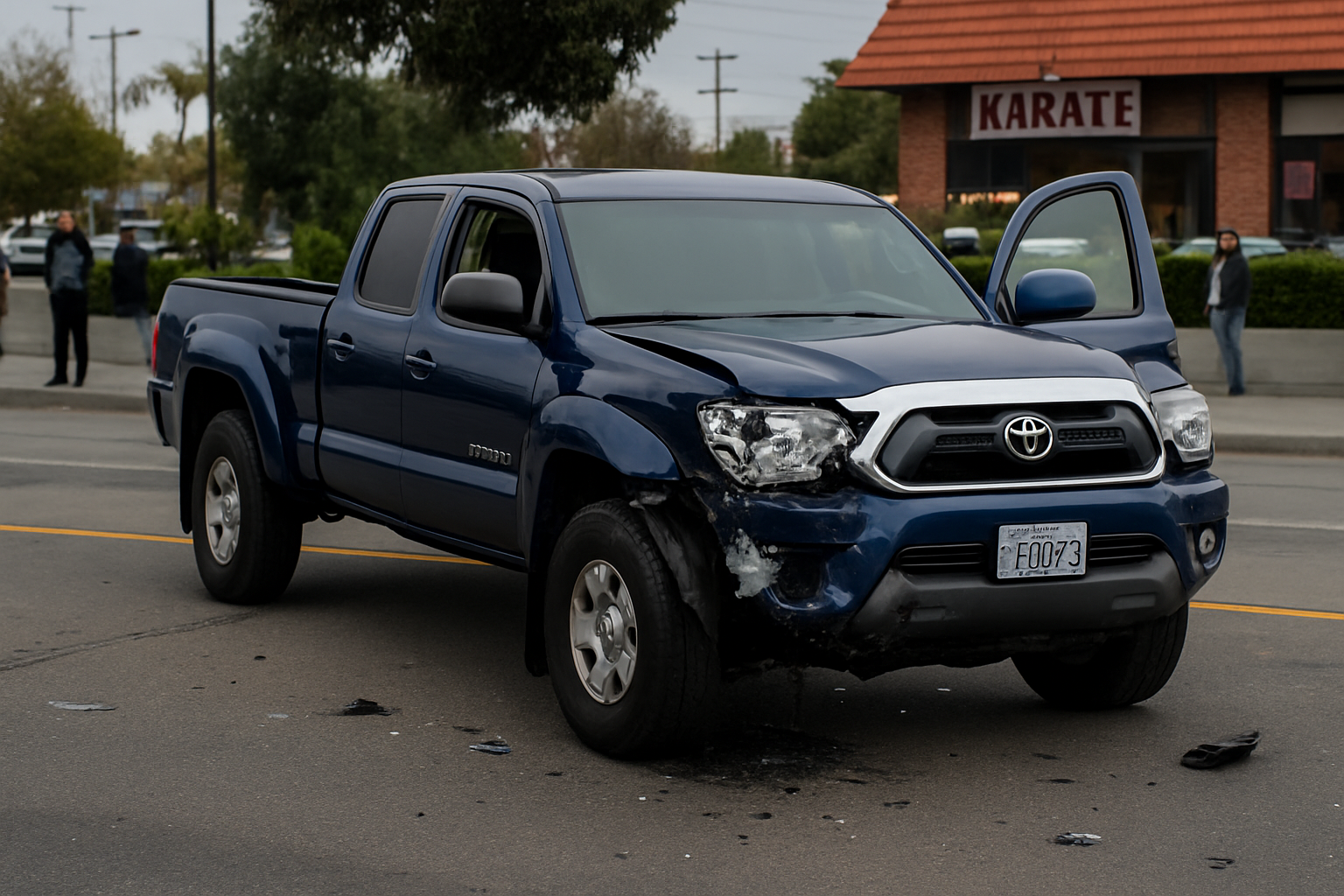
Your teen just had their first accident in Tacoma. Here's exactly how much your premium will increase, what violations stay on their record, and whether you should file a claim or pay out of pocket.
How Much Will Your Premium Increase After a Teen At-Fault Accident in Tacoma?
Adding a teen driver to your Tacoma policy already increased your annual premium by $2,400-$4,200 depending on your carrier and the vehicle they drive. An at-fault accident adds another layer: Washington insurers typically surcharge teen driver accidents at 30-50% of the current premium for three years following the incident. If your family policy currently costs $3,600/year with your teen included, expect that to jump to $4,680-$5,400/year — an additional $1,080-$1,800 annually, or $3,240-$5,400 over the three-year surcharge period.
The surcharge percentage varies by carrier and severity. A backing-into-a-mailbox claim under $1,000 might trigger a 25-30% increase with some carriers, while a multi-vehicle intersection collision over $5,000 can hit 50% or higher. State Farm, GEICO, and Progressive — three of the most common carriers for Tacoma families — each apply different accident forgiveness timelines and surcharge schedules. Some offer accident forgiveness after five claim-free years on the policy, but that protection rarely extends to drivers under 21.
Washington state does not regulate accident surcharge percentages, meaning carriers set their own schedules. The Office of the Insurance Commissioner requires only that surcharges be "actuarially justified," which gives insurers wide latitude. This is why shopping your policy after an accident often backfires — the new carrier sees the accident on your teen's record and prices accordingly, often higher than your current carrier's loyalty retention rate.
Should You File the Claim or Pay Out of Pocket?
The break-even calculation is straightforward: compare the cost to repair the other party's vehicle (and your own, if you're filing for collision coverage) against the total three-year surcharge cost. If the accident caused $2,000 in damage to another vehicle and your three-year rate increase would be $3,600, paying out of pocket saves you $1,600 — assuming you have the cash available and the other party agrees to settle directly.
Direct settlement works only if the other driver agrees in writing not to file a claim and your teen was clearly at fault with no injury involved. Even minor soft-tissue injuries can escalate to five-figure medical claims months later, which is why most insurance professionals recommend filing any claim involving another person's injury, no matter how minor it seems at the scene. Washington is a pure comparative negligence state, meaning even if your teen is 90% at fault, the other party can still claim for their 10% of damages — and if they file six months later, your carrier will treat it as a late-reported claim, which looks worse than an immediate report.
If you're considering paying out of pocket, get a written release from the other party before handing over any money. This should state the amount paid, the date of the accident, and confirmation that no further claims will be made. Without this, you've paid for repairs and still face the risk of a claim filing that triggers the surcharge anyway. Washington law does not require a specific release form, but your insurer can provide a template if you call and explain you're considering a direct settlement before filing.
What Stays on Your Teen's Driving Record in Washington?
Washington maintains two separate records that affect insurance rates: the Department of Licensing driving record (traffic violations and license actions) and the insurance claim history maintained by LexisNexis and other data brokers. An at-fault accident your teen caused does not appear on the DOL driving record unless it involved a citation — but it does appear on the insurance claim record for 5-7 years, depending on the carrier's underwriting lookback period.
Most Washington insurers use a three-year surcharge window but a five-year underwriting window. This means your current carrier will stop adding the accident surcharge after three years, but if you shop for a new policy in year four, the new carrier sees the accident in their underwriting review and may still rate your teen as higher risk. The claim falls off entirely after five years with most carriers, though some — particularly non-standard insurers — look back seven years for drivers under 25.
If your teen received a citation at the scene (following too closely, failure to yield, negligent driving second degree), that violation appears on the DOL record separately from the accident itself and carries its own point assessment and surcharge. A negligent driving second-degree charge adds one point and typically increases rates 15-25% for three years. The violation and the accident surcharge stack — you're paying for both. If the citation was a moving violation like speeding or running a stop sign, those carry steeper point penalties and longer rate impacts. Washington teen driver insurance requirements
Graduated Licensing Restrictions and How They Affect Post-Accident Coverage
Washington's intermediate driver's license restricts teen drivers under 18 from carrying passengers under 20 (except siblings) for the first six months, and no more than three passengers under 20 after that until they turn 18. If your teen caused an accident while violating these restrictions — say, driving three friends home from school during the first four months of licensure — your liability coverage still applies to injuries and property damage to other parties, but your carrier may deny collision and comprehensive claims for damage to your own vehicle.
This passenger restriction violation doesn't void your liability coverage because Washington law prohibits carriers from denying third-party claims based on policy violations by the insured — but it does give your insurer grounds to non-renew your policy at the next renewal period or move you to a higher-risk tier. Some parents don't realize the violation occurred until the claim investigation reveals passenger statements. By that point, the accident is already on record, the surcharge applies, and the policy is flagged for non-renewal.
If your teen's accident involved a passenger restriction violation, expect a letter from your carrier within 30-45 days outlining their decision. Non-renewal is more common than mid-term cancellation, which gives you six months to shop for a new policy. This is one scenario where working with an independent agent in Tacoma who represents multiple carriers pays off — they can place you with a carrier willing to write post-violation teen drivers without forcing you into non-standard high-risk markets.
How to Minimize the Rate Impact Going Forward
Once the accident is on record, your immediate goal is limiting how much you pay over the surcharge period and positioning your teen to qualify for discounts that offset part of the increase. The good student discount — 3.0 GPA or higher, verified by report card or transcript — reduces teen driver premiums by 10-25% depending on the carrier. If your teen wasn't previously enrolled in this discount, now is the time. Most carriers apply it retroactively to the current policy period once you submit proof.
Telematics programs like Snapshot (Progressive), DriveEasy (GEICO), or Drive Safe & Save (State Farm) monitor braking, acceleration, and speed and can reduce premiums by 10-30% for safe driving behavior. Enrollment is voluntary, but post-accident it serves dual purposes: rate reduction and demonstrated commitment to safer driving, which some carriers weigh during renewal underwriting. If your teen scores well over six months, you're rebuilding insurer trust in real time. If they score poorly, you can unenroll before renewal, though that loses you the potential discount.
The distant student discount applies if your teen attends college more than 100 miles from home without a car. This removes them as a rated driver on your policy — though they retain coverage when home on breaks — and can reduce your premium by the full cost of rating them, minus a small occasional driver charge. If your teen is a high school junior or senior with an accident already on record, this discount becomes available in 12-18 months and essentially erases the surcharge for the remaining surcharge period, assuming they leave the car at home.
When to Consider Moving Your Teen to a Separate Policy
The conventional wisdom is that teens should stay on a parent's policy because standalone policies for drivers under 21 are prohibitively expensive — often $4,800-$9,600/year for liability-only coverage in Tacoma. But post-accident, that math changes. If your family policy is now surcharged 40% and your current premium with the teen included is $5,400/year, you're paying $1,800/year for the accident surcharge alone. Meanwhile, a separate named-operator policy for your teen with minimum liability limits might cost $450-$650/month ($5,400-$7,800/year), which is higher than keeping them on your policy — but it removes the accident from your personal policy's claim history.
This strategy makes sense only if you plan to remove your teen from your policy entirely, you're willing to let them carry state minimum liability limits (25/50/10 in Washington, which is dangerously low for most families), and you anticipate your own premium dropping enough post-removal to offset the cost of their standalone policy. Most parents find the total household cost is still lower keeping the teen on the family policy, even with the surcharge, because the parent policy discount for multi-car and homeowner bundling outweighs the standalone teen policy cost.
A better middle-ground option: if you have another teen approaching driving age, or your surcharged teen will age out of the highest-risk tier in 18-24 months, absorb the current surcharge, stack every available discount, and wait it out. The accident surcharge drops off after three years, and if your teen maintains a clean record from that point forward, the rate impact diminishes significantly once they turn 21 and move out of the statistically highest-risk age band.