Your teen is driving a paid-off 2014 sedan. Do you still need collision and comprehensive coverage, or can you drop them and save $800/year? Here's the actual cost-benefit math most parents miss.
The Premium Sticker Shock: Adding a Teen to Your Illinois Policy
You just got the quote to add your 16-year-old to your Illinois auto policy and the annual premium jumped $2,200. The carrier didn't break down the increase by coverage type, but here's what you're actually paying for: roughly $1,400-$1,800 of that increase is the teen driver surcharge applied to your liability coverage, and $600-$900 is the collision and comprehensive premium on whatever vehicle your teen drives most.
If your teen is driving a 2014 Honda Civic or Ford Focus worth $5,500, you're paying $75-$90 monthly to insure physical damage to a vehicle that would cost $5,500 to replace outright. Most parents never run this calculation because the quote arrives as a single bundled increase.
The coverage decision isn't whether your teen needs insurance. Illinois requires 25/50/20 liability minimums, and your teen is covered under your policy the moment they're licensed. The decision is whether paying $800 annually to insure a $5,500 asset makes financial sense when liability coverage is mandatory and collision/comprehensive are optional.
What Collision and Comprehensive Actually Cover on an Older Vehicle
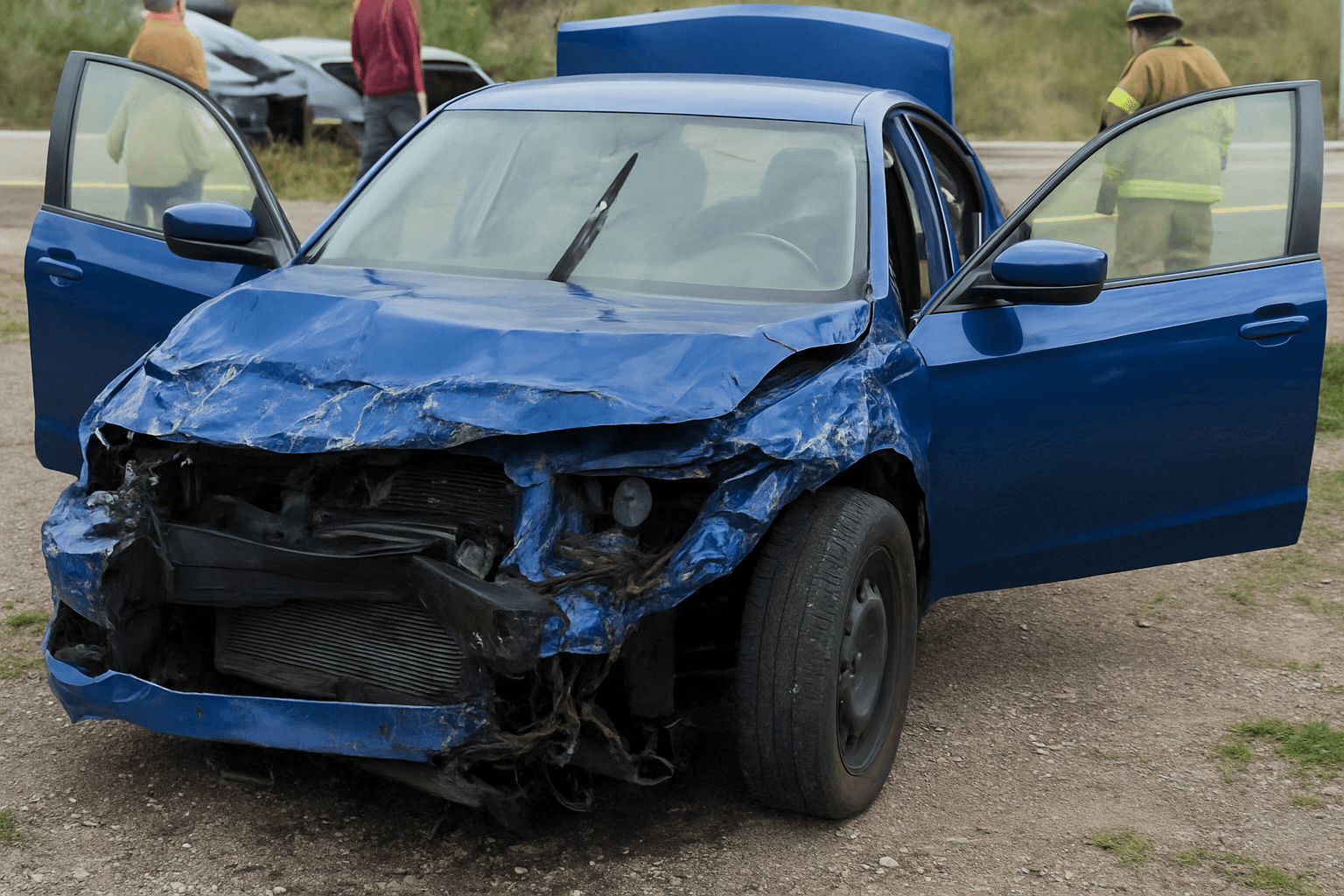
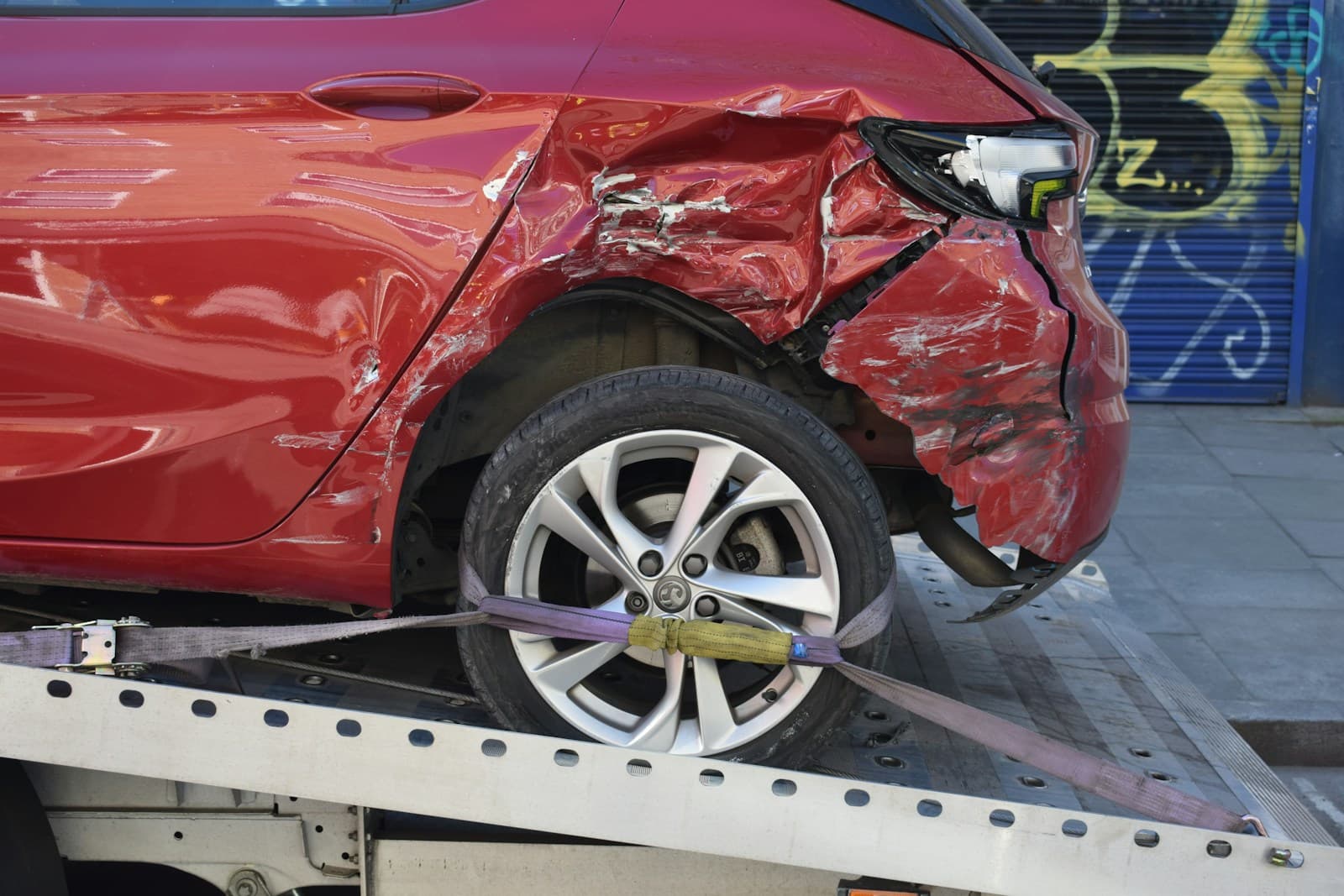
Collision coverage pays to repair your teen's car after an at-fault accident, minus your deductible. If your teen backs into a pole and causes $2,800 in damage to your 2013 Camry, and you carry a $500 deductible, the carrier pays $2,300. If the repair estimate exceeds the car's actual cash value, the carrier totals the vehicle and pays you the ACV minus your deductible.
Comprehensive covers non-collision damage: theft, vandalism, hail, hitting a deer. Illinois sees significant deer activity in collar counties and rural areas, and comprehensive claims are common. But the payout is still capped at actual cash value.
Here's the math most parents miss: if your car is worth $6,000 and you carry a $500 deductible, the maximum you can ever collect on a total loss is $5,500. If you're paying $850/year for collision and comprehensive combined, you break even after 6.5 years of premium payments assuming no claim. If your teen drives this car for 2-3 years before college, you'll pay $1,700-$2,550 in premiums to insure an asset that depreciates to $4,200 by year three.
See what adding a teen driver actually costs in your state
Compare quotes from carriers that offer good student discounts — most parents find savings they didn't know were available.
Get Your Free Quote✓ Good Student Discounts✓ No Obligation✓ Licensed Carriers✓ All 50 States
When Dropping Physical Damage Coverage Makes Sense
If your teen's vehicle is paid off, worth under $7,000, and you can afford to replace it out of pocket after a total loss, dropping collision and comprehensive eliminates $600-$900 annually from your premium. This is the single largest controllable cost reduction available after discount stacking.
The decision hinges on replaceability. Can you write a $5,000 check tomorrow if your teen totals the car? If yes, you're effectively self-insuring physical damage and pocketing the premium savings. If no, you're paying $75/month to transfer that risk to the carrier.
Most parents keep collision and comprehensive out of habit, not analysis. The car was financed three years ago, the loan is paid off, but the coverage stays on the policy because no one reviewed it. Carriers don't prompt you to drop coverage when your loan satisfies, and the annual renewal notice doesn't break out collision/comprehensive as separate line items you can eliminate.
Illinois-Specific Graduated Driver Licensing and Coverage Timing
Illinois requires teens to hold a learner's permit for 9 months with 50 hours of supervised driving (10 hours at night) before obtaining a Graduated Driver License at age 16. During the permit phase, your teen is covered as an occasional driver under your existing policy in most cases, but you must notify your carrier when the permit is issued or coverage may be void in an accident.
Once your teen obtains the GDL, they must be listed as a rated driver on your policy. This is when the surcharge hits. The GDL restricts nighttime driving (10 p.m. to 6 a.m. Sunday-Thursday, 11 p.m. to 6 a.m. Friday-Saturday) and limits passengers to one non-family member under 20 for the first 12 months. These restrictions reduce crash exposure but don't reduce your premium.
At age 18, your teen can obtain a full unrestricted license, but the insurance surcharge remains elevated until age 25. The gradual reduction in premium happens annually as your teen ages and maintains a clean record, not at specific licensing milestones.
Good Student Discount and Driver Training: Illinois Stacking Rules
Illinois does not mandate the good student discount, but most carriers writing in the state offer it: State Farm, GEICO, Progressive, Allstate, Country Financial, and Erie all provide 10-25% discounts for students maintaining a 3.0 GPA or higher. You must submit proof at initial application and again at each renewal period. Most carriers require a report card, transcript, or letter from the school registrar.
The discount applies to the portion of the premium attributable to the teen driver, not your entire household policy. If the teen surcharge adds $2,200 annually and the good student discount is 15%, you save $330/year. That's $27.50/month, meaningful but not transformative.
Driver training discounts stack with good student discounts. Illinois-approved driver education courses (minimum 30 hours classroom, 6 hours behind-the-wheel) qualify for an additional 5-10% discount with most carriers. Combined, you're looking at $400-$550 annual savings on a $2,200 surcharge. These discounts do not apply to the base household premium, only the incremental teen cost.
Telematics Programs: The Underused Cost Reduction Tool
Progressive Snapshot, State Farm Drive Safe & Save, Allstate Drivewise, and GEIC's DriveEasy all operate in Illinois and offer usage-based discounts for teen drivers. These programs monitor braking, acceleration, speed, mileage, and time of day. Safe driving behavior can reduce the teen surcharge by 10-30% after the monitoring period.
The advantage for parents: telematics discounts apply immediately during the monitoring window (typically 90 days), and the data is objective. Your teen can demonstrate safe driving and earn a discount that persists as long as the monitoring device stays active. This is the only discount mechanism that rewards actual behavior rather than proxies like GPA.
The tradeoff: your teen's driving is monitored continuously. Hard braking events, speeding, and late-night driving all reduce the discount. Parents report this as a secondary benefit, a conversation starter about driving habits your teen can't dispute. If your teen drives cautiously, telematics programs deliver $250-$400 annual savings on top of good student and driver training discounts.
The Add-to-Parent-Policy vs Separate-Policy Decision in Illinois
Most parents add their teen to an existing family policy because it's cheaper than a standalone teen policy in nearly every scenario. Illinois carriers price teen policies as high-risk new driver policies: $3,500-$5,500 annually for state minimum liability coverage on a 16-year-old with no prior insurance history. Adding that same teen to a parent's policy with multi-car and bundling discounts already in place costs $2,000-$2,800 annually.
The separate policy only makes sense in two scenarios: your teen drives a high-risk vehicle (sports car, modified vehicle) that would spike your household policy premium disproportionately, or your own driving record is severely compromised and you're already in a non-standard market where adding a teen creates underwriting issues.
Illinois does not require teens to carry their own policy at any age. A 19-year-old living at home and driving a vehicle titled in the parent's name can remain on the parent policy indefinitely. The distant student discount applies if your teen attends college 100+ miles away without a car, reducing the premium by 20-35% while they're away.