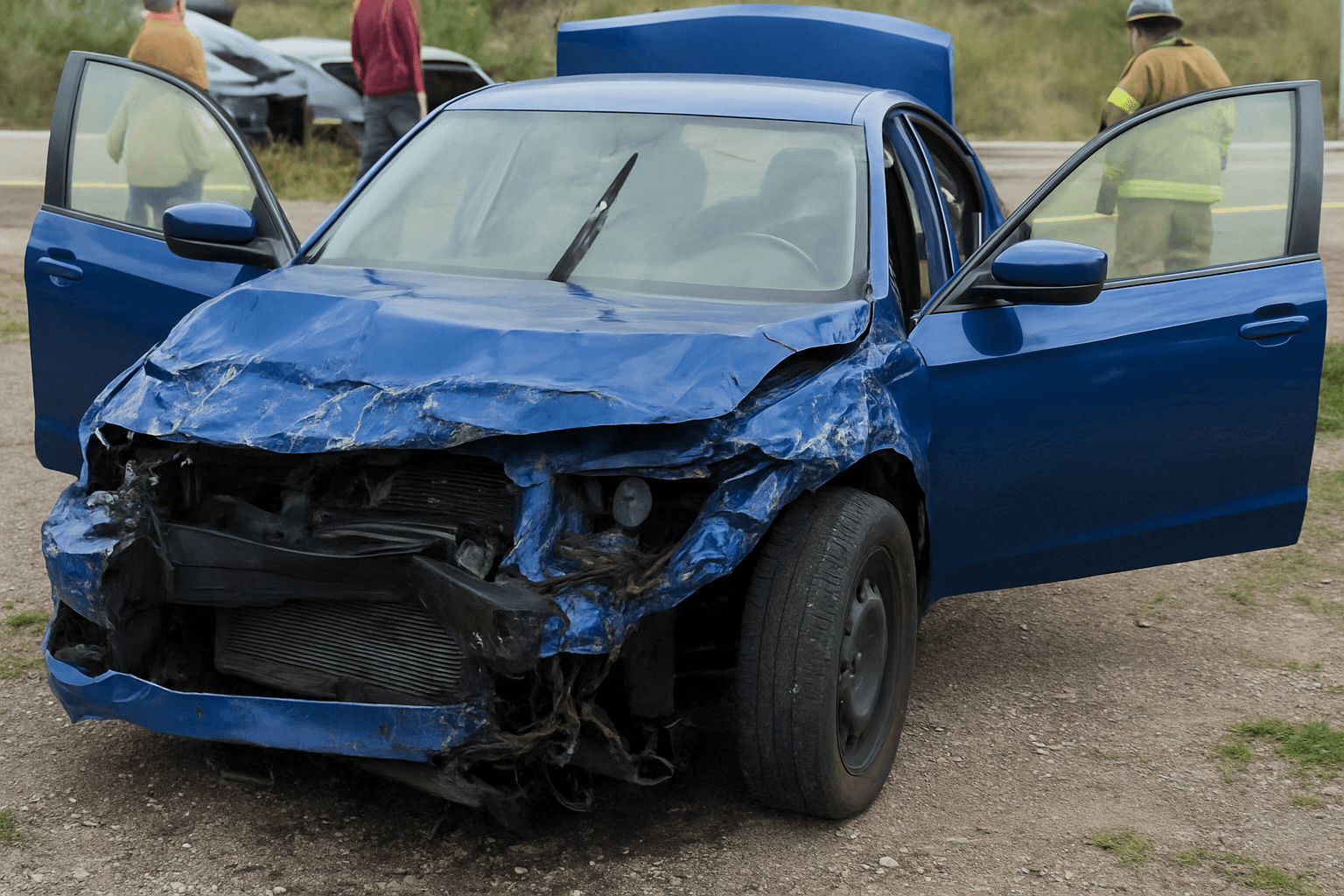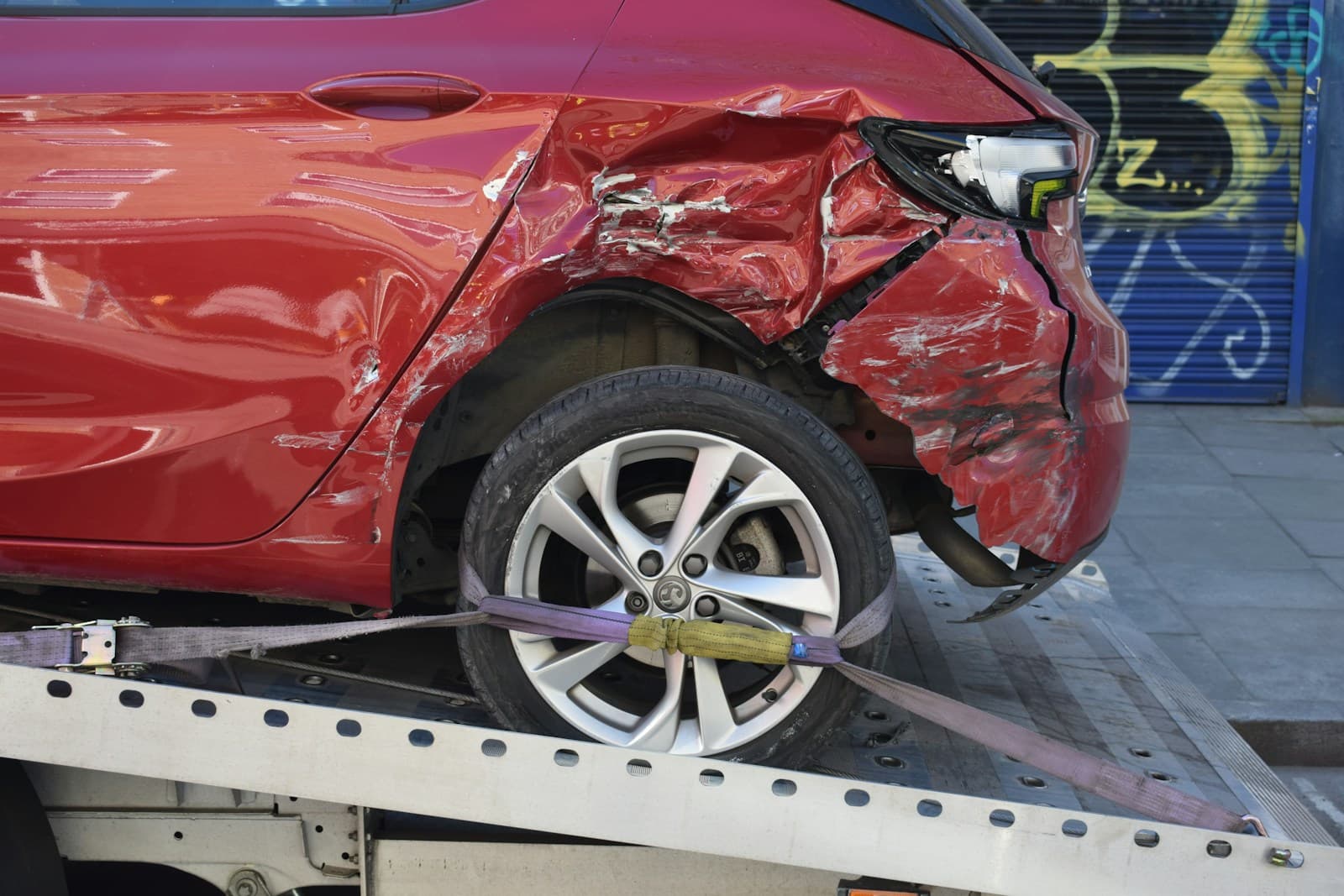
Your teen just got their license and you're keeping them on an older paid-off vehicle. Here's what coverage you actually need and what you can skip without leaving yourself exposed.
Why the 10-Year-Old Vehicle Strategy Works Until It Doesn't
Putting your newly licensed teen behind the wheel of an older paid-off vehicle makes immediate financial sense: you avoid collision risk on a newer car, eliminate a car payment, and reduce the base premium before the teen surcharge even applies. A 2014 Honda Civic with 140,000 miles might be worth $4,500 in today's market. Your collision coverage on that vehicle, with a $500 or $1,000 deductible, costs $400–$600 annually after the teen driver surcharge. If your teen backs into a mailbox or clips a curb, you're paying the deductible and getting maybe $3,500 after depreciation. The math breaks even or goes negative after one claim.
Most parents recognize this and drop collision and comprehensive coverage entirely, keeping only Ohio's required liability minimums. That decision is financially sound for the vehicle. Where families get exposed is failing to replace the coverage verification that collision provided. When a teen has full coverage, the carrier monitors their driving through claims data. When you drop to liability-only, you lose that feedback loop unless you explicitly add telematics monitoring. Your teen could be accumulating speeding tickets or near-miss hard braking events and you won't know until renewal when the rate spikes or the policy non-renews.
Ohio's graduated licensing structure gives you a natural window to test this. During the probationary period, which lasts until age 18 or one year after licensure (whichever is longer), your teen faces automatic license suspension for any moving violation. Most parents keep full coverage during probationary licensure because the risk of a claim is highest in the first 12 months. The decision point arrives when the probationary restrictions lift. That's when dropping collision makes sense, but only if you add a telematics program the same day to maintain visibility into how your teen actually drives when you're not in the passenger seat.
What Ohio Requires vs What Protects Your Assets When a Teen Is Listed
Ohio requires $25,000 per person and $50,000 per accident in bodily injury liability, plus $25,000 in property damage liability. Those limits were set decades ago and assume the driver poses average risk. Your teen driver does not pose average risk. A 16-year-old is three times more likely to cause an at-fault accident than a driver over 25, and if that accident involves serious injury, $25,000 covers approximately eight hours in a trauma center before you're personally liable for the remainder.
Parents who own a home, have retirement accounts, or earn a household income above $75,000 should not carry state minimums when a teen is listed on the policy. The standard recommendation is $100,000/$300,000 bodily injury and $100,000 property damage, but here's the pricing reality in Ohio: increasing liability limits from minimum to $100,000/$300,000 adds $150–$250 annually to your premium. The teen surcharge, by comparison, adds $1,500–$3,000 annually regardless of limits. You're already paying the risk load. The incremental cost of adequate liability protection is 8–12% of the total teen premium increase, and it's the coverage that responds when your teen merges into a vehicle carrying four passengers on I-71.
If you're dropping collision to save money, reallocate half of that savings to higher liability limits. A $500 annual collision premium on a 10-year-old vehicle converts to $250 in additional liability coverage, which moves you from $25,000/$50,000 to $100,000/$300,000 in most Ohio rating territories. You've reduced total premium, eliminated coverage that pays you for a low-value asset, and added coverage that protects everything you own when your teen causes a serious accident.
See what adding a teen driver actually costs in your state
Compare quotes from carriers that offer good student discounts — most parents find savings they didn't know were available.
Get Your Free Quote✓ Good Student Discounts✓ No Obligation✓ Licensed Carriers✓ All 50 States
The Telematics Trade: Surveillance for a 20–30% Rate Reduction
Progressive Snapshot, State Farm Drive Safe & Save, Nationwide SmartRide, and Allstate Drivewise all operate in Ohio and all offer teen driver enrollment. The programs monitor hard braking, rapid acceleration, cornering speed, phone handling, and time-of-day driving. Parents receive weekly or monthly score reports. Safe driving over a six-month evaluation period reduces your premium by 20–30%, which translates to $300–$600 annually on a teen-inflated policy.
The discount applies at renewal after the monitoring period completes, not immediately. If your teen gets their license in September, you enroll in telematics in October, and your policy renews in March, you'll see a partial discount at that March renewal and the full discount at the following year's renewal if driving scores remain consistent. Some carriers let you stack the telematics discount with the good student discount (3.0 GPA or higher), driver training discount, and multi-vehicle discount. A family running all four discounts can reduce the teen surcharge by 40–50%, but only if the monitoring data supports it.
Here's the part carriers don't advertise clearly: telematics programs penalize nighttime driving, and Ohio's probationary license restricts teen drivers from operating a vehicle between midnight and 6 a.m. except for work, school, or emergency. Your teen should score well on the time-of-day component automatically during probationary licensure. If their telematics score is poor during this period, it reflects hard braking, speeding, or phone handling, which are the behaviors most predictive of a future at-fault accident. That score is telling you something actuarially valid, and ignoring it because you trust your teen's self-reported driving is how families end up blindsided by a serious crash.
When Keeping Collision Coverage Still Makes Sense on an Older Vehicle
If your teen's vehicle is financed or leased, collision and comprehensive coverage are required by the lienholder regardless of vehicle age. If you own the vehicle outright but it's worth more than $8,000 in current market value, the breakeven analysis shifts. A 10-year-old vehicle in that range is typically a well-maintained truck, SUV, or a lower-mileage sedan in high demand. Collision premiums on vehicles valued above $8,000 are higher, but a total loss payout after deductible might still be $6,000–$7,000, which covers replacement.
The second scenario where collision makes sense: your teen drives fewer than 3,000 miles annually and the vehicle is used exclusively for school commuting or weekend errands. Low mileage reduces collision premium, and if the vehicle sits in your driveway most of the week, the probability of a claim drops enough that the premium-to-value ratio stays favorable. Some carriers offer low-mileage discounts that reduce collision costs by 10–15% when annual mileage is verified below 5,000.
The third scenario: your teen has already demonstrated poor judgment. If they've been cited for a moving violation during their permit phase (yes, that's possible in Ohio if they're operating the vehicle without proper supervision), or if they've had a parking lot incident or minor at-fault accident in the first six months of licensure, dropping collision removes the financial cushion during the highest-risk period. Even if the vehicle is worth $4,000, paying $500 annually for collision coverage might be worth it if the alternative is replacing the vehicle out-of-pocket after the next incident. This is a family-specific risk tolerance decision, not a universal rule.
How Vehicle Choice Affects the Add-to-Policy Decision
Adding a teen driver to your existing Ohio auto policy is almost always cheaper than putting them on a separate policy, but the vehicle they drive determines the margin. If your teen drives a 2015 Accord and you drive a 2023 Accord, the carrier rates both vehicles and assigns the teen driver to the higher-value vehicle for premium calculation unless you explicitly request rated driver assignment. That assignment can inflate your premium by $800–$1,200 annually compared to assigning the teen to the older vehicle.
When you add a teen to your policy, confirm with your carrier which vehicle the teen is rated on. Some carriers allow you to designate a primary vehicle per driver. Others default to the highest-value vehicle in the household and require you to call underwriting to request a different assignment. If your teen drives the older vehicle 90% of the time, that assignment should be reflected in your rating. It's not automatic.
The separate policy decision makes sense in two narrow scenarios: your teen has already had an at-fault accident or moving violation and adding them to your policy will trigger a mid-term surcharge or non-renewal notice, or you're a high-net-worth household and want to isolate liability exposure by keeping the teen on a separate policy with lower limits while maintaining your own policy with umbrella coverage. The second scenario is rare and typically involves legal advice. For most Ohio families, keeping the teen on the existing policy and managing cost through discount stacking and vehicle assignment is the correct play.
The Good Student Discount and What Happens When Grades Slip
Most carriers writing in Ohio offer a good student discount requiring a 3.0 GPA or higher, verified through report card or transcript submission. The discount reduces your premium by 10–25%, which translates to $200–$500 annually on a teen-inflated policy. The discount applies as long as your teen remains a full-time student under age 25 and maintains the GPA threshold.
Here's what parents miss: the discount is not automatically renewed. Your carrier will request updated GPA verification every six or twelve months depending on their underwriting rules. If you don't submit documentation, the discount is removed at the next renewal without advance notice in most cases. You'll see the rate increase on your renewal declaration, and if you call to ask why, the carrier will tell you the discount was removed due to missing documentation. Reapplying requires submitting the transcript again and waiting until the following renewal for the discount to be reinstated.
If your teen's GPA drops below 3.0, the discount is lost until they bring it back up. Some carriers allow you to reapply once per policy term if grades improve mid-year. The actuarial logic is straightforward: students with higher GPAs have fewer at-fault accidents. It's not a reward for good behavior. It's a statistically valid risk adjustment. If your teen is borderline at 2.9, check whether your carrier rounds up or requires a hard 3.0. Some do, some don't. A single conversation with your agent before report cards are finalized can determine whether you're paying $300 more next year.