
What Affects Rates in Portland
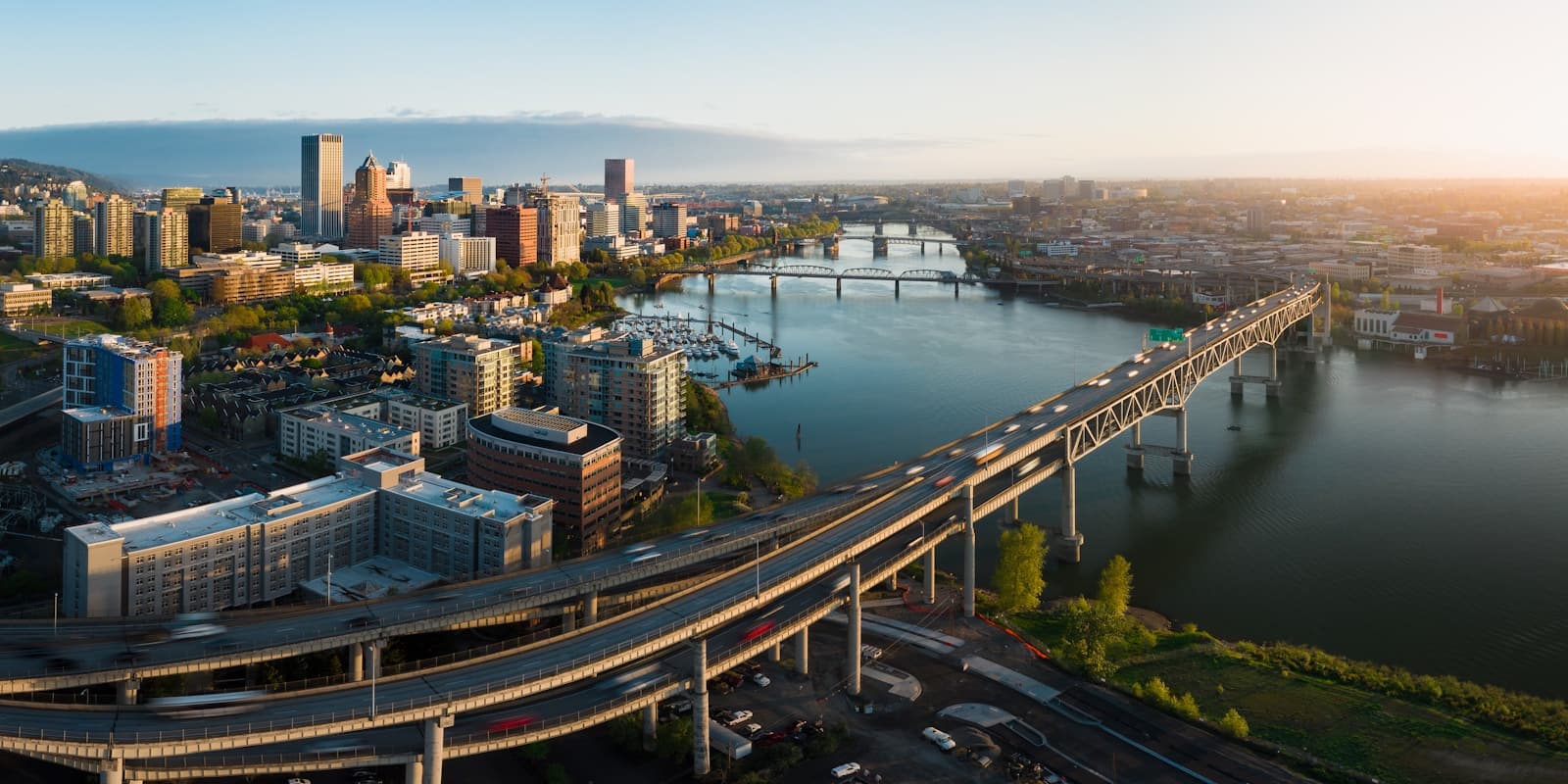
- Teens commuting from east Portland neighborhoods to westside high schools like Lincoln or Jesuit navigate the Morrison, Burnside, or Ross Island bridges daily, merging onto I-5 or I-405 during peak hours. These bridge approaches and downtown exits show elevated collision rates for drivers under 20, making liability limits above state minimums critical if your teen crosses the river regularly. Parents in outer eastside ZIP codes (97236, 97233) often see slightly lower base rates but face the same bridge commute risk if teens attend westside schools or work downtown.
- Portland averages 155 rainy days annually, with October through May bringing consistent wet pavement that reduces traction and visibility for inexperienced drivers on Highway 26, I-205, and surface streets like 82nd Avenue and Powell Boulevard. Teen drivers lack experience modulating speed in rain, contributing to higher rear-end and lane-departure claims during the school year. Collision coverage becomes more cost-justified here than in Oregon's drier eastern regions, particularly if your teen drives a newer vehicle financed through a loan requiring full coverage.
- SE/NE 82nd Avenue from Clackamas to the Columbia corridor is Portland's highest-frequency collision corridor and a common route for teens commuting to David Douglas, Parkrose, and outer eastside employers. The mix of five-lane traffic, frequent bus stops, and strip-mall access points creates constant merging conflicts where teen driver inexperience shows in claim data. If your teen's school or work commute involves 82nd Avenue, prioritize higher liability limits — the state's $25,000 per-person minimum exhausts quickly in multi-vehicle incidents common on this arterial.
- Teens working or attending programs downtown face comprehensive coverage decisions driven by Portland's vehicle theft and parking damage rates, particularly in Old Town, the Pearl District, and Lloyd Center areas. Multnomah County reports consistent auto theft concentrations in urban core ZIP codes (97209, 97232), making comprehensive coverage cost-effective for vehicles valued above $5,000 that regularly park overnight in these zones. Parents adding teens to policies should verify whether existing comprehensive deductibles ($500–$1,000) align with the vehicle's value and parking patterns.
- Oregon carriers offer discretionary good student discounts requiring a 3.0 GPA or B average, saving 10–25% for teen drivers attending Portland Public Schools, private schools like Oregon Episcopal or Catlin Gabel, or colleges like Portland State, Lewis & Clark, and Reed. Parents must request this discount explicitly and provide report cards or transcripts each semester — it's not automatically applied. For a Portland family paying $3,600 annually after adding a teen, a 15% good student discount saves $540 per year, making it the highest-value discount available if your student qualifies.
See what adding a teen driver actually costs in your state
Compare quotes from carriers that offer good student discounts — most parents find savings they didn't know were available.
Get Your Free QuoteCoverage Recommendations
Cost estimates are based on available industry data and vary by driver profile. These are not insurance quotes.
Liability Insurance
Portland's bridge commutes and I-5/I-84 merge zones create multi-vehicle collision scenarios where Oregon's $25,000-per-person minimum exhausts quickly; parents should consider 100/300/100 limits if teens drive these corridors daily.
Required by law; higher limits add $15–$40/monthEstimated range only. Not a quote.
Collision Coverage
Portland's nine-month rain season and high-traffic corridors like 82nd Avenue and Highway 26 increase rear-end and lane-departure claims for inexperienced drivers; cost-justified if your teen drives a vehicle worth more than $4,000 or you're financing the car.
Typically $80–$150/month for teen driversEstimated range only. Not a quote.
Comprehensive Coverage
Multnomah County's elevated vehicle theft rates in downtown Portland, Old Town, and Lloyd Center areas make comprehensive coverage valuable for teens parking overnight or working in urban core ZIP codes; consider a $500 deductible for vehicles valued above $5,000.
Typically $30–$70/month for teen driversEstimated range only. Not a quote.
Uninsured Motorist Coverage
Oregon requires carriers to offer uninsured motorist coverage but doesn't mandate purchase; Portland's dense traffic on I-205, Powell Boulevard, and downtown surface streets increases exposure to uninsured drivers, making this coverage worth considering at limits matching your liability.
Adds $10–$25/month to teen policiesEstimated range only. Not a quote.
Personal Injury Protection (PIP)
Portland's congested bridge approaches and I-84 corridor see frequent low-speed collisions where PIP covers immediate medical costs without waiting for liability determination; Oregon mandates $15,000 minimum PIP, with higher limits available for teens with health insurance gaps.
Required; typically $8–$20/monthEstimated range only. Not a quote.